Modern fence design trends in San Diego for 2026
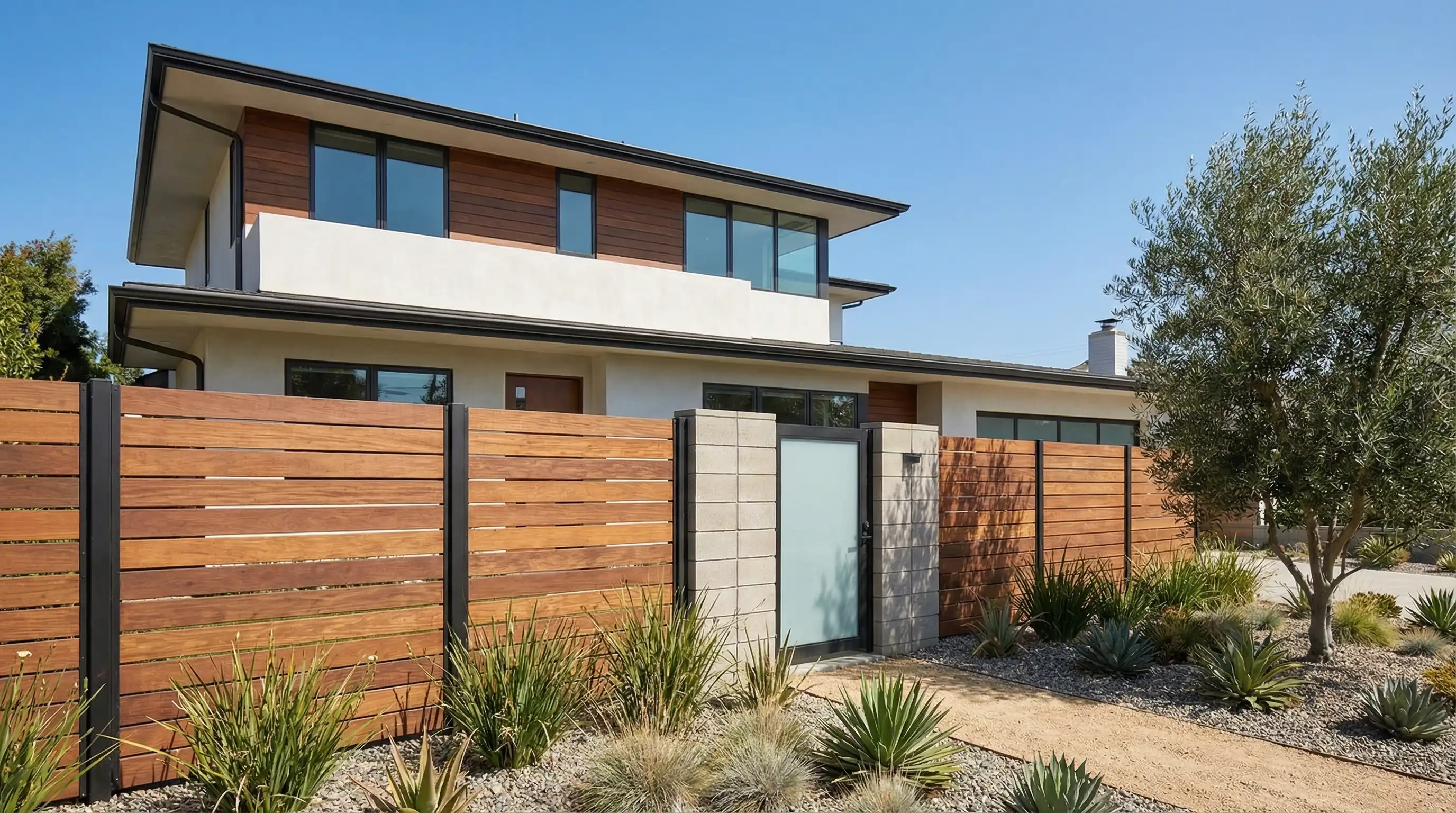
San Diego has always been a design-forward city. Between the mid-century homes in Mission Hills, the contemporary builds in La Jolla, and the hillside properties scattered across Rancho Bernardo and Scripps Ranch, there is no shortage of architectural variety. Fencing has historically lagged behind the rest of a home’s exterior design — a six-foot dog-eared cedar fence was the default for decades, regardless of the house style.
That is changing. Homeowners are treating fences less like a necessary afterthought and more like an intentional part of the property’s architecture. And in San Diego specifically, fire zone requirements in many neighborhoods mean the old wood fence default is no longer just an aesthetic choice — it is a risk and compliance question too.
This guide covers the fence design trends we are seeing across San Diego in 2026, why they are gaining traction, and how fire safety considerations fit into the picture. If you are planning a fence project, this should help you understand what is current, what is practical, and what actually works long-term in our climate.
Planning a custom gate or design-forward upgrade?
See gate systems, finishes, and installation options built for Southern California properties.
Explore Custom GatesFor a broader look at how different materials compare, see our complete guide to choosing the best fence material for your San Diego home.
The shift from traditional to modern fencing
What “modern” actually means in fencing
When people say they want a “modern fence,” they usually mean one or more of the following:
- Clean lines instead of scalloped tops or decorative post caps
- Horizontal orientation instead of vertical pickets
- Metal or mixed materials instead of all-wood
- Dark, matte finishes instead of natural wood tones or glossy paint
- Minimal visible hardware — no bulky brackets or exposed bolts
This shift mirrors broader residential architecture trends. The American Institute of Architects (AIA) has noted in its Home Design Trends Survey that homeowners consistently favor contemporary and transitional styles, with clean geometry and mixed materials ranking high in exterior design preferences. Fencing is catching up to that same sensibility.
Why San Diego is leading the shift
San Diego’s building stock is younger than many U.S. cities. A significant portion of the housing in areas like Carmel Valley, 4S Ranch, and Eastlake was built after 2000, with contemporary or transitional architecture. These homes look odd with a traditional picket fence or a six-foot cedar board-on-board.
The climate also plays a role. We do not deal with freeze-thaw cycles, so materials like aluminum and composite perform well year-round. And the amount of outdoor living space San Diego homeowners use — patios, outdoor kitchens, side yards — means fences are visible and functional, not just property-line markers hidden behind shrubs.
Horizontal slat designs: why they are everywhere
The appeal
Horizontal slat fencing is arguably the single biggest design shift in residential fencing over the past decade. Instead of vertical boards, the slats run left to right, typically with even spacing or a slight gap between them.
The reasons are straightforward:
- It reads as modern. Horizontal lines create a sense of width and calm that works with contemporary architecture.
- It pairs well with flat or low-slope rooflines, which are common in San Diego’s newer developments and many mid-century neighborhoods.
- Spacing is adjustable. You can go tight for more privacy or wider for airflow and sightlines.
Fire considerations with horizontal slats
Here is where design meets regulation. A horizontal slat fence made from wood — even with gaps — is still a combustible structure. In fire-prone areas of San Diego (and there are many), that matters.
The better approach for horizontal slat designs in fire zones is to use non-combustible or fire-resistant materials:
- Aluminum horizontal slat panels deliver the same look with zero combustibility. They are fabricated to match the slat width and gap spacing you want. See our aluminum fencing page for examples.
- Composite horizontal slats offer good aesthetics and varying levels of fire resistance depending on the product. Our composite fencing guide covers how to evaluate those claims.
- Steel horizontal slats with powder coating give you thinner profiles and a more industrial aesthetic.
If you are anywhere near a Very High Fire Hazard Severity Zone (VHFHSZ), a wood horizontal slat fence within Zone 0 (the first five feet from the structure) is a problem. Our fire-resistant fencing guide explains the specifics.
Mixed-material combinations
Why one material is not always enough
One of the strongest trends we see in San Diego is combining two or more materials in a single fence design. This is not about cutting costs — it is about getting the best properties of each material where they matter most.
Common combinations include:
- Aluminum posts and frame with composite infill panels. The aluminum provides structural strength and non-combustibility. The composite provides the solid, opaque look homeowners want for privacy.
- Steel posts with horizontal wood or Ipe slats. The steel handles the structural work and ground contact. The wood provides warmth and texture. For more on Ipe specifically, see our Ipe hardwood fencing guide.
- Block or concrete base walls with aluminum fencing on top. This is extremely common on San Diego hillside properties. The block wall handles the grade change, and the aluminum fence adds height and airflow above.
- Gabion walls with metal or composite fence extensions. Gabion (wire cages filled with stone) provides a solid, non-combustible base with a natural look, and metal fencing on top adds height without visual bulk.
Design cohesion matters
The risk with mixed materials is creating something that looks cobbled together. The way to avoid that is simple: pick a consistent color palette and keep the proportions intentional. A matte black aluminum frame with charcoal composite panels reads as one unified design. A mismatched combination of brown wood, silver aluminum, and gray concrete does not.
This is where working with a company that fabricates custom designs helps. Stock fence panels from a big-box store do not lend themselves to mixed-material work. You need someone who can match profiles, colors, and dimensions across materials. See our custom gates page for examples of how mixed-material design extends to entries and gates.
Dark and matte finishes replacing glossy
The color shift
Five or ten years ago, the most common fence colors in San Diego were natural cedar, white vinyl, and the occasional green chain link. That palette has shifted dramatically.
The dominant finishes in 2026 are:
- Matte black — by far the most requested color in our projects
- Dark bronze — a close second, especially on properties with warm-toned exteriors
- Charcoal and graphite grays — popular with contemporary and industrial-style homes
- Earth tones — dark olive, clay, and warm brown for properties that want to blend with landscaping
The trend toward dark, matte finishes aligns with broader exterior design. Dark window frames, matte garage doors, and dark metal accents on facades are all standard on newer San Diego homes. The fence is simply following suit.
Why matte outperforms glossy
Beyond aesthetics, matte finishes have practical advantages:
- They show fewer imperfections. Scratches, fingerprints, and minor wear are less visible on matte surfaces than on glossy ones.
- They reduce glare. In a city with as much sun as San Diego, a glossy fence can create uncomfortable reflections, especially in narrow side yards.
- They age more gracefully. Glossy finishes tend to show chalking and UV degradation more obviously over time.
For more on how finish quality affects long-term appearance, see our guide on powder coating colors and durability.
Integrated lighting and smart features
Lighting as part of the fence design
Rather than adding landscape lights after the fence is installed, more homeowners are building lighting into the fence itself. Common approaches include:
- LED strip lighting integrated into the top or bottom rail
- Recessed post cap lights that cast downward illumination along the fence line
- Backlit panels where light shines through gaps in slat designs, creating a lantern effect at night
Aluminum fences are particularly well-suited to integrated lighting because the hollow post and rail profiles can conceal wiring cleanly. Low-voltage LED systems are the standard — they are energy-efficient, cool-running, and can often be connected to smart home controllers.
Smart features
While still relatively niche, we are seeing more interest in:
- Automated gates with app-based controls and camera integration
- Motion-activated lighting along fence lines
- Electric lock integration for side gates
The key design principle is concealment. The hardware should be invisible when not in use. Bulky gate motors mounted on top of posts are out. Hidden operators and clean-line actuators are in.
Privacy without bulk: louvered and angled designs
The problem with solid privacy fences
A traditional six-foot solid fence gives you privacy, but it also gives you a wall. In smaller San Diego lots — which is most of them in areas like North Park, Hillcrest, and Normal Heights — a solid fence on all sides can make a yard feel closed in and dark.
It also creates wind issues. San Diego’s Santa Ana winds and coastal breezes need somewhere to go. A solid fence acts like a sail, putting stress on posts and panels. It can also create turbulence on the downwind side that is worse than the open wind would have been.
Louvered and angled alternatives
Louvered fence designs angle the slats so that you get privacy from certain viewing angles while still allowing air circulation. Think of it like window blinds turned on their side.
Benefits of louvered designs:
- Privacy from the street or neighbor’s view while maintaining airflow
- Reduced wind load compared to solid panels
- Light filtration that keeps the yard from feeling dark
- A distinctive look that sets the property apart
Angled slat designs work similarly but with a more geometric, architectural feel. They are especially popular on modern homes in La Jolla, Del Mar, and Solana Beach.
Both louvered and angled designs work well in aluminum and steel, which means they can meet fire zone requirements while delivering the privacy homeowners want.
How fire zone requirements influence design choices
The reality in San Diego
A large portion of San Diego County falls within or adjacent to Very High Fire Hazard Severity Zones. If your property is in one of these zones, your fence design is not purely an aesthetic choice — it has compliance implications.
CAL FIRE’s defensible space guidelines under PRC 4291 and the ember-resistant zone (Zone 0) guidance from the California State Fire Marshal mean that combustible fencing materials within five feet of a structure face increasing scrutiny. Some jurisdictions are enforcing non-combustible material requirements in Zone 0 outright.
For a detailed breakdown of how fire zones affect fencing, read our complete guide to fire-resistant fencing in San Diego.
Design implications
Fire zone requirements actually push designs in a modern direction. Here is why:
- Non-combustible materials like aluminum and steel tend to have cleaner lines and more contemporary profiles than wood.
- The need for defensible space encourages open or semi-open designs rather than solid combustible walls — which aligns with the louvered and slat trends described above.
- Metal fences with gaps between slats reduce ember collection and allow embers to pass through rather than accumulating against a solid surface.
In other words, if you are in a fire zone and want a modern-looking fence, the requirements are actually working in your favor. The materials and designs that meet fire safety goals are often the same ones that deliver the contemporary aesthetic most San Diego homeowners are looking for.
Working with terrain: hillside and slope solutions
San Diego is not flat
Anyone who has driven through Tierrasanta, Rancho Penasquitos, or the hills above Escondido knows that flat lots are not the norm in much of San Diego. Sloped properties create specific fencing challenges:
- Grade changes mean fence panels need to step or rack (angle) to follow the terrain.
- Retaining walls are often part of the equation, and the fence sits on top of or adjacent to them.
- Erosion and drainage affect post footing design, especially on slopes with sandy or decomposed granite soil.
Modern solutions for slopes
Stepped panels — where each section of fence drops down in a stair-step pattern — are the most common approach. With horizontal slat designs, stepping works well visually because the horizontal lines create a consistent rhythm even as the panels step down.
Racked panels — where the entire panel angles to follow the slope — are possible with some fence systems but not all. Aluminum systems with adjustable brackets handle racking better than rigid welded panels.
Combination approaches — using a block or concrete retaining wall to handle the grade change, then placing a level fence on top — are popular in San Diego. This is both practical (the wall handles the structural work of the slope) and aesthetic (the fence line stays clean and level).
On steep hillside properties common in areas like Mount Soledad, Point Loma, and the hills above Mission Valley, working with a company experienced in San Diego terrain is important. A fence design that looks great on a flat lot can fail structurally or visually on a 30-degree slope.
Color trends in detail
What San Diego homeowners are choosing
Based on what we see in actual projects across the county, here is how color preferences break down:
Matte black remains the most popular choice by a wide margin. It works with virtually every home exterior color, it disappears into landscaping at a distance, and it photographs well (which matters to homeowners who care about curb appeal).
Dark bronze is the second most common, particularly in neighborhoods with warm-toned stucco exteriors — which describes a huge portion of San Diego’s housing stock. Bronze reads as sophisticated without being as stark as black.
Charcoal and dark gray appeal to homeowners with contemporary homes that use gray tones in siding, concrete, and stone. These colors are especially popular in newer communities like Pacific Highlands Ranch and Civita.
Earth tones — dark olive, terracotta-adjacent browns, and muted greens — show up on properties where the homeowner wants the fence to blend with landscaping rather than stand out as an architectural element.
White and light colors are increasingly rare in new installations, though they remain common in replacement work where the homeowner wants to match existing elements.
How to choose
The simplest approach: look at your home’s window frames, fascia, and front door. If those are dark (which is the trend), match or complement with a dark fence. If those are light or traditional, a dark fence can still work as an accent, but consider a medium tone like bronze for a gentler contrast.
For more on how powder coating color and finish affect durability and appearance over time, see our powder coating guide.
Putting it together: design principles for San Diego fences in 2026
Start with the architecture
The fence should feel like it belongs to the house. A horizontal aluminum slat fence on a Spanish Colonial revival home in Kensington will look odd. A wrought-iron-style fence on a flat-roof modern in Bird Rock will too. Match the design language.
Consider the full property line
Most properties have different conditions on different sides. The front may face a street. One side may face a neighbor’s driveway. The back may face a canyon. You do not need the same fence everywhere. A mixed approach — using taller privacy panels where needed and more open designs where views or airflow matter — often produces a better result than one style all the way around.
Factor in fire zone status early
If your property is in or near a fire hazard zone, know that before you start choosing designs. It will narrow your material options in a way that actually helps the design process. Non-combustible materials have their own aesthetic strengths, and designing around them from the start produces better results than trying to retrofit fire compliance into a wood-based design.
Think about maintenance from day one
A beautiful fence that looks worn out in three years is not good design. Choose materials and finishes that hold up to San Diego’s sun, salt air (if coastal), and occasional heavy rain. Our fence maintenance guide breaks down what each material requires so you can make an informed choice.
Work with the terrain, not against it
On sloped lots, embrace the step or the grade change rather than fighting it. Some of the best-looking fence installations in San Diego work with the natural topography rather than trying to force a level line across uneven ground.
Next steps
If you are planning a fence project in San Diego and want a design that is current, fire-compliant, and built to last, we would be glad to talk through the options.
Modern Fence & Deck designs and installs aluminum, composite, hardwood, and mixed-material fences across San Diego County. We handle everything from flat lots in Clairemont to hillside properties in Rancho Santa Fe.
Call us at (619) 975-1883 or request a quote to get started.
Sources
- American Institute of Architects (AIA), Home Design Trends Survey — documents ongoing consumer preference for contemporary and transitional residential design, including clean lines and mixed exterior materials.
- CAL FIRE, Defensible Space (PRC 4291) — California’s defensible space requirements, including Zone 0 guidance for materials within five feet of structures.
- California State Fire Marshal (SFM), Ember-Resistant Zone (Zone 0) Guidance — recommendations for non-combustible materials in the immediate area around structures in fire hazard severity zones.
- San Diego County, Very High Fire Hazard Severity Zone Maps — official mapping of fire hazard zones that trigger material and design requirements for fencing and other exterior structures.
- AAMA 2604 and AAMA 2605, Voluntary Specification for High Performance Organic Coatings on Architectural Extrusions and Panels — industry standards for powder coating durability referenced in finish selection.
Verification note (updated March 26, 2026): Regulatory requirements can vary by parcel, jurisdiction, and inspection cycle. Confirm current requirements with your AHJ and official California sources before final design or contract decisions: PRC 4291, Board of Forestry Zone 0 updates, and OSFM FHSZ maps.