AB 3074 compliance: what San Diego homeowners need to know about fencing
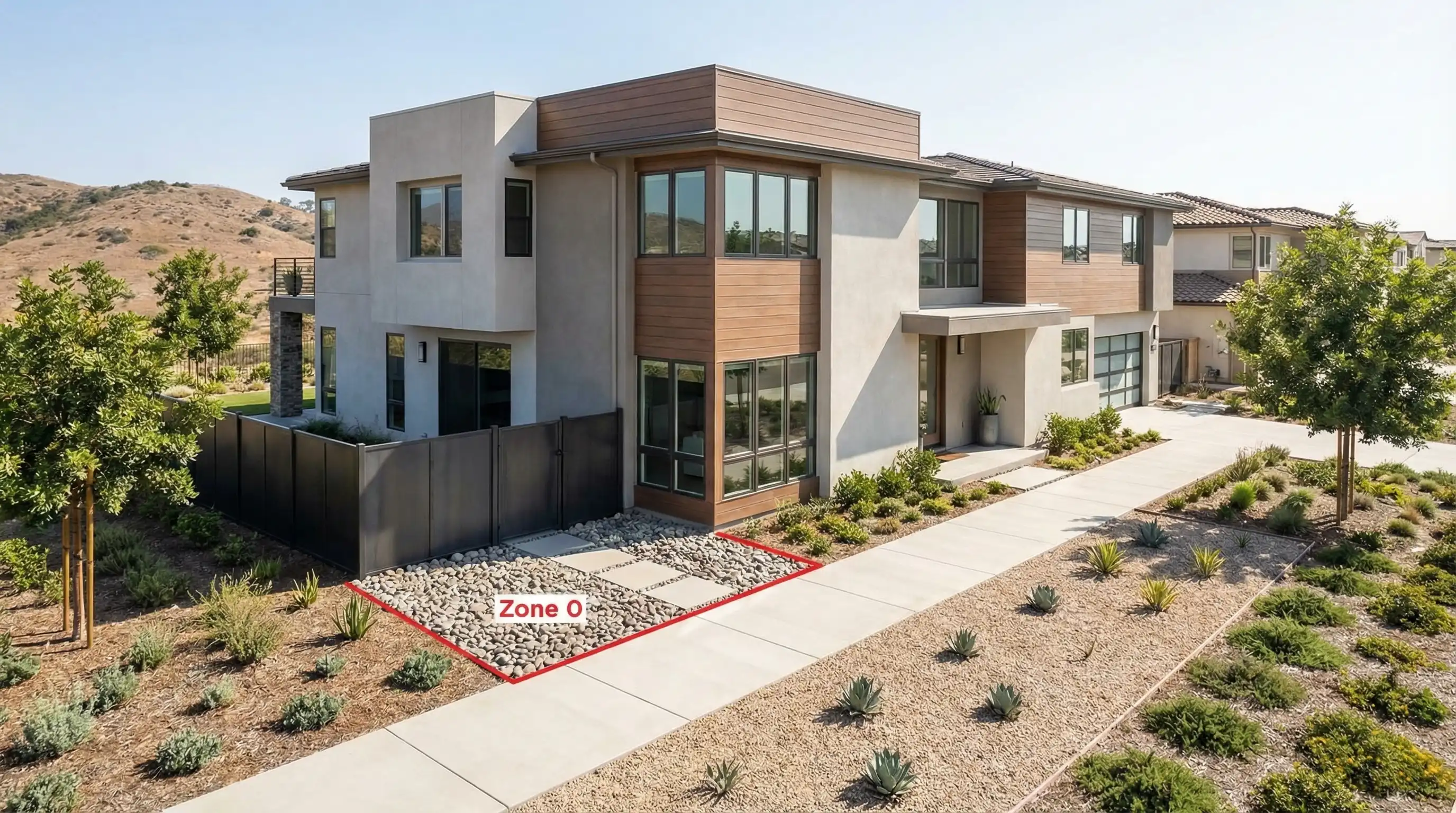
If you have been looking into fire-resistant fencing for your San Diego home, you have probably come across references to “AB 3074.” It is the California law that created Zone 0 — the ember-resistant zone within the first 5 feet of a structure — and it has direct implications for what kind of fencing you can have next to your house.
This guide explains what AB 3074 actually says, how it changed existing defensible space law, what it means for fencing decisions, and how to determine whether your San Diego property is affected. We are going to stick to what the law requires, not speculation, because compliance is about verifiable requirements, not guesswork.
For the broader context on fire-resistant fencing in San Diego — materials, costs, insurance, inspections — see our complete fire-resistant fencing guide.
Need a Zone 0 planning review?
Review near-structure material options and get parcel-specific guidance before you finalize your layout.
See Zone 0 FencingWhat AB 3074 is
Assembly Bill 3074 was authored by Assembly Member Friedman and signed into law by Governor Newsom on September 29, 2020. It was enacted as Chapter 259 of the Statutes of 2020 [1].
The bill amended California Public Resources Code Section 4291 (PRC 4291) [2], which is the state’s primary defensible space statute. PRC 4291 has required property owners in fire-prone areas to maintain defensible space around their structures for decades. AB 3074’s specific contribution was adding a new, stricter zone within the existing defensible space framework.
AB 3074 did not create an entirely new regulatory system. It built on what was already in place and added a focused requirement for the area immediately adjacent to structures — the area where embers are most likely to ignite a home.
How AB 3074 changed PRC 4291
Before AB 3074, PRC 4291 required two defensible space zones:
- Zone 1 (0 to 30 feet from the structure): Lean, clean, and green landscaping
- Zone 2 (30 to 100 feet from the structure): Reduced fuel zone
AB 3074 carved out a new zone within the existing Zone 1:
- Zone 0 (0 to 5 feet from the structure): Ember-resistant zone
With AB 3074, the defensible space framework under PRC 4291 is generally described in terms of three zones [1] [2]:
| Zone | Distance | Focus |
|---|---|---|
| Zone 0 | 0 to 5 feet | Ember-resistant materials and construction |
| Zone 1 | 5 to 30 feet | Reduced and maintained vegetation |
| Zone 2 | 30 to 100 feet | Thinned vegetation and fuel breaks |
An important caveat: while the AB 3074 statute created the ember-resistant zone in 2020, the state’s implementing Zone 0 regulations are still in draft as of this writing (the Board of Forestry released an updated draft in April 2026). What is enforceable today depends on your jurisdiction — the City of San Diego has adopted its own Zone 0 rule (see below), while the statewide rule is not yet final. The key distinction is that Zone 0 is not just about vegetation. It addresses materials and construction — including fencing, decking, patio covers, and anything attached to or immediately adjacent to the structure.
AB 3074 directed the State Board of Forestry and Fire Protection to develop and recommend regulations implementing Zone 0. The Board was tasked with creating specific standards for what qualifies as “ember-resistant” in this zone [1].
For a full explanation of all three zones and how they work together, read our guide on California defensible space zones explained.
What the law requires for structures in Zone 0
The regulations developed under AB 3074’s directive focus on creating a hardened perimeter in the first 5 feet around a structure. While the Board of Forestry’s implementing regulations provide the detailed requirements, the intent of the law is clear from the bill text and the Board’s rulemaking process [1] [3]:
Materials within 5 feet of the structure
Materials within Zone 0 should be non-combustible or ember-resistant. This applies to:
- Ground surfaces — Non-combustible hardscape (concrete, gravel, pavers, stone) is preferred over combustible mulch, wood chips, or bare soil where embers can accumulate.
- Fencing and walls — Fencing attached to or within 5 feet of the structure should be non-combustible. This is the requirement most relevant to homeowners considering fence replacement.
- Decking and patio covers — Attached decks within Zone 0 should use non-combustible or ignition-resistant materials.
- Stored items — Combustible items (firewood, lumber, cardboard, patio furniture) should not be stored against the structure within Zone 0.
Vegetation within 5 feet
- No plants should be in direct contact with the structure
- Vegetation should be well-maintained, irrigated, and fire-resistant
- Dead vegetation and debris must be removed regularly
- Combustible mulch should not be used within Zone 0
The intent: break the ember ignition pathway
Everything in Zone 0 regulations comes back to one principle: prevent embers from finding fuel near the structure. Embers are small, wind-driven burning fragments that travel ahead of a wildfire. Research by the Insurance Institute for Business & Home Safety (IBHS) has demonstrated that embers are the primary cause of home ignition during wildfires, often igniting homes far from the fire’s perimeter [4].
Zone 0 is designed to ensure that even if embers land in the first 5 feet around your home, they cannot find combustible material to ignite.
How fencing is affected
Fencing is one of the most common combustible elements within Zone 0 on residential properties. Here is why it matters and what the practical implications are.
The problem with combustible fencing in Zone 0
On most San Diego residential lots, fencing comes very close to — or directly attaches to — the structure. Side-yard fences, courtyard fences, and return fences typically connect to the house wall. In older installations, a wood fence is often bolted or screwed directly into the home’s framing or siding.
In a wildfire or ember event, this creates a direct ignition pathway:
- Embers land on or near the combustible fence
- The fence ignites (wood fencing can ignite from ember accumulation, especially when dry and weathered)
- Fire travels along the fence to the point where it contacts the structure
- The structure itself is now exposed to direct flame contact from the burning fence
This is not a theoretical risk. Post-fire damage assessments consistently show homes where the primary ignition point was combustible fencing, landscaping, or stored materials adjacent to the structure [4].
What AB 3074 means for your fence
If your property is in an area where Zone 0 regulations apply, the practical implications are these. The exact rules depend on whether the fence is new or existing and on your jurisdiction, so read this alongside the current draft and any local ordinance:
- New combustible fences and gates within 5 feet of the structure are not permitted under the state draft after its effective date, and combustible fences and gates should not be attached to the structure. The draft requires a 5-foot non-combustible span where a fence attaches to or comes within one foot of the home.
- Existing combustible fences may generally be repaired — the state draft allows repairs to an existing combustible fence using combustible replacement materials. The City of San Diego’s adopted rule (see below) adds its own exceptions for existing vinyl and, in limited cases, existing wood. This is why “combustible = must rip it all out” is an oversimplification; confirm your situation with your AHJ.
- The fence-to-structure connection matters. Even a non-combustible fence can create problems if the connection detail traps debris, uses combustible blocking or mounting materials, or creates a pathway for embers to accumulate against the structure.
- Gates within Zone 0 should also be non-combustible. A gate is part of the fence system. A wood gate in an otherwise aluminum fence within Zone 0 defeats the purpose.
What materials qualify
Under the framework AB 3074 establishes, “non-combustible” generally means materials that meet ASTM E136 — the Standard Test Method for Assessing Combustibility of Materials Using a Vertical Tube Furnace [5]. Materials that pass ASTM E136 testing include:
- Aluminum — Non-combustible. The most common residential fencing material for Zone 0 compliance.
- Steel — Non-combustible. Heavier and more corrosion-prone than aluminum but equally fire-resistant.
- Masonry (concrete block, brick, stone) — Non-combustible. Provides solid fire barrier.
- Gabion (stone in wire mesh) — Non-combustible. Both the stone fill and steel wire mesh are non-combustible.
Materials that do not qualify as non-combustible under ASTM E136:
- Wood — Combustible, including fire-retardant-treated wood (which slows ignition but does not prevent it).
- Vinyl / PVC — Combustible. Melts and ignites.
- Most composite materials — Combustible, though some carry Class A fire ratings under ASTM E84 (surface flame spread test). Class A is not the same as non-combustible [6].
For a detailed comparison of non-combustible fencing materials including performance, maintenance, and cost factors, see our guide on non-combustible fencing materials compared.
San Diego has already adopted Zone 0
This is the part that trips up a lot of homeowners: the statewide Zone 0 regulation and San Diego’s local rule are at different stages.
Yes — the City of San Diego has already adopted Zone 0, ahead of the state. The city’s requirement lives in San Diego Municipal Code (SDMC) §512.0604, the San Diego Wildland Urban Interface (SDWUI) Code. It applies to structures in a Very High Fire Hazard Severity Zone within the City of San Diego and took effect for new structures on February 28, 2026, and applies to existing structures beginning February 28, 2027 (subject to change at the discretion of the Fire Code Official).
The statewide Board of Forestry Zone 0 rule is separate and is not yet final. The Board released an updated draft on April 17, 2026 (workshop April 23, 2026), and it remains a draft — the original December 31, 2025 deadline passed without adoption. The draft’s fence and gate language is §1298.04(b)(8)–(9), and it traces back to AB 3074 and PRC 4291.
San Diego’s adopted rule includes specific exceptions. Existing vinyl fencing may be allowed within 5 feet if it runs parallel to the wall, sits no less than 4 feet from the structure, is kept clear of debris, and has no vegetation between the fence and the structure. New parallel wood fencing is permitted only if it is Fire Retardant Treated Wood (FRTW), meets the vinyl conditions, and is on the California OSFM Wildland Urban Interface (WUI) Products Handbook and approved for exterior use. Your insurer or the IBHS may not allow vinyl or FRTW within 5 feet even where code does.
| Rule | Status | Key dates |
|---|---|---|
| City of San Diego — SDMC §512.0604 (SDWUI Code) | Adopted | New: Feb 28, 2026 · Existing: Feb 28, 2027 |
| Statewide — Board of Forestry (PRC 4291 / AB 3074) | Draft (April 2026) | Not yet final; comment period open |
Confirm current status with your AHJ before final design decisions.
Enforcement: who inspects and when
AB 3074 strengthened the defensible space framework, but enforcement still happens at the local level through your AHJ (Authority Having Jurisdiction). Understanding how enforcement works helps you plan appropriately.
Who enforces Zone 0 in San Diego County
Depending on where your property is located:
- CAL FIRE and the San Diego County Fire Authority enforce defensible space in State Responsibility Areas (SRA) and unincorporated county areas.
- City of San Diego Fire-Rescue Department enforces within city limits, including in designated Very High Fire Hazard Severity Zones (VHFHSZ).
- Other local fire authorities serve specific communities like Poway, Rancho Santa Fe, and others.
When inspections happen
Defensible space inspections in San Diego County can be triggered by:
- Routine community-wide programs. Many fire authorities conduct annual or seasonal defensible space inspections, often before fire season (typically spring and early summer).
- Real estate transactions. Some jurisdictions require defensible space compliance as part of a property sale. Buyers, sellers, and their agents should verify local requirements.
- Post-fire assessments. After a fire event, authorities may inspect properties in the affected area.
- Complaint-driven investigations. A neighbor or community member can report a property that appears non-compliant.
- Insurance inspections. While not governmental enforcement, insurance companies increasingly conduct their own property assessments for wildfire risk [7].
What happens if you are not compliant
Non-compliance with PRC 4291 can result in [2]:
- Notice of violation with a timeline to correct
- Administrative fines (amounts vary by jurisdiction)
- Abatement orders where the fire authority arranges the work and bills the property owner
- Potential civil liability if a fire originates from a non-compliant property and damages neighboring properties
The enforcement tone varies by jurisdiction. Many fire authorities prefer education and voluntary compliance over punitive measures, especially for homeowners making good-faith efforts. But the legal authority to enforce is real, and it is being used more actively as wildfire risk increases.
For a detailed guide on what San Diego fire inspectors look for and how to prepare, see our San Diego fire inspection guide.
Steps to check if your property is affected
Not every property in San Diego County falls under AB 3074’s Zone 0 requirements. Here is how to determine whether yours does.
Step 1: Check the fire hazard severity zone maps
CAL FIRE publishes Fire Hazard Severity Zone (FHSZ) maps that classify areas as Moderate, High, or Very High fire hazard [8]. Zone 0 requirements apply most directly to properties in:
- State Responsibility Areas (SRA) classified as fire hazard severity zones
- Local Responsibility Areas (LRA) designated as Very High Fire Hazard Severity Zones (VHFHSZ) by the local jurisdiction
You can look up your property’s classification on CAL FIRE’s FHSZ Viewer, which allows you to search by address [8].
Step 2: Understand SRA vs. LRA vs. FRA
California categorizes land by fire protection responsibility:
- SRA (State Responsibility Area) — Lands where CAL FIRE has primary fire protection responsibility. Generally unincorporated areas with wildland vegetation. PRC 4291 applies directly.
- LRA (Local Responsibility Area) — Lands within cities and some counties where the local fire department has responsibility. Zone 0 requirements apply if the area is designated VHFHSZ.
- FRA (Federal Responsibility Area) — Federal lands (national forests, military installations). Federal fire management rules apply, though adjacent private property may still fall under state or local requirements.
In San Diego County, you can have SRA properties right next to LRA properties, especially in communities at the urban-wildland interface like Ramona, Alpine, Lakeside, and parts of North County.
Step 3: Contact your local AHJ
The most reliable way to confirm what applies to your specific property is to contact your Authority Having Jurisdiction. They can tell you:
- Whether your property is in an area where Zone 0 applies
- What specific requirements they enforce for fencing
- Whether a permit is needed for your fencing project
- Any local amendments or interpretations beyond the state-level requirements
For properties within the City of San Diego, contact the Fire-Rescue Department’s Fire Prevention Bureau. For unincorporated areas, contact the San Diego County Fire Authority or your local fire district.
Step 4: Document your findings
When you confirm your property’s status, keep a record of:
- Your FHSZ classification (from the CAL FIRE map)
- Which AHJ has jurisdiction over your property
- Any specific requirements they communicated about fencing
- The date you contacted them and who you spoke with
This documentation is valuable not only for your fencing project but also for insurance purposes and future property transactions.
Practical next steps for San Diego homeowners
If your property falls under AB 3074’s Zone 0 requirements, here is a practical approach to addressing fencing compliance:
Assess your current situation
Walk the perimeter of your home and identify every fence section within 5 feet of the structure. Note:
- What material each section is made of (wood, vinyl, metal, masonry)
- Whether and how the fence attaches to the structure
- The condition of the fence and any debris accumulation along the base
- Gate materials and locations within Zone 0
Prioritize Zone 0 first
If you cannot replace all fencing at once, start with the sections within Zone 0. This is both the legal priority and the highest-impact fire safety improvement. A non-combustible fence within the first 5 feet eliminates the most direct ignition pathway to your home.
Choose the right material
For most residential properties in San Diego, aluminum fencing is the most practical non-combustible option for Zone 0. It is lightweight, corrosion-resistant (important in coastal areas), low-maintenance, and available in modern styles that complement San Diego architecture.
Learn more about material options on our fire ratings page, or see our detailed non-combustible materials comparison.
Work with an installer who understands Zone 0
Not every fence contractor is familiar with Zone 0 requirements and the details that matter — fence-to-structure connections, debris management, and AHJ-specific expectations. Working with an installer who has experience with fire-resistant fencing in San Diego saves time and avoids compliance issues.
Modern Fence & Deck installs non-combustible fencing for Zone 0 compliance throughout San Diego County. If you want to discuss your property’s specific situation, call us at (619) 975-1883 or request a quote.
Frequently asked questions
When did AB 3074 take effect? The AB 3074 statute was signed into law on September 29, 2020, and took effect on January 1, 2021. That is the date the law took effect — not the date Zone 0 fencing rules became enforceable everywhere. AB 3074 directed the Board of Forestry and Fire Protection to develop the implementing regulations, and those statewide Zone 0 regulations are still in draft as of this writing (an updated draft was released in April 2026). Meanwhile, the City of San Diego adopted its own Zone 0 rule under SDMC §512.0604 with effective dates of February 28, 2026 (new structures) and February 28, 2027 (existing structures). So what is actually enforceable near your home depends on your jurisdiction [1].
Does AB 3074 apply to all California properties? No. AB 3074’s Zone 0 requirements apply to properties in State Responsibility Areas (SRA) and Very High Fire Hazard Severity Zones (VHFHSZ) within Local Responsibility Areas. Properties outside these designations are not subject to Zone 0 requirements, though maintaining defensible space is advisable for any property near wildland vegetation.
Can I keep a wood fence if it is more than 5 feet from my house? Zone 0 specifically addresses the first 0 to 5 feet from the structure. Fencing beyond 5 feet falls within Zone 1 or Zone 2, which have different (and generally less strict) requirements regarding materials. However, a long run of combustible fencing anywhere in your defensible space area can create a fuel pathway. Check with your AHJ for their interpretation.
Does fire-retardant-treated wood qualify for Zone 0? Fire-retardant-treated (FRT) wood is still combustible — the treatment slows ignition but does not prevent it. Under the strict interpretation of Zone 0’s ember-resistant requirements, non-combustible materials (aluminum, steel, masonry) are the appropriate choice. Consult your AHJ for their specific position on FRT wood in Zone 0.
What if my neighbor’s fence is within my Zone 0? If a neighbor’s fence runs within 5 feet of your structure, it creates a fire risk to your home even though it is on their property (or on the property line). This is a conversation to have with both your neighbor and your AHJ. Some jurisdictions can require both property owners to address the issue.
Sources
-
California Assembly Bill 3074 (AB 3074), Chapter 259, Statutes of 2020. “Defensible space: ember-resistant zones.” California Legislative Information. leginfo.legislature.ca.gov
-
California Public Resources Code Section 4291 (PRC 4291). “Defensible Space.” California Legislative Information. leginfo.legislature.ca.gov
-
State Board of Forestry and Fire Protection. “Defensible Space and Vegetation Management Regulations — Zone 0.” California Department of Forestry and Fire Protection. bof.fire.ca.gov
-
Insurance Institute for Business & Home Safety (IBHS). “Wildfire Prepared Home.” ibhs.org
-
ASTM International. “ASTM E136 — Standard Test Method for Assessing Combustibility of Materials Using a Vertical Tube Furnace.” West Conshohocken, PA. astm.org
-
ASTM International. “ASTM E84 — Standard Test Method for Surface Burning Characteristics of Building Materials.” West Conshohocken, PA. astm.org
-
California Department of Insurance (CDI). “Wildfire.” insurance.ca.gov
-
CAL FIRE. “Fire Hazard Severity Zone Maps.” Office of the State Fire Marshal. osfm.fire.ca.gov
Working out how AB 3074 and Zone 0 affect your fence or gate? Review the near-structure material options, then confirm what your local jurisdiction (AHJ) enforces for your parcel.
Verification note (updated March 26, 2026): Regulatory requirements can vary by parcel, jurisdiction, and inspection cycle. Confirm current requirements with your AHJ and official California sources before final design or contract decisions: PRC 4291, Board of Forestry Zone 0 updates, and OSFM FHSZ maps.