La Jolla’s guide to fire-wise fencing: aluminum, steel, and composite that actually make sense
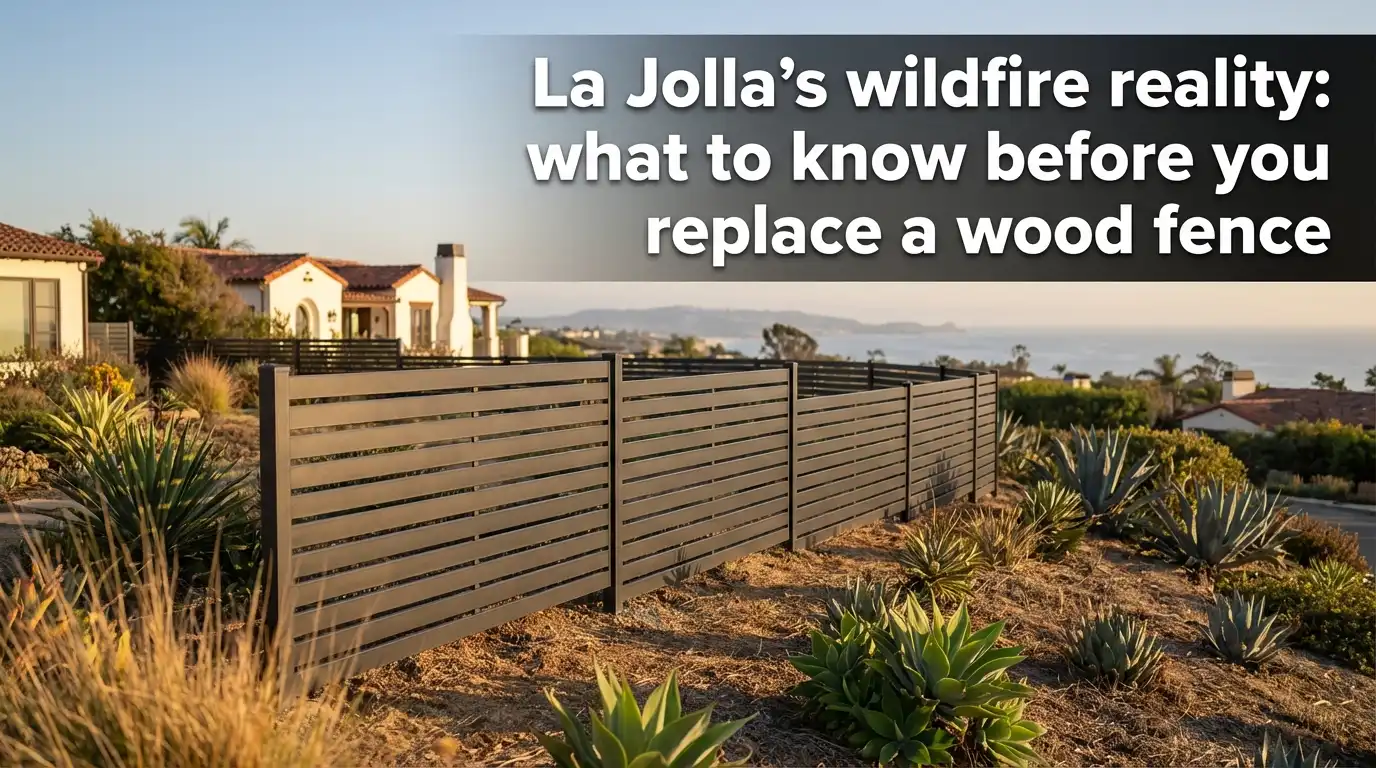
If you live in La Jolla, you’ve probably noticed things changing a bit: more metal fencing, fewer cedar pickets right up against the house, and a lot more people asking about “Zone 0.” It’s not a trend chase. It’s homeowners and contractors paying attention to the spots where embers tend to cause problems—especially close to the building—without turning Bird Rock or the streets above Windansea into an industrial zone.
This guide is for homeowners searching for Fire wise aluminum, steel and composite fencing. in La Jolla who are trying to sort through marketing claims, evolving California defensible space guidance, and what actually looks right on a La Jolla property. We’ll cover where these fence types make sense here, what to ask a contractor, and the local details—salt air, slopes, HOA review—that can make a simple fence feel like a whole project.
The local fencing scene in La Jolla (and why “fire-wise” comes up now)
La Jolla fencing isn’t one-size-fits-all because the properties aren’t one-size-fits-all. There are compact coastal parcels near La Jolla Shores, narrow side yards in older parts of the Village, and hillside lots where a fence line runs along a grade change and has to respect a view corridor.
Working on a project in La Jolla?
See local service options, material guidance, and nearby project coverage for La Jolla.
Explore La JollaA few real-world pressures are bringing “fire-wise” materials into more La Jolla fence conversations:
First, California’s defensible space approach is getting more specific close to structures. You’ll hear “Zone 0” a lot. Zone 0 is the 0–5 foot area around a structure, where the aim is to reduce things that can ignite from embers and radiant heat. Some jurisdictions are moving toward tighter expectations for what’s allowed right next to walls, windows, and under eaves. The rules that apply to your address depend on your AHJ (Authority Having Jurisdiction)—usually the City of San Diego plus the fire authority guidance for your area.
Second, it’s easier to design around materials that don’t become fuel. Aluminum and steel are non-combustible, so they don’t add to the fire load the way dry wood can. That doesn’t mean “nothing can burn,” and it doesn’t mean a fence stops a wildfire. It does mean you can avoid one common weak spot: a combustible fence element attached to, or leaning into, the home’s ignition zone.
Third, La Jolla’s coastal exposure is hard on sloppy details. Salt air and afternoon onshore winds (especially in late spring and summer) don’t just mess with a patio umbrella—they go after fasteners, coatings, hinge hardware, and they can exaggerate how composite boards expand and contract on long runs.
And then there’s the look. La Jolla streetscapes—think Prospect Street, Girard Avenue, and the blocks around La Jolla Cove—tend to suit clean lines. That’s why you’re seeing more modern fence design choices like horizontal aluminum slats, thin steel pickets, and minimal frames.
In practice, “fire safe fencing” in La Jolla usually ends up meaning some mix of:
- Non-combustible fencing where the fence gets close to the house (aluminum or steel)
- Wildfire compliant fence detailing at gates and returns (how the fence meets the structure matters as much as the panel)
- Careful use of composite where it makes sense—often away from the structure, or as a privacy/screen run planned with separation in mind
If you’re hearing neighbors mention AB 3074 fencing requirements, use that as a cue to ask a more useful question: “What does my AHJ require or expect for fences in the 0–5 foot zone around my home?” That answer is what shapes a design you can actually build.
Why La Jolla homeowners pick aluminum, steel, or composite (and where each one fits)
Aluminum fencing: clean, non-combustible, and pretty forgiving near the coast
For a lot of La Jolla homes, aluminum fencing is the easiest way to get a modern look while keeping the fence material itself non-combustible. It won’t ignite from embers the way wood can, and it’s lighter than steel, which matters on long runs along a slope or when you’re trying not to oversize posts.
What La Jolla homeowners usually like about aluminum:
- Non-combustible behavior near structures (helpful for Zone 0 design conversations)
- Powder-coated finishes that can hold up well when the prep and spec are right
- Works with tight picket spacing or horizontal slats for privacy without the mass of masonry
Where aluminum can disappoint if the design/spec is weak:
- Cheap systems can feel “tinny,” and thin-wall posts can rack over time in wind.
- Hardware matters. Coastal air will chew through the wrong hinges and latches.
If you’re aiming for fire resistant fencing close to the home, aluminum is often the simple, clean path—especially when you need a gate that swings true and doesn’t sag.
Steel fencing: heavier, stiffer, and a good fit for security lines and narrow profiles
Steel fencing California projects in La Jolla usually show up when you want a narrower picket profile, more security, or a more architectural look. Steel is non-combustible too, but it’s unforgiving if corrosion protection is treated like an afterthought.
Steel often makes sense for:
- Front-yard boundaries in the Village where you want a more refined line
- Long runs where you don’t want the panel flexing or drifting over time
- Custom details (laser-cut panels, custom gate frames) when fabrication is done right
But steel isn’t “install it and forget it” unless the coating system is right. In a coastal pocket like Bird Rock, the finish conversation should be straightforward: galvanizing vs. quality primer systems vs. powder coat, and what the warranty really covers.
Composite: good for privacy and low maintenance, but it isn’t non-combustible
Composite can work well in La Jolla, especially when you want privacy and don’t want to repaint. It also pairs well with modern architecture—dark metal frames with composite infill is a common combo.
Here’s the plain truth: composite isn’t non-combustible, and different brands and product lines react differently to heat. When you see claims like “Class A,” ask what, exactly, that rating is referring to.
You may hear about ASTM E84 and “Class A.” ASTM E84 measures surface burning characteristics (flame spread and smoke development) for interior finish materials in a tunnel test. It can be useful context, but it’s not the same as saying a fence board won’t melt, deform, or contribute fuel during exterior fire exposure. For exterior ignition concerns near a structure, your AHJ’s guidance and product-specific documentation matter more than a single rating headline.
So why do La Jolla homeowners still choose composite?
- It solves privacy problems when an open metal picket fence won’t
- No painting, no termite damage, and fewer splinters than wood
- The look stays more consistent if you pick a reputable line and color
Composite usually fits best as part of a defensible space fencing plan—for example, keeping any structure-adjacent segments non-combustible (metal), then using composite where you’ve got more separation, hardscape breaks, or landscape buffers.
What to look for in a La Jolla fire-wise fencing contractor (so the project doesn’t get messy)
Materials matter, but install details are where La Jolla fence projects tend to unravel—especially near the house.
1) They treat Zone 0 like a design constraint, not a sales phrase
If a contractor says “we do Zone 0 fencing” but can’t explain what Zone 0 is (the 0–5 foot zone around structures) or how it changes returns, gate posts, and attachment points, you’re more likely to get a nice-looking plan that turns into a bunch of mid-job changes.
A solid approach sounds more like: “Let’s map the fence line and mark any segments within 5 feet of the house. For those areas, we’ll stick with non-combustible materials and avoid details that trap debris.”
And AHJ (Authority Having Jurisdiction) should come up early. Your AHJ is the body that interprets and enforces requirements. What passes can vary even within San Diego depending on the property and the inspection path.
2) They call out corrosion-resistant hardware for coastal pockets
In La Jolla, hinges and fasteners can fail long before panels do if the metals aren’t compatible or the hardware grade is too low for the environment. If your contractor can’t tell you what they’re using (and why), ask again.
You don’t need an engineering seminar. You do want basics like: stainless where it counts, isolation to reduce galvanic corrosion, and gate hardware that won’t start binding after a year of salt air.
3) They treat the gate like the hard part (because it is)
A “wildfire compliant fence” discussion often turns into a gate discussion fast, because gates are where sag, gaps, and latch problems show up.
Ask how they handle:
- Post sizing and footing depth for gate posts
- Hinge type and adjustability
- Latch placement and self-closing needs (common for pools)
Near La Jolla Shores and around schools and parks, gates also take real abuse—strollers, surfboards, landscaping crews—so a flimsy build won’t last.
4) They can explain composite trade-offs without trashing wood (or overselling composite)
Wood isn’t “bad,” and composite isn’t “magic.” A contractor you can trust will describe how each material behaves on an actual property:
- Wood: looks great, but it’s combustible and needs maintenance; it can warp and split in sun.
- Composite: low maintenance and consistent; not non-combustible; thermal movement needs room.
- Aluminum/steel: non-combustible; coatings and hardware decide whether it holds up.
If it feels like you’re being steered into one material no matter what your site conditions are, pause.
5) They’re used to HOA coordination and coastal review realities
Parts of La Jolla have HOA design review, and coastal proximity can bring extra scrutiny around height, visibility, and style. A good contractor won’t promise approvals they can’t control, but they should be comfortable providing drawings, cut sheets, and clear material descriptions.
Modern Fence & Deck typically puts material specs in writing for these conversations and will tell you where the line is between “good practice” and “your AHJ will decide.”
La Jolla-specific details that change how we build fire-wise fences
La Jolla isn’t just “San Diego but nicer.” The little conditions change the build.
Coastal wind and salt: your finish system needs to be thought through
Afternoon winds push salt-laden moisture inland. Over time, that turns into corrosion on the wrong fasteners, bubbling under cheap coatings, and latches that start sticking.
For metal fencing, ask about:
- Powder coat quality and prep steps
- Whether steel is galvanized (and how weld points are treated)
- What’s used at cut ends and drill points
If you’re near Coast Boulevard or you can smell the ocean from your front yard, treat finish details like performance, not decoration.
Slopes and retaining edges: posts and footings aren’t “standard”
La Jolla has plenty of lots where the fence line runs along a drop, a retaining edge, or a stepped grade. That affects post spacing, whether you need rackable panels, and how you handle the bottom gap (which also affects how much debris gets trapped).
For defensible space fencing, that bottom gap detail matters. A fence that collects leaves and mulch at the base becomes a maintenance problem and can leave ember fuel right where you don’t want it.
Landscaping right up against the fence line
You can do everything right with the fence and still lose the plot with what sits next to it. In La Jolla, privacy landscaping is often dense—and sometimes it’s planted right against the fence.
If you’re thinking in Zone 0 terms, plan hardscape breaks, gravel bands, or cleanable edges so plant debris doesn’t build up against the fence, especially within that first 5 feet of the structure.
“AB 3074” and what it means for your fence
Homeowners ask about AB 3074 fencing requirements when they’re rebuilding after a renovation or trying to stay aligned with California’s wildfire resilience direction.
A practical way to use that question: ask your AHJ early, “Are there any current requirements or plan check notes about non-combustible materials in Zone 0, specifically for fences attached to or within 5 feet of the structure?” Then design to that answer.
Fire ratings and compliance expectations can vary by jurisdiction. That’s why we treat “fire-wise” as a set of build choices that may line up with Zone 0 expectations—not a blanket promise.
Getting started with fire-wise aluminum, steel and composite fencing in La Jolla
Start with your site layout, not a product brochure.
First, walk the property and mark where the fence sits within 5 feet of the house, garage, ADU, or any enclosed structure. That’s your Zone 0 conversation zone. A lot of La Jolla homes have side-yard pinch points where the fence nearly kisses the eave line—those areas deserve extra care.
Next, decide what each segment actually needs to do:
If it’s near the structure, many homeowners go with non-combustible fencing (aluminum or steel). If it’s a back-yard privacy run farther from the house, composite can make sense when it’s planned with proper spacing, framing, and access for cleaning/maintenance.
Then, get a plan that spells out:
- Fence height, post spacing, and gate locations
- Material and finish specs (especially for steel)
- Notes on how the fence meets the structure (or avoids it)
If you want a local team to walk the site with you, Modern Fence & Deck can help you sort through fire safe fencing options and put together a fence line that fits La Jolla conditions without making hand-wavy promises about compliance. You can reach the office at (619) 975-1883.
Wrap-up: a La Jolla fence that looks right and doesn’t ignore Zone 0
If you’re searching for Fire wise aluminum, steel and composite fencing. La Jolla CA, keep your focus on two things: where the fence sits relative to the structure, and whether the build details match coastal exposure. Aluminum and steel are non-combustible and usually make the most sense near the house. Composite can work well for privacy when you plan for separation, heat movement, and cleanable edges.
If you’re in Bird Rock, the Village, or near La Jolla Shores and you want a fence plan that’s honest about Zone 0 and local conditions, call Modern Fence & Deck at (619) 975-1883. We’ll help you choose materials, document specs for HOA/AHJ conversations, and design a fence line you’ll feel good about living with.
FAQ
Does aluminum fencing meet Zone 0 in California? Aluminum is non-combustible, which is often the point of Zone 0 guidance near structures. But Zone 0 enforcement varies by AHJ, and details like fence attachment, gate framing, and nearby ground cover can change what’s accepted.
Is steel fencing better than aluminum in La Jolla? Steel is stiffer and can feel more substantial, but it needs the right corrosion protection near the coast. Aluminum is lighter and naturally resists corrosion. The better pick comes down to the design, exposure, and how the fence is finished and installed.
Is composite fencing non-combustible? No. Composite is not non-combustible. Some products have fire testing data (like ASTM E84 surface burning characteristics), but that doesn’t mean the fence can’t deform or contribute fuel during exterior fire exposure. Plan composite carefully, especially close to structures.
What’s the biggest mistake you see with fire-resistant fencing? Installing a non-combustible panel, then surrounding it with combustible debris traps—mulch piled at the base, shrubs pressed against the fence, or wood elements tied into the gate area. The material and the site detailing have to work together.
Will a wildfire compliant fence lower my insurance? That depends on your carrier, your property, and your overall risk profile. A fire-wise fence can be part of reducing ignition risk, but nobody should promise an insurance outcome. Ask your provider directly.
Comparing fire-resistant fencing options for your San Diego property? Look at non-combustible materials for the near-structure zone, then confirm what applies to your parcel with your local jurisdiction (AHJ).
Verification note (updated March 26, 2026): Regulatory requirements can vary by parcel, jurisdiction, and inspection cycle. Confirm current requirements with your AHJ and official California sources before final design or contract decisions: PRC 4291, Board of Forestry Zone 0 updates, and OSFM FHSZ maps.