Powder-Coated Fence Colors, Durability, and Finish Specs
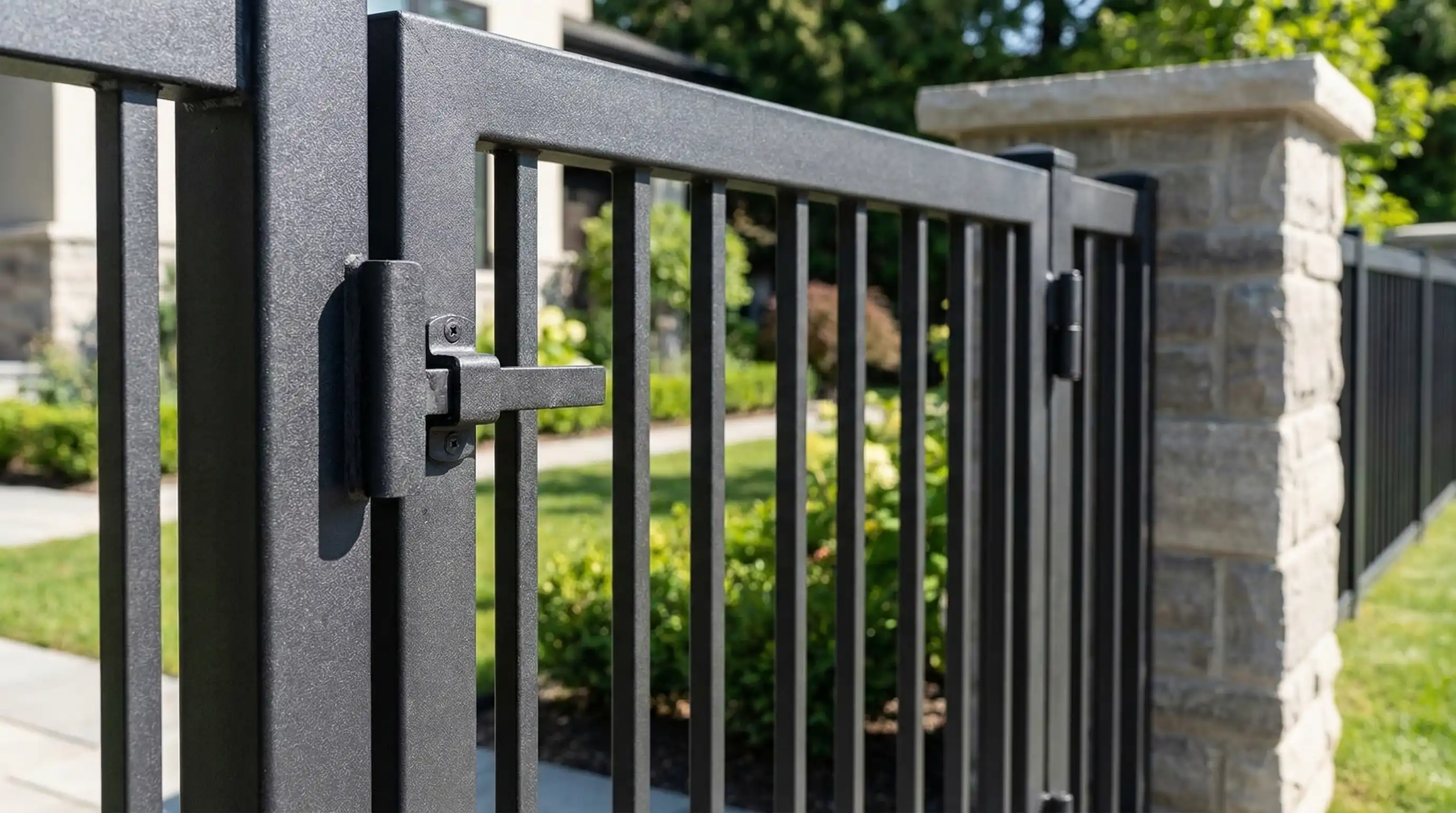
If you are choosing an aluminum or steel fence, the finish affects its color, maintenance, and response to sun, moisture, and salt air. Powder coating is a common factory-applied finish for metal fencing, but the coating specification, preparation, and care instructions still need to match the product and site.
This guide covers the decisions a homeowner can verify before ordering: finish standard, color and gloss, substrate preparation, manufacturer documentation, and maintenance for the property’s exposure.
For a broader material comparison, see our fence material comparison.
Planning a powder-coated fence?
Share the metal, color direction, and site exposure. We’ll use those details to discuss finish options for your project.
Request a Fence QuoteWhat powder coating is and how it differs from paint
The basics
Powder coating is a dry finishing process that applies a durable, protective layer to metal surfaces. Unlike liquid paint, powder coating uses finely ground particles of pigment and resin that carry an electrostatic charge. These charged particles are sprayed onto the metal surface, where they adhere uniformly due to the electrostatic attraction. The coated piece then goes into a curing oven, where heat causes the powder to melt, flow, and chemically cross-link into a continuous, hard film.
The result is a finish that is fundamentally different from paint:
- Dry application. Powder is applied without the liquid carrier used in conventional paint, then cured according to the coating manufacturer’s instructions.
- Controlled coverage. Electrostatic application helps the powder reach the grounded metal, but edge coverage and film thickness still depend on part geometry and process control.
- Chemical cross-linking. The curing process forms the finished film. Compare its documented properties with any field-applied coating being considered.
- Specified film build. The coating supplier’s product data sheet and the selected performance specification define the target thickness and cure requirements.
Why it matters for fences
Fences are outdoor structures exposed to UV radiation, moisture, temperature cycling, and physical contact. The finish should be selected and maintained with those exposures in mind.
Powder coating and field-applied paint are different finish systems. Their performance depends on the substrate, preparation, coating chemistry, application, cure, exposure, and maintenance—not the finish name alone.
The process: electrostatic application and heat curing
Step by step
Understanding the process helps you ask for useful documentation. A factory powder-coating process commonly includes these stages:
1. Surface preparation. The metal needs cleaning and preparation for the specified coating system. Preparation methods may include:
- Chemical pretreatment — cleaning, degreasing, and applying a conversion coating selected for the substrate and coating system.
- Mechanical preparation — sandblasting or media blasting to create a surface profile that the powder can grip.
- Multi-stage wash systems — larger fabricators use automated wash lines with multiple chemical stages for consistent results.
Inadequate preparation can contribute to adhesion and corrosion problems. Ask the fabricator to identify the pretreatment, coating product, and inspection steps rather than relying on “powder-coated” as the complete specification.
2. Powder application. The prepared metal piece is grounded (given a negative electrical charge), and the powder is sprayed from a gun that gives each particle a positive charge. The electrostatic attraction pulls the powder to the metal and holds it in place until curing. Operators control the thickness and coverage by adjusting the gun settings and application technique.
3. Heat curing. The coated piece enters an oven, where the powder flows and cures. Temperature and time vary by formulation and part temperature; the coating manufacturer’s technical data controls the process.
4. Cooling and inspection. After curing, the piece can be inspected for coverage, thickness, adhesion, and appearance. Ask which checks are documented for the system being quoted.
What to ask your fence provider
- “What preparation and pretreatment does this substrate receive?”
- “Which coating product and specification are included in the written scope?”
- “How are film thickness and cure checked?”
- “Can I review the coating manufacturer’s care instructions and written finish terms, if any?”
AAMA 2604 vs. AAMA 2605: what the specs mean
Two specifications to compare
The Fenestration and Glazing Industry Alliance (FGIA) publishes the AAMA 2603, 2604, and 2605 voluntary specifications for factory-applied organic coatings on architectural aluminum extrusions and panels. When a fence supplier references AAMA 2604 or 2605, confirm the exact standard edition, coating product, applicator documentation, and whether the claim applies to the quoted fence components.
AAMA 2604 — Voluntary Specification, Performance Requirements and Test Procedures for High Performance Organic Coatings on Aluminum Extrusions and Panels
FGIA describes AAMA 2604 as the high-performance level in this family. The specification covers test procedures and performance requirements related to appearance, film integrity, weathering, humidity, and corrosion resistance. The purchased standard—not a marketing label—is the controlling source for exact thresholds.
AAMA 2605 — Voluntary Specification, Performance Requirements and Test Procedures for Superior Performing Organic Coatings on Aluminum Extrusions and Panels
FGIA describes AAMA 2605 as the superior-performing level, with more demanding performance criteria than AAMA 2604. A resin brand or generic “premium powder” description does not establish conformance by itself; request the written coating and applicator documentation for the exact system.
What this means for your fence
Treat AAMA 2604 and 2605 as specification options to review, not automatic prescriptions. Substrate, coating availability, color, gloss, distance from salt exposure, cleaning access, budget, and the manufacturer’s written finish terms all affect the decision.
If a quote lists “powder coat” without further detail, ask for the product data sheet and the performance specification, if one is included. Avoid assuming that a coating meets AAMA 2604 or 2605 without documentation tied to the quoted system.
How to verify
Ask your fence provider which specification and edition the coating is represented to meet, then request the supporting product and applicator documentation. If those details are unavailable, treat the finish performance as unspecified in your comparison.
Color options
Standard colors
Available palettes vary by manufacturer and coating line. Common fence color families include:
- Black
- Bronze / Dark bronze
- White
- Dark green
- Beige / Sand / Clay
- Charcoal / Dark gray
Ask which colors are standard for the selected system and which require a custom run. Availability, lead time, minimum quantity, and price need written confirmation from the supplier.
Custom color matching
For homeowners who want to coordinate with an exterior color, a fabricator may offer a custom or special-order finish. Confirm the accepted reference system and sample-approval process. A typical review can involve:
- Providing a color sample, Pantone number, or RAL code
- The coating supplier identifies or formulates an available match
- A sample panel is coated and sent for approval before production
Custom-color availability, lead time, minimums, and added cost vary by supplier and should be included in the written quote.
Popular choices in San Diego
Matte black is Modern Fence & Deck’s default direction for a premium aluminum system because it supports clean lines and works with many contemporary exterior palettes. Dark bronze, charcoal, graphite, and earth tones can be considered when the fence needs to coordinate more closely with stucco, metalwork, or landscape materials.
For more on color trends in fence design, see our modern fence design trends guide.
UV resistance: how powder coating holds up in Southern California sun
The challenge
Southern California fences can receive sustained UV exposure. Over time, organic coatings can show color change, gloss loss, or chalking; the rate depends on the coating system, color, orientation, exposure, and care.
Sections with greater direct sun can age differently from shaded sections of the same fence. Compare the site orientation with the coating manufacturer’s weathering documentation rather than relying on a universal lifespan estimate.
How different coating types perform
- Unspecified powder coating: Performance cannot be inferred from “powder-coated” alone. Ask for the resin system, product data sheet, and written finish terms.
- AAMA 2604-referenced system: Ask for documentation tying the coating and application to the cited specification and edition.
- AAMA 2605-referenced system: Review the same documentation and compare the more demanding specified performance criteria with the project’s exposure and budget.
The matte advantage
Gloss level changes how dust, water spotting, surface variation, and gloss loss read from normal viewing distances. Review a physical sample in the site’s light before approving the finish; matte black remains the premium default direction for Modern Fence & Deck aluminum fencing.
Salt air considerations for coastal San Diego
The coastal challenge
Near-coast properties can expose fencing to salt deposits and moisture. Actual exposure varies with distance, wind, shelter, elevation, cleaning access, and the details of the fence assembly.
Salt does two things to powder-coated fences:
- It attacks the coating itself. Salt deposits on the surface are hygroscopic (they attract moisture), creating a wet, corrosive environment on the fence surface even when it has not rained.
- It attacks any exposed metal. Anywhere the coating is compromised — a chip, a scratch, a fabrication defect — salt accelerates corrosion of the base metal.
How to handle it
Compare documented corrosion-resistance requirements. FGIA’s specification family uses increasingly demanding test criteria, but laboratory tests are not a site-specific lifespan promise. Verify the cited edition and exact coating system.
Plan for periodic cleaning. Fresh-water rinsing can remove accumulated salt and dirt. Follow the fence and coating manufacturer’s written cleaning interval and method for the site exposure.
Specify the complete assembly. Fasteners, hinges, latches, isolation between dissimilar metals, cut edges, and drainage details all influence coastal performance. Ask the fabricator to document hardware material and corrosion-protection details for the site.
Compare aluminum and steel as systems. Aluminum does not form red rust like carbon steel, while either material still needs appropriate detailing, finish selection, compatible hardware, and maintenance. Review aluminum fencing alongside steel when planning a coastal project.
Maintenance: how to clean and care for powder-coated surfaces
Routine cleaning
Cleaning a powder-coated fence is straightforward:
- Rinse the fence with a garden hose to remove loose dirt and debris.
- Wash with a solution of mild soap (dish soap) and warm water, using a soft cloth, sponge, or soft-bristle brush.
- Rinse again with clean water to remove soap residue.
- Dry as directed for the finish and local water conditions; a clean soft cloth can reduce water spotting on dark colors.
What not to use:
- Abrasive cleaners or scrubbing pads (they scratch the coating)
- Harsh solvents (acetone, MEK, lacquer thinner — they can damage the finish)
- Pressure washers at high pressure (the force can chip or peel coating, especially at edges and around fasteners)
- Steel wool or wire brushes
Frequency
Use the coating manufacturer’s current care guide to set the cleaning interval. Salt exposure, irrigation overspray, dust, pollen, and nearby chemicals can require more frequent attention than a sheltered inland site.
For a complete maintenance schedule by material type, see our fence maintenance guide.
Inspection
During cleaning, inspect for:
- Chips or scratches that expose bare metal
- Areas where the coating appears thinner (near edges, at fabrication joints)
- Fastener corrosion (especially on steel fences or where dissimilar metals are in contact)
- Gate hardware wear (hinges, latches, closers)
When powder coating fails: causes and prevention
Common causes of premature failure
Inadequate surface preparation. If the metal was not cleaned and pretreated for the coating system, adhesion problems such as peeling, flaking, or blistering can develop. The cause should be evaluated against the fabricator’s process records and the coating manufacturer’s instructions.
Cure outside the product specification. Temperature and time that fall outside the coating manufacturer’s process window can affect hardness, adhesion, color, or brittleness. Evaluation requires the product data and process records.
Physical damage. Chips, scratches, and dents from impact break the coating’s continuity. Once the base metal is exposed, corrosion can begin (especially on steel) and spread under the surrounding coating.
Galvanic corrosion. When dissimilar metals are in direct contact, corrosion can develop at the connection under certain exposure conditions. The project detail should specify compatible metals or an isolation method appropriate to the assembly.
Chemical exposure. Lawn fertilizers, pool chemicals, concrete splatter, and some landscaping products can damage powder coating if left in contact. Rinse any chemical spills promptly.
Prevention
- Choose a fabricator that can document pretreatment and quality-control processes.
- Specify the finish in writing, including the coating product, color, gloss, applicable performance specification, and documentation to request at handoff.
- Follow the manufacturer’s repair instructions for chips and scratches.
- Clean on the documented schedule for the site exposure.
- Specify compatible hardware and isolation details for the complete assembly.
Touch-up and refinishing options
Small touch-ups
For chips and scratches that expose bare metal, request the coating or fence manufacturer’s current repair procedure. It should identify surface preparation, compatible primer or touch-up coating, application limits, and cure or dry time.
A field-applied touch-up coating is a different finish from the factory-cured powder coat. Confirm compatibility, color-match expectations, and whether the repair affects any written finish terms.
Section refinishing
If a section of fence has significant coating damage — widespread chipping, fading, or corrosion — it may be worth having the section professionally refinished. The process involves:
- Removing the section from the installation
- Stripping or sanding the existing coating
- Pretreating the surface
- Applying new powder coating in a spray booth
- Curing in an oven
- Reinstalling the section
This is more involved than a field touch-up. A qualified contractor should compare refinishing with replacement after checking substrate condition, access, disassembly risk, color-match expectations, and quoted cost.
Field painting (as a last resort)
If removing a section for refinishing is not practical, a compatible field-applied metal coating may be an option. Follow the coating manufacturer’s substrate, preparation, application, and cure instructions.
How to specify powder coating when ordering a fence
What to include in your specifications
When you are ordering a custom metal fence, specify the following for the coating:
- Performance specification: The applicable standard and edition, if included, plus documentation tying the quoted coating and applicator to that specification.
- Color: Standard color name/number, or custom color reference (RAL, Pantone, or physical sample).
- Gloss level: Matte, satin, semi-gloss, or gloss, based on available samples for the selected coating line.
- Texture: Smooth or a documented textured option, with cleaning and touch-up implications reviewed before approval.
- Pretreatment: The fabricator’s documented preparation and pretreatment for the substrate and selected coating system.
Red flags to watch for
- No performance specification or product data. If the provider does not identify the coating product or any represented specification, compare the finish as undocumented rather than assuming a performance tier.
- “It’s just powder coating.” Powder coating is a process, not a quality level. The resin system, pretreatment, and cure process all determine the quality. “Just powder coating” tells you nothing.
- Quotes with different finish detail. Before comparing totals, align the coating product, preparation, color, gloss, documentation, hardware, and written finish terms.
- Unclear finish terms. If manufacturer or applicator coverage is represented, request the actual document and review its scope, exclusions, maintenance conditions, and responsible party.
The bottom line
Powder coating gives a metal fence its color and a protective finish, but the installation-day appearance does not reveal the full coating specification. Written product, preparation, application, care, and finish-term details make quotes easier to compare.
For San Diego homeowners:
- AAMA 2604 and 2605 are voluntary architectural-aluminum coating specifications to verify against the exact product and applicator documentation
- Coastal and high-exposure sites need a written review of the finish, hardware, isolation, drainage, and maintenance details
- Cleaning and repair should follow the coating manufacturer’s current instructions for the property’s exposure
- A documented pretreatment and quality-control process makes the finish scope easier to evaluate
Modern Fence & Deck can review the metal, color direction, site exposure, and available finish documentation as part of project planning. Final coating availability and represented performance criteria should be confirmed in the written project scope.
Call us at (619) 975-1883 or request a quote to discuss your project.
Sources
- Fenestration and Glazing Industry Alliance, AAMA 2603, 2604, 2605 Now Available — current specification titles and scope for factory-applied organic coatings on architectural aluminum extrusions and panels.
- Fenestration and Glazing Industry Alliance, Start 2023 with the Most Recently Updated FGIA Standards and Documents — overview of the increasingly stringent test categories and exposure durations in the 2603/2604/2605 family. Confirm exact requirements in the purchased edition cited by the supplier.
- Fenestration and Glazing Industry Alliance, AAMA 609 & 610-25: Cleaning and Maintenance Guide for Architecturally Finished Aluminum — scope of the current cleaning and periodic-maintenance guide.
- Powder Coating Institute, Powder Coating: The Complete Finisher’s Handbook, 5th Edition — industry reference covering preparation, application, curing, testing, maintenance, and troubleshooting.