Zone 0 fencing in Huntington Beach: when aluminum, steel, and composite make more sense than wood
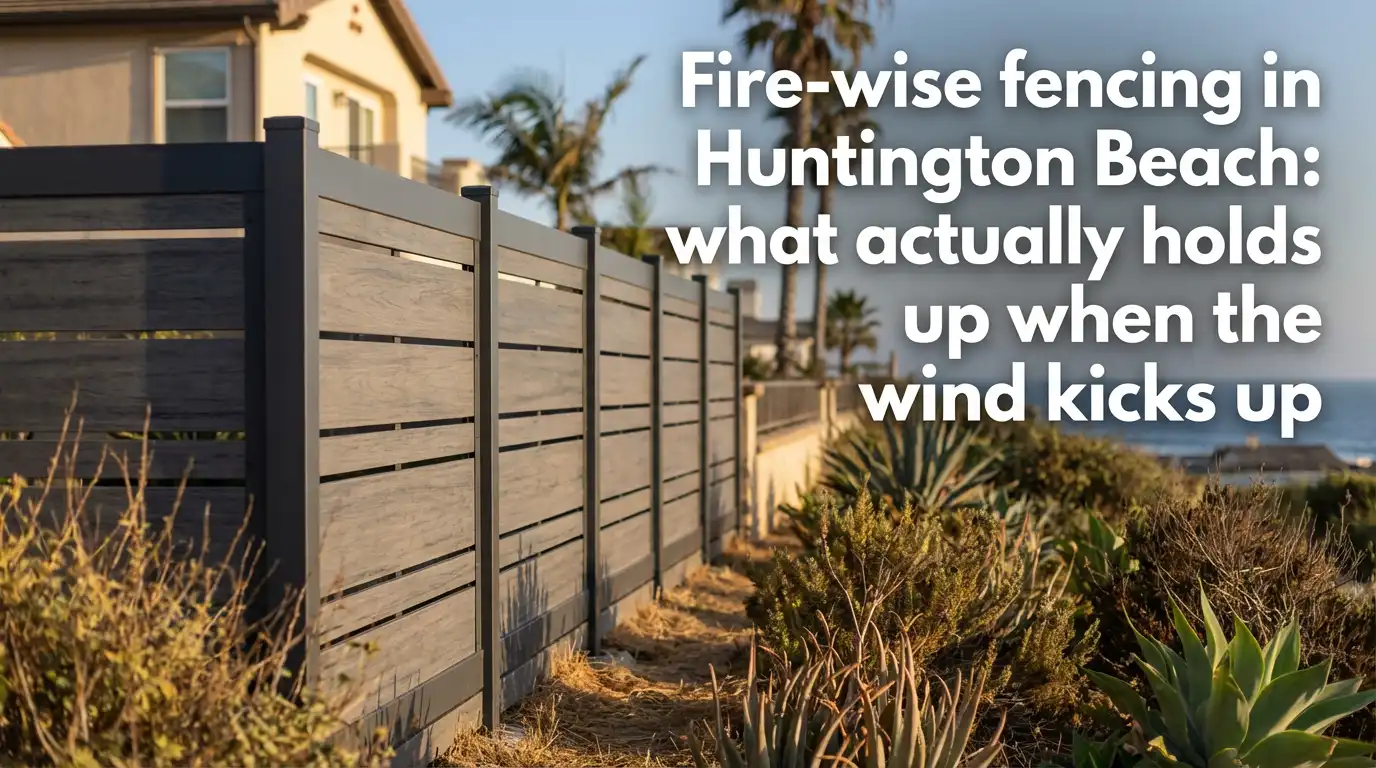
If you’ve been pricing a new fence in Huntington Beach, you’ve probably noticed the push and pull: you want something that looks clean and holds up in salty air, and you also don’t want a fence that turns into kindling if embers end up in the wrong place.
That’s where Fire wise aluminum, steel and composite fencing. in Huntington Beach comes in. Plainly: aluminum and steel are non-combustible, and composite can make sense in the right spots—especially if you’re planning around California defensible space ideas like Zone 0.
This guide explains what “fire-wise” means for fencing, how Huntington Beach conditions affect material choices, and how to lay out a fence line that works with your property, your HOA rules, and the Authority Having Jurisdiction (AHJ)—the city/county agency that interprets and enforces local code.
Need a non-combustible fence that still looks residential?
See aluminum fence systems built for coastal durability, clean lines, and fire-aware near-structure transitions.
Explore Aluminum FencingThe local fencing reality in Huntington Beach (and why fire-wise is part of it)
Huntington Beach isn’t a mountain town, and most neighborhoods don’t feel like “wildfire country” the way parts of inland Orange County do. But ember exposure isn’t limited to forests. Wind can carry embers from structure fires too, and fences can act like a path for fire along a property line toward a home—especially when the fence ties into a gate, a side yard, a deck, or anything attached to the structure.
In Huntington Beach, the questions we hear most from homeowners in Pacific City, Downtown Huntington Beach, and Seacliff aren’t dramatic. They’re day-to-day:
You’ve got an older wood fence that’s warped from sun and moisture swings. Or posts are leaning because the bottom rails never really played well with the soil. Or you’re sick of repainting every couple of years because the ocean air at PCH and around Huntington Beach Pier eats cheap coatings.
Then there’s the rules side. California has been moving toward clearer defensible space expectations near buildings, including the idea of Zone 0—the first 0–5 feet around a structure where the goal is to limit combustible materials. Homeowners also ask about AB 3074 fencing requirements, usually because they saw it mentioned online or an inspector brought it up in conversation. For most residential projects, the practical takeaway is simpler than the headlines: if you’re trying to reduce ignition risk near a home, treat the area right next to the structure differently than the rest of the yard.
That’s why “fire-wise” fencing in Huntington Beach usually turns into a design conversation: where does the fence touch the house, what’s the gate frame made of, what’s the clearance above grade, and what materials sit within a few feet of walls, vents, and eaves.
One more local factor: plenty of Huntington Beach homes have tight side yards. When the fence runs close to the house, the material choice matters more because you don’t have much room to create separation between a heat source and the structure.
Why Huntington Beach homeowners choose aluminum, steel, or composite for fire-wise fencing
There isn’t a perfect fence material. There’s only “right for this property line, this exposure, and how much maintenance you’re willing to live with.” In Huntington Beach, decisions usually come down to combustibility, corrosion resistance, and how the fence looks after five summers.
Aluminum fencing: non-combustible and practical near structures
Aluminum is a common pick for non-combustible fencing because it won’t ignite the way wood can. For Zone 0-style planning, that matters most where fencing is closest to the house—side yards, returns that tie into stucco, and gate frames near garage walls.
In Huntington Beach, aluminum’s other plus is that it generally handles coastal conditions well when it’s powder-coated correctly. You’ll still want quality hardware (hinges, latches, fasteners) because ocean air is rough on mixed metals.
Style-wise, aluminum works for the “modern fence design” look a lot of homeowners want—clean lines, horizontal layouts, or simple vertical pickets with a contemporary gate.
Steel fencing: stronger, still non-combustible, but coating quality matters
Steel is also non-combustible, and it’s often the choice when you need more rigidity—taller panels, longer spans, or a gate that gets used constantly.
But Huntington Beach is also where steel quality shows up later. If steel isn’t properly galvanized and coated, corrosion turns into a maintenance headache. This isn’t a place to guess. Ask what coating system they’re using and where the steel will be exposed to standing moisture (sprinklers, planters, drip lines).
Steel can look great in modern designs—especially if you want slimmer profiles or a more architectural look. It’s also a common choice for “front yard statement” fencing when you want curb appeal without relying on wood.
Composite: place it thoughtfully, especially near the house
Composite fencing and composite decking tend to get wrapped into the same project because a lot of homeowners plan them together: new side-yard fence, new gate, maybe a small landing or deck.
Composite is popular because it doesn’t rot, doesn’t need paint, and can give you privacy with a consistent finish. Fire behavior depends on the exact product and how it was tested. If you’re looking at composite as part of a fire-conscious plan, stick with products that publish test data. A common reference point people ask about is ASTM E84.
Here’s the plain-English version: ASTM E84 measures surface burning characteristics (flame spread and smoke developed) on a material sample. It’s not a “won’t burn” label, and it doesn’t recreate every real-world condition. But it can help you compare products.
With a Zone 0 approach, a lot of homeowners land on a hybrid layout: metal fencing close to the structure (where non-combustible matters most), then composite or other materials farther out where you’ve got better separation distance.
The honest wood comparison (because it still comes up)
Wood fencing still has a place in Huntington Beach: it’s familiar, it can pencil out better on price, and it’s easy to repair. But from a fire-wise standpoint, it’s combustible, and it can act like a “fuse” if it connects directly to the house. If you like the look of wood, a common compromise is wood farther from the structure and aluminum or steel for the return near the home.
What to look for in a Huntington Beach fire-wise fencing provider
When you’re hiring for fire resistant fencing or a wildfire compliant fence approach, the contractor’s material judgment matters as much as clean installation. In Huntington Beach, you’re also juggling HOA rules, coastal exposure, and whatever your property line allows.
Ask how they handle Zone 0-style design around the house
Even if your neighborhood isn’t formally labeled a fire hazard severity zone, Zone 0 is still a useful way to think: keep the first 0–5 feet next to the structure as non-combustible as you reasonably can.
A good provider should be able to walk your side yard and answer questions like:
If the fence touches the house, can we change the connection detail? Do we need a non-combustible gate frame where the latch side sits near the wall? Is there a better way to terminate the fence so it doesn’t act like a continuous fuel line?
Get clear on what “non-combustible” means (and what it doesn’t)
Aluminum and steel are generally non-combustible as materials, but the full fence assembly can still include things like:
- Post caps
- Infill components
- Gaskets
- Powder coating
- Hardware
You’re not chasing perfection. You just want a contractor who can tell you what’s metal, what isn’t, and why each piece is there.
Make them talk about corrosion, not just fire
In Huntington Beach, corrosion is the real performance test. If a company can’t explain how they avoid galvanic corrosion (for example, mixing stainless fasteners with certain metals in the wrong way), you’ll be the one swapping out hardware later.
A practical question: “What hardware do you use for gates within a mile of the ocean?” If they answer with brand/spec details and talk about keeping sprinkler overspray off the metal, that’s usually a good sign.
Confirm how they work with your AHJ and HOA
AHJ means Authority Having Jurisdiction—the local department that has the final say on interpretation and approvals. In Huntington Beach, depending on what you’re building, that can mean city requirements, HOA design rules, or both.
You want a contractor who helps you avoid the usual mistakes:
Installing a fence height/style that violates HOA rules Placing posts over utilities without planning Building a gate swing that conflicts with setback or sidewalk clearance
And if you’re specifically asking about AB 3074 fencing requirements, the right answer shouldn’t be a blanket promise. It should sound more like: “Let’s confirm what applies to your property and what your local AHJ expects, then we’ll design around that.”
Look for documentation you can keep
For property managers and HOA boards, the “win” is often paperwork: material cut sheets, product data, and a basic plan showing where non-combustible sections are installed. It’s also handy if you ever need to explain defensible space choices during a sale or an insurance update.
Huntington Beach-specific considerations that change the fence plan
Salt air and sun exposure: coating and color aren’t cosmetic details
Huntington Beach sun is strong, and UV plus salt air can wear finishes down fast. Dark colors can look great, but they also show salt residue and water spots more easily. Powder coating quality matters here.
If your fence is near Main Street or closer to the coast by Pacific Coast Highway, assume you’ll rinse it down more often than someone farther inland. Even a quick hose rinse every few weeks helps keep buildup from sticking.
Wind: design for gusts, especially with privacy panels
Privacy fencing catches wind. That’s a real issue in coastal Huntington Beach where gusty days aren’t rare.
A contractor should think through:
Panel reinforcement on longer runs Post spacing and footing depth Gate bracing so it doesn’t sag over time Whether a semi-private design (small gaps) makes sense for airflow
Tight side yards: heat pathways and attachment details
A lot of Huntington Beach homes have narrow side yards where fences run close to stucco, vents, and eaves. In those spots, the goal isn’t big promises about fire behavior. It’s reducing easy ignition pathways.
That can mean using metal fencing for the portion closest to the house, keeping plants trimmed back, and avoiding wood-to-wall contact.
Year-round outdoor living: fencing and decking plans collide
Because patios get used year-round in Huntington Beach, fencing projects often tie into a deck plan. Composite decking can be a solid low-maintenance choice, but it should be planned with the same “near-structure” mindset. Where does the deck meet the house? What’s underneath it? How is it vented? Those details matter more than whatever the board’s marketing label says.
Local data point worth knowing
CAL FIRE’s defensible space model is built around the idea that the first five feet next to a structure (Zone 0) should be kept as ignition-resistant as possible by limiting combustible materials and reducing ember traps. People talk about it a lot because embers are a common cause of home ignitions in wildfires. What you’ll actually be held to can vary by property location and local enforcement, so it’s worth confirming with your AHJ.
Getting started with fire wise aluminum, steel and composite fencing in Huntington Beach
Start with your property line and your “touch points.” Literally: where does the fence touch a structure, a gate post, a deck, or a side-yard return? Those are the spots where non-combustible materials like aluminum and steel usually make the most sense.
Then decide what you need the fence to do:
If it’s mostly privacy, you may lean composite or a privacy-oriented metal design. If it’s pool safety or a front yard boundary, aluminum often fits cleanly. If you need strength for a heavy-use gate, steel is usually the better conversation.
Modern Fence & Deck typically starts Huntington Beach projects with a site walk to map the fence line, confirm elevation changes, and talk through where a Zone 0-style approach fits your layout. If you want to talk through materials or a mixed-material plan (metal near the home, composite farther out), call (619) 975-1883.
Conclusion: a fire-wise fence plan that still looks like Huntington Beach
Most homeowners don’t want a fence that screams “code.” They want something that fits the neighborhood, holds up near the ocean, and avoids obvious risks near the house.
In Huntington Beach, the plan is often pretty straightforward: use non-combustible aluminum or steel closest to the structure, be picky about where you use composite, and design gates and connections so the fence doesn’t turn into an easy pathway. If you’re weighing options for Fire wise aluminum, steel and composite fencing. Huntington Beach CA, Modern Fence & Deck can help you sort through materials, layout, and local constraints without making it feel like a chemistry class.
FAQ
Does Huntington Beach require Zone 0 fencing? It depends on your property and which rules apply in your area. “Zone 0” is a defensible space concept used across California, but enforcement and details vary by AHJ. If you’re not sure, confirm with the City of Huntington Beach or your local fire authority.
Is aluminum fencing actually non-combustible? Aluminum is generally considered non-combustible as a material. The full fence system still includes coatings and hardware, so the better question is how the assembly is handled where it meets the house.
Is composite fencing fire-resistant? Some composite products publish fire test data (often referenced with ASTM E84). Composite can still be combustible, so it’s usually best when you’ve got separation distance and thoughtful placement.
What’s the difference between steel and aluminum fencing near the coast? Both are non-combustible. Steel can be more rigid, but coating and corrosion protection matter more in salty air. Aluminum generally resists corrosion well when it’s finished correctly.
Can a new fence help with insurance? Maybe, but it depends on your carrier and your policy. Don’t plan a fence project around an insurance promise. Plan around materials, layout, and defensible space basics, then ask your provider what they recognize.
Disclaimers: Fire ratings, defensible space expectations, and compliance requirements vary by jurisdiction and inspection. Always confirm requirements with your AHJ (Authority Having Jurisdiction). Insurance outcomes depend on individual policies and circumstances.
Verification note (updated March 26, 2026): Regulatory requirements can vary by parcel, jurisdiction, and inspection cycle. Confirm current requirements with your AHJ and official California sources before final design or contract decisions: PRC 4291, Board of Forestry Zone 0 updates, and OSFM FHSZ maps.