Poway homeowners: what “fire-wise” fencing really means (and what to install near your house)
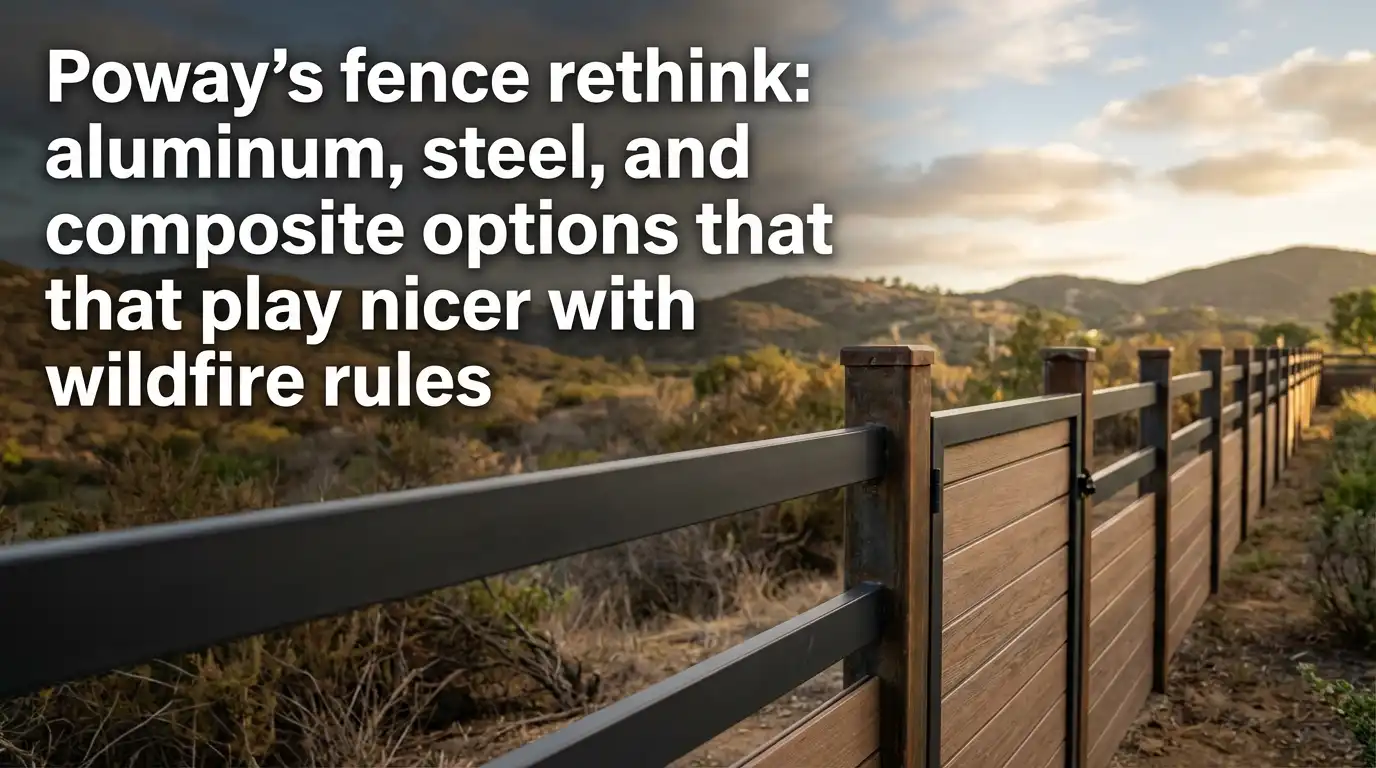
If you’ve been getting fence quotes in Poway and keep hearing “Zone 0,” “non-combustible,” or “wildfire compliant,” you’re in good company. A lot of homeowners are replacing old wood fencing with something less likely to ignite from wind-blown embers—and something that lines up with California defensible space expectations.
This guide is for people searching Fire wise aluminum, steel and composite fencing. in Poway and trying to separate what’s practical from what’s just sales talk, and what actually gets installed around homes here. We’ll walk through fire resistant fencing, where aluminum fencing and steel fencing California options make sense, when composite is a reasonable middle ground, and what to ask your AHJ (Authority Having Jurisdiction) before you sign off.
You’ll also see Poway-specific factors—sun, wind, slopes, and HOA rules—plus a straightforward way to get started without having to become a code nerd.
Working on a project in Poway?
See local service options, material guidance, and nearby project coverage for Poway.
Explore Poway1) The local fencing picture in Poway: why “fire-wise” is coming up so often
Poway sits in the middle of the stuff that makes fencing decisions in San Diego County feel a little different: long hot/dry stretches, Santa Ana wind events, brushy edges, and neighborhoods that back up to canyons and open space. Even if you’re not on a backcountry road, you’ve probably noticed more talk about defensible space and ember exposure.
A few local realities shape what people search for and what ends up getting built:
Poway has a lot of wildland-urban interface (WUI) conditions. Think areas near Old Poway Park, parts of Green Valley, and homes along the open-space edges near Blue Sky Ecological Reserve. That doesn’t mean every lot follows the same requirements, but it does mean homeowners are paying more attention to what’s closest to the structure.
Then there’s the way people now think about the first few feet around the house. California’s “Zone 0” concept (the 0–5 foot area next to structures) has nudged more homeowners toward non-combustible fencing where a fence meets the home, especially at side yards and gate returns. If your fence is attached to the house (or ends right against it), the material choice matters more than it did 10–15 years ago.
Poway also has plenty of slope and tiered yards. Combine slope with wind and you get embers that can drift and settle in corners—often the same corners where fences, gates, and side-yard storage end up. That’s one reason you’ll hear more requests for metal fencing and cleaner “modern fence design” layouts that don’t create extra ledges and pockets.
And then there are HOAs and streetscape rules. In places like Rancho Arbolitos and Old Poway (and nearby pockets off Poway Road), you may run into limits on height, color, and visibility. Powder-coated aluminum and steel usually do well here because you can keep a modern look while dialing in privacy and staying non-combustible near structures.
The takeaway: “fire-wise fencing” in Poway usually isn’t one magic product. It’s picking the right material in the right spot—especially within that first 5 feet.
2) Why Poway residents pick aluminum, steel, and composite (and where each one fits)
When someone asks for fire safe fencing, they’re usually trying to fix one of these: a fence that’s rotting or warping, a fence that needs constant repainting, or a fence close enough to the home that they don’t want something that can catch from embers.
Here’s how the common “fire-wise” materials actually behave day to day.
Aluminum fencing: non-combustible, low maintenance, clean lines
Aluminum is non-combustible. In plain terms, it won’t ignite from embers the way wood can. For Poway homeowners, aluminum is often the easy pick for side yards, gate returns, and anywhere a fence ends at the house.
A few details worth checking when you’re comparing bids:
Aluminum fence systems are usually powder-coated. That finish holds up well in Poway sun, but color still matters. Dark bronzes and blacks look good with modern designs, though they can show dust faster during dry months.
Aluminum is lighter than steel. That helps with corrosion and handling, but it also means you want a solid post and footing plan—especially with wider panels or privacy inserts.
If you’re trying to align with Zone 0 fencing California expectations near structures, aluminum is generally a straightforward “yes” from a material standpoint. The design details (gaps, attachments, and whether combustible material sits right behind it) still matter.
Steel fencing: strength, tighter tolerances, and a more “architectural” feel
Steel is also non-combustible, and people tend to pick it when they want a heavier, more rigid fence—often for front-yard fencing, security, or more structured modern designs.
In Poway, steel often shows up for:
Front entries where you want a squared-off look and a gate that won’t rack over time.
Longer runs where stiffness matters, or where wind pushes on panels.
Custom gates (vehicle and pedestrian) where the frame needs to stay straight.
Steel needs real corrosion protection—usually galvanizing and/or a quality powder coat. If you’re comparing “steel fencing California” proposals, ask exactly what coating system they’re using and where. Not all coatings are the same, and cut ends and weld points need to be handled correctly.
Composite fencing and composite decking: where it helps, and where it doesn’t
Composite is popular because it stays consistent, doesn’t warp like wood, and doesn’t lock you into the same repainting cycle. But it’s not in the same bucket as aluminum or steel when you’re talking non-combustible fencing.
Composite products vary a lot. Some have published fire test results and may make sense in certain uses, but many composite boards are still combustible. If you’re thinking about defensible space fencing, composite is often better outside the closest-to-structure area or in layouts where the fence doesn’t connect directly to the home.
This is where people get tripped up: “fire-resistant” in marketing language isn’t the same thing as “non-combustible.”
If you’re considering composite, ask for the product’s fire testing information. A common reference is ASTM E84, which measures surface burning characteristics. You’ll sometimes hear “Class A” tied to this. That rating describes flame spread and smoke developed under that test—it’s useful, but it doesn’t turn a material into something non-combustible. And it doesn’t replace what your local AHJ expects near structures.
Composite can still be a solid choice in Poway when you want privacy, cleaner lines than wood, and less upkeep—especially when it’s paired with metal posts or when the first 5 feet near the house is handled with metal.
A simple way to think about “fire-wise” layouts in Poway
A lot of the best installs aren’t “all one material.” They’re mixed-material plans:
Use steel or aluminum where the fence meets the house, at side-yard gates, and at any return panels directly next to the structure.
Use composite farther out for privacy runs if your HOA prefers a solid look.
Avoid ember-catching ledges (horizontal caps, deep trim profiles) right next to the home.
That’s usually how you get a fence that looks modern, holds up, and tracks defensible space intent without turning the whole yard into metal.
3) What to look for in a Poway fire-wise fencing contractor (without getting buried in jargon)
Most fence issues don’t come from the material itself. They come from layout choices, how things attach, and the install details. If you’re hiring a contractor for Fire wise aluminum, steel and composite fencing. Poway CA, here are the checks that tend to matter.
Start with the AHJ question (and make them define it)
Your AHJ (Authority Having Jurisdiction) is the local agency that interprets and enforces applicable codes for your property. In Poway, that can involve city requirements and/or Cal Fire standards depending on where you are.
A good contractor won’t wing it. They’ll ask where your property is (WUI or not), whether you’re in an HOA, and how the fence ties into the structure.
Ask how they handle “the first five feet” (Zone 0 thinking)
You don’t need to memorize AB numbers to ask a smart question. Just ask:
“How do you handle the section of fence within 5 feet of the house?”
Listen for practical answers: metal return panels, non-combustible gate frames, and avoiding wood posts right next to siding. If someone jumps straight to “everything is compliant” without first asking where the fence touches the home, treat that as a red flag.
You mentioned AB 3074 fencing requirements in your research. The bigger point is that California keeps pushing toward better ignition resistance near structures. Your fence plan should match that direction, even if the exact details change by property and inspector.
Footings and slopes: Poway yards aren’t flat
In areas with grade changes (common near canyon edges), a fence that looks perfect on install day can shift later if posts aren’t set right.
Ask what they’re planning for:
Post depth and diameter for your soil conditions
Stepping vs racking (especially for metal panels)
Gate posts (heavier footings, tighter tolerances)
This is also where steel often makes sense: when it’s installed properly, it stays rigid across longer spans.
Hardware and gates: the part you touch every day
With “modern fence design,” gates are where a project either feels good or becomes a daily annoyance. Ask what hinge/latch hardware they’re using, whether it’s rated for exterior coastal-inland conditions, and what they do to prevent sag.
Poway isn’t right on the coast, but you still want exterior-grade hardware that won’t seize up after a couple seasons of heat and dust.
Get clarity on what’s documented
For property managers and HOAs, paperwork matters. Even as a homeowner, it helps to get:
Product spec sheets (especially for composite)
A simple layout drawing
Finish and color info (powder coat codes)
Any notes about how the fence ties into the house
No contractor can promise every inspector will treat every edge case the same way. But good documentation keeps the conversation concrete.
4) Poway-specific conditions that change material choices
Poway isn’t just “San Diego County.” The heat, wind, and lot layouts change what works.
Heat and UV: darker colors look great, but plan for it
Poway summers get hot, and UV is no joke. Powder-coated aluminum and steel handle UV well, but darker colors can get warmer to the touch and show dust. Composite boards can expand and contract; spacing and the fastener system matter more in hot inland neighborhoods than they do closer to the marine layer.
If your fence line runs along a west-facing exposure, ask about expansion allowances and how the system handles long runs.
Wind-driven debris: reduce “ember traps” and leaf catch points
Even before you bring fire into it, Poway gets plenty of wind-driven leaves and debris. Fence designs with lots of horizontal shelves, deep caps, and tight corners collect material. Cleaner profiles are simply easier to keep clear.
If your property sits near open space (common around Poway’s edges), this is one place where a minimal metal design can be the practical move.
Irrigation and sprinklers: corrosion and staining are installation problems, not just material problems
If sprinklers hit your fence every day, you’ll see mineral staining and faster wear—especially at the base of posts and on gate hardware.
A Poway-friendly plan often means adjusting sprinkler heads, using drip lines near the fence, and setting posts/plates so water doesn’t pool. Not glamorous. But it’s the difference between a fence that stays clean and one that looks rough after two seasons.
HOAs and sightlines: modern doesn’t have to mean “see-through”
Some Poway neighborhoods want traditional privacy lines. Others allow open modern metal styles.
If you need privacy but want to keep the fence non-combustible near the house, a common approach is metal framing with carefully chosen infill—then keeping those infill choices farther from the structure where rules are looser. Your AHJ and HOA decide the final version.
A note on fire ratings and compliance (so expectations stay realistic)
Fire ratings and “compliance” depend on where your property is and what your inspector is looking for. Product testing like ASTM E84 (surface burning) can help you compare materials, but it doesn’t replace local requirements.
If you’re trying to line up with wildfire compliant fence expectations, treat the first 0–5 feet near structures as its own mini-project and design it on purpose.
5) Getting started with fire-wise aluminum, steel, and composite fencing in Poway
If you want to get this moving without months of back-and-forth, here’s a process that tends to work well in Poway.
First, walk the property and mark where the fence actually touches the house (side-yard returns, gate posts, and any sections that stop at a wall). Those spots usually drive the “Zone 0” conversation.
Next, decide what problem you’re solving: privacy, pool safety, front-yard curb appeal, or replacing a deteriorating wood fence. That choice helps narrow whether aluminum pickets, steel panels, or composite privacy boards make the most sense.
Then, take 10 minutes and gather the constraints: HOA rules (if you have them), property line info if there’s any doubt, and a couple photos of grade changes. In Poway, slope and drainage details save time later.
Modern Fence & Deck can walk you through material options—Aluminum Fencing, steel, and composite—then put together a plan that keeps non-combustible materials where they matter most and matches the look you want for the rest of the run. To talk through your layout, call (619) 975-1883.
Conclusion: a practical path to fire-wise fencing in Poway
Most Poway homeowners don’t need to swap every foot of fence to metal to make smarter fire-wise choices. A more practical approach is targeted: use non-combustible aluminum or steel where the fence meets the structure, avoid ember-catching details, and use composite where it makes sense for privacy and style.
If you’re comparing options for Fire wise aluminum, steel and composite fencing. in Poway, we can help you map the fence line, find the Zone 0 pinch points, and pick materials that fit your lot and your HOA. Reach Modern Fence & Deck at (619) 975-1883 and we’ll start with the layout and constraints—then work outward from there.
FAQ
Do I need metal fencing for Zone 0 in California?
Zone 0 is the first 0–5 feet next to structures. In many cases, non-combustible fencing (like aluminum or steel) is the simplest way to reduce ignition risk where a fence meets the house. Exact expectations can vary by AHJ (Authority Having Jurisdiction), so it’s worth confirming how your property is classified and how the fence attaches.
Is composite fencing considered fire-resistant?
Some composite products have published fire testing (often referenced with ASTM E84). That can help for comparison, but composite isn’t automatically non-combustible. If the fence sits right next to the structure, many homeowners use aluminum or steel for that section and put composite farther out.
Will a “wildfire compliant fence” help with insurance?
Insurance outcomes depend on your policy and carrier. A fire-wise fence plan can support a stronger overall defensible space approach, but no contractor should promise premium changes. Ask your insurer what they actually recognize.
What’s better in Poway: aluminum or steel?
Aluminum is lighter and highly resistant to corrosion; steel is stiffer and often preferred for heavier gates and more rigid modern designs. The right call depends on gate size, wind exposure, and run length—especially on slopes.
Can you replace only the section of fence that touches the house?
Often, yes. Many Poway layouts work well with a metal “return” section near the structure, then a different material for the rest of the boundary. Whether it looks seamless comes down to design details like post spacing, color matching, and transitions.
Disclaimers
Fire ratings and code expectations vary by jurisdiction and property conditions. Always confirm requirements with your local AHJ (Authority Having Jurisdiction). Insurance outcomes depend on individual policies and circumstances.
Verification note (updated March 26, 2026): Regulatory requirements can vary by parcel, jurisdiction, and inspection cycle. Confirm current requirements with your AHJ and official California sources before final design or contract decisions: PRC 4291, Board of Forestry Zone 0 updates, and OSFM FHSZ maps.