Zone 0 fences in Pacific Palisades: when aluminum, steel, and composite actually make sense
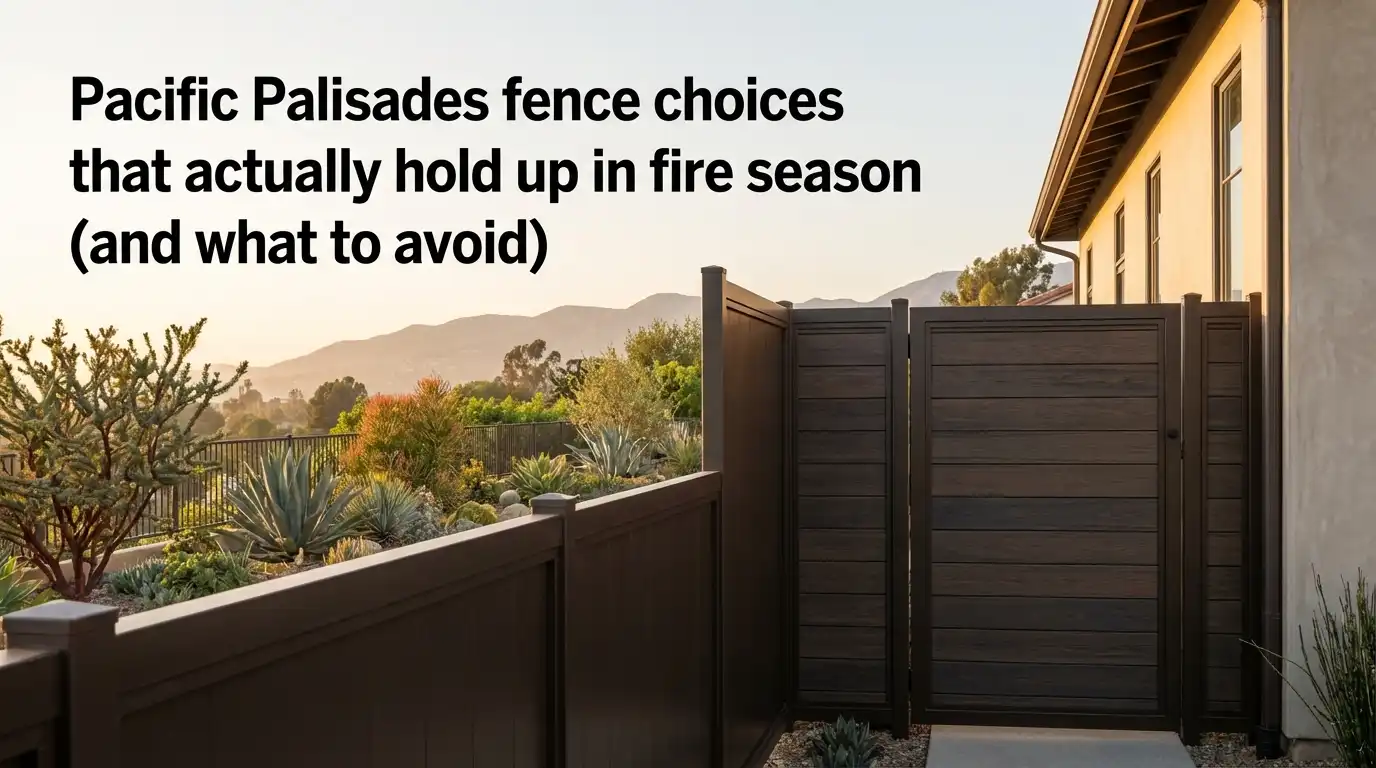
Pacific Palisades has a familiar headache: you want a fence that fits the house, doesn’t turn into a constant upkeep job, and doesn’t add fuel right up against the structure.
If you’re searching for Fire wise aluminum, steel and composite fencing. in Pacific Palisades, you’re usually trying to balance three things at once: wildfire defensible space expectations, HOA/design review rules, and the fact that coastal sun + salt air will punish the wrong materials.
This guide explains what “fire-wise” actually means at the fence line, how non-combustible aluminum and steel fencing fits into Zone 0 fencing California conversations, where composite can still make sense (and where it usually doesn’t), and what to ask your installer before you sign.
Working on a project in Pacific Palisades?
See local service options, material guidance, and nearby project coverage for Pacific Palisades.
Explore Pacific Palisades1) The fire-wise fencing picture in Pacific Palisades isn’t one-size-fits-all
Pacific Palisades is one of those places where microclimates and topography aren’t just talk. You’ve got ocean moisture near the bluff and canyon winds pushing drier air inland. Neighborhoods like The Highlands, Marquez Knolls, and the Huntington Palisades look close on a map, but the exposure can be totally different depending on slope, vegetation, and whether you’re near a canyon edge.
That’s why most “fire-wise” fence decisions here start with a simple question: Where is the fence in relation to the house and other structures?
California’s defensible space approach is strictest right next to the home. People often use “Zone 0” to mean the first 0–5 feet next to a structure, where you want non-combustible surfaces and details so embers don’t get an easy foothold.
Fencing gets messy in that 0–5 foot band because a fence often ties into the house at a side-yard gate, returns to a wall, or runs tight along eaves and siding. If the fence is combustible (like redwood), it can act like a wick. If it’s non-combustible (like aluminum or steel), it won’t ignite the same way—but you still have to think about what can pile up against it (leaf litter, mulch, stored items, planter boxes).
In Pacific Palisades, design constraints also push material choices around:
Some streets want a modern horizontal look, but wood horizontals right near a structure can clash with Zone 0 goals.
Some properties have grade changes and retaining conditions where a fence is part of a bigger system—posts, footings, drainage, and sometimes a wall.
And salt air is real. If you’re closer to Pacific Coast Highway (PCH) or up near Sunset Boulevard with strong marine influence, corrosion resistance and coating quality stop being theoretical.
Finally, enforcement and expectations depend on your AHJ (Authority Having Jurisdiction)—usually the local building department and fire authority that interpret and enforce requirements for your address. Two homes a few blocks apart can get different plan check notes depending on scope, permit triggers, or hazard designations.
2) Why Pacific Palisades residents choose aluminum, steel, and composite (and where each wins)
Most homeowners start with the look, then end up making decisions based on performance. That’s normal. Here’s how the three “fire-wise” buckets usually shake out under Pacific Palisades conditions.
Aluminum fencing: non-combustible, low maintenance, and easier near the house
Aluminum comes up a lot in Zone 0 fencing California conversations for a straightforward reason: it’s non-combustible. It doesn’t become fuel right next to your exterior walls.
For Pacific Palisades homes, aluminum also works well with modern architecture. You can do clean picket styles, slatted privacy looks (depending on the product line), and powder-coated colors that tie in with window frames and trim. And unlike iron, you’re not constantly battling rust.
What to watch:
Aluminum systems aren’t all built the same. Powder coat quality and hardware quality are usually what separates a fence that stays tight and good-looking from one that chalks, fades, or starts rattling.
If you want a “solid privacy” look in aluminum, pay attention to panel stiffness and wind load—especially on exposed lots.
Steel fencing: non-combustible with strength that helps on slopes and wind-exposed sites
Steel is also non-combustible, and it’s often the pick when you want slimmer profiles with more rigidity, or you’re dealing with tougher conditions—grade changes, longer spans, or higher wind exposure.
In neighborhoods like The Highlands where hillside conditions show up fast, steel can be a practical choice because it handles structural demands without forcing oversized sections.
What to watch:
Steel needs real corrosion protection. “Painted steel” isn’t a spec—ask whether it’s galvanized, what coating system is used, and what the warranty actually covers.
Dissimilar metal contact matters. If steel parts touch incompatible fasteners without isolation, corrosion can start at the connection points.
Composite fencing: great for privacy and looks, but not a Zone 0 default
Composite gets pulled into these conversations because people want the warmth of wood without the constant upkeep. Composite can be a solid choice in the right layout. But it doesn’t behave like aluminum or steel in a fire.
Composite boards typically aren’t “non-combustible.” Some products may carry a Class A flame spread rating under ASTM E84 (that test measures flame spread and smoke development on a surface), but Class A doesn’t mean a material can’t burn in every situation. It means it performed well in that specific test setup.
So where does composite fit in Pacific Palisades?
Composite can make sense for sections that aren’t in the 0–5 foot zone or where the fence is separated from the structure and detailed to reduce ember-trap spots.
Composite is often chosen for privacy, sound buffering, and a consistent look, especially along busy edges near Sunset Blvd corridors.
What to watch:
If you’re trying to meet “Zone 0” expectations, composite right against the house can raise eyebrows. A common hybrid approach is metal framing + careful transitions so the portion closest to the home is non-combustible.
Composite fences can still fail early if the framing is sloppy. Posts, rails, and fasteners decide whether panels stay straight.
3) What to look for in a Pacific Palisades fire-conscious fencing provider
When you hire a fence contractor in Pacific Palisades, you’re not only paying for materials. You’re paying for layout judgment, permitting familiarity, and details that keep the fence from turning into a maintenance headache.
Here’s what we suggest you look for if your goals include fire resistant fencing and wildfire compliant fence outcomes.
They can explain Zone 0 without pretending every property is identical
A good provider won’t promise “guaranteed compliance.” They’ll explain what they can control—materials, spacing, transitions, gates, and attachments—and what the AHJ decides.
Ask how they handle the most common weak spot: where the fence meets the house.
Practical options include:
A non-combustible return section (aluminum/steel) for the first run near the structure.
A break in continuity so a combustible section doesn’t attach directly to siding.
Gate and latch hardware chosen for durability and safe egress.
They talk about ember traps, not just the fence panels
In a wind-driven ember event, fences usually don’t fail because a panel “spontaneously ignites.” They fail because embers land in predictable collection spots—corners, the base of the fence, behind planters, against stored items.
Your installer should be willing to walk through:
How they keep the bottom edge from turning into a debris shelf.
Whether you should avoid bark mulch along the fence line.
How gates will clear grade changes without leaving a gap you can’t stand.
They understand coatings and corrosion near the coast
In Pacific Palisades, coatings are part of the performance spec.
For aluminum, ask about powder coating standards and warranties.
For steel, ask if it’s galvanized and how it’s finished.
And ask what happens at cut edges, welds, and fastener penetrations—those are usually the first places corrosion shows up.
They don’t dodge AB 3074 questions
You’ll hear AB 3074 fencing requirements in wildfire discussions. If you ask about it and the installer gives you a vague answer, slow down.
What you want is a contractor who can say: “Here’s what the state guidance says in plain language, here’s what usually gets flagged in plan check, and here’s why we still confirm with your AHJ.”
Because in real life, jurisdiction interpretation and project scope decide what actually gets enforced on your job.
They build gates like you’ll use them every day
A fire-wise fence that drags, slams, or falls out of alignment turns into the thing you avoid—until you need it and it fails.
Ask what they use for:
Hinges (brand and load rating)
Latches (self-latching needs for pools, if applicable)
Drop rods for double gates
Post sizing and footing depth (especially on slopes)
4) Pacific Palisades-specific considerations that change the “best” fence choice
Pacific Palisades has a few local realities that nudge people toward aluminum and steel, and it’s not only about wildfire.
Wind patterns and canyon influence
If you’re near a canyon edge or an open exposure, wind load matters. Solid privacy fences catch more wind than open designs. That doesn’t mean you can’t do privacy. It means you’ll need better engineering: heavier posts, better footings, and stiffer framing.
Steel often wins on stiffness. Aluminum can work too, but the system has to match the site.
Coastal corrosion and finish wear
Salt air doesn’t rust aluminum the way it rusts unprotected steel, but it can still chew up cheaper finishes. You want a fence that still looks intentional in five years, not something that’s faded to a different shade on the street-facing side.
If your property is closer to Will Rogers State Beach or you’re frequently under marine layer conditions, ask more finish questions, not fewer.
Tight side yards, zero-lot-ish conditions, and attachments to structures
A lot of Palisades homes have tight side yards where the fence line runs close to stucco walls, vents, and utility areas.
That’s where defensible space fencing details really matter:
Avoid creating a “storage alley.” Keep combustible storage out of that strip.
Be careful with gate returns that attach directly to siding.
If you have a grill area, don’t jam it into a narrow fenced run.
HOA and design review expectations
Some pockets of Pacific Palisades have HOA or architectural review requirements. You may need specific height limits, view-preserving designs, or a particular finish.
Metal fencing can still feel warm and residential if it’s designed well—flat-top, tight picket spacing where needed, or a modern slat pattern that matches the home’s lines.
Seasonal California maintenance reality
Pacific Palisades gets dry seasonal conditions even with coastal influence. Vegetation drops, winds pick up, and debris collects at fence bases.
A non-combustible fence doesn’t erase maintenance. It shifts it. Instead of repainting wood, you’re clearing leaves, checking hardware, and keeping the fence line from turning into an ember catch zone.
5) Getting started with fire wise aluminum, steel and composite fencing. in Pacific Palisades
Most projects run smoother when you start with the site constraints, not a catalog page.
First, walk your perimeter and mark three zones: (1) fence sections within 5 feet of the house, (2) sections that tie into gates and driveways, and (3) everything else. That quick sketch usually tells you where non-combustible fencing is the cleanest answer.
Next, decide what you need the fence to do. Privacy? Pool safety? Keeping pets in? Securing side-yard access? In Pacific Palisades, a lot of homeowners end up with a mixed layout: metal where the fire/maintenance requirements are tight, and composite where privacy and street noise matter more.
Then book a site visit with a contractor who’ll talk through details like post placement, grade changes, and fence-to-house transitions. If you want to compare bids apples-to-apples, ask each contractor to specify:
The exact fence system or manufacturer line
Finish/coating specs
Post sizes and spacing
Gate hardware brands
How they handle the first 0–5 feet near structures
Modern Fence & Deck builds and installs Aluminum Fencing, steel fencing, and composite options for homeowners in Los Angeles County (including Pacific Palisades) and San Diego. If you want to talk through a fire-wise layout and material options, call (619) 975-1883.
Conclusion: a practical way to make a fence more fire-wise in Pacific Palisades
If your fence is close to the house, the simplest upgrade is often switching that near-structure run to non-combustible aluminum or steel and detailing it so it doesn’t collect debris. If you need privacy, composite can still be part of the plan—just not automatically right against the structure.
If you’re planning Fire wise aluminum, steel and composite fencing. Pacific Palisades CA, start with a site walk and a quick zone sketch, then confirm expectations with your AHJ (Authority Having Jurisdiction). Decisions come faster, and the final design usually fits the property instead of fighting it.
Verification note (updated March 26, 2026): Regulatory requirements can vary by parcel, jurisdiction, and inspection cycle. Confirm current requirements with your AHJ and official California sources before final design or contract decisions: PRC 4291, Board of Forestry Zone 0 updates, and OSFM FHSZ maps.