Your San Diego Fence Shouldn't Be a Wicking Stick: A Guide to Fire-Smart Materials
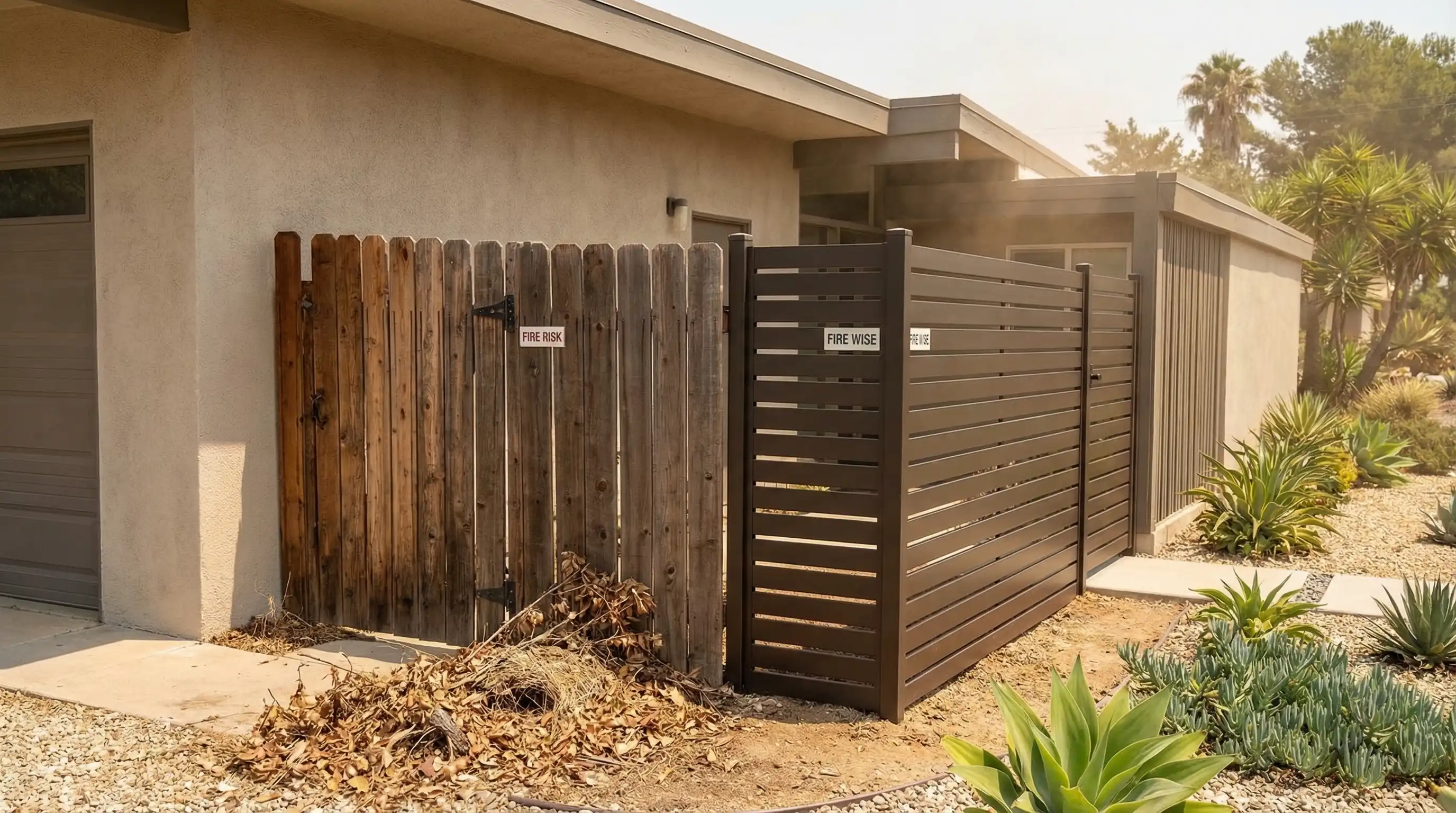
If you’re staring at your wooden fence in San Diego and wondering if it’s more of a liability than an asset, you’re on the right track. We’re way past picking stain colors. In a county where the Santa Ana winds can turn a spark into a disaster, what’s around your property matters. It’s not just about privacy or curb appeal anymore. If you live in the canyons of Tierrasanta, the hills of Scripps Ranch, or anywhere close to wildland, your fence line is part of your home’s defense.
This guide skips the fluff. We’ll cover why fire-resistant materials like aluminum, steel, and modern composites are shifting from a niche upgrade to a sensible standard here. You’ll get a straight breakdown of what these materials are, how they fit with California’s changing codes like AB 3074, and what actually makes sense for your street. Let’s talk about building something that lasts, looks decent, and doesn’t help a fire reach your front door.
The new reality for San Diego fences: It’s not about looks
San Diego’s fire season isn’t really a season anymore. It’s just the background condition. The mix of thick, dry brush—what fire crews call “fuel”—and those punishing fall winds creates a risk that’s built into the land. If you’ve driven through Rancho Bernardo after 2007 or near the 52 freeway more recently, you’ve seen the marks. The conversation has changed for good.
Need a non-combustible fence that still looks residential?
See aluminum fence systems built for coastal durability, clean lines, and fire-aware near-structure transitions.
Explore Aluminum FencingThis isn’t a hypothetical. Local fire marshals and the San Diego Fire-Rescue Department are now zeroed in on “hardening” homes. That means looking at every part of your property’s outside, from your roof vents to your deck, and asking, “Will this burn?” Your fence is a huge piece of that. A wooden fence, especially an old, dry one or one sitting in dry grass, can act like a fuse, carrying flames right to your siding. Swapping that fuse for a non-combustible barrier is one of the most effective physical changes you can make. It’s a different way of thinking: your fence isn’t just a boundary; it’s part of your defensible space.
Why aluminum, steel, and composite are the picks for San Diego backyards
So, what are people actually choosing? Vinyl melts, wood burns, and chain link gives you zero privacy. That leaves three main options getting attention from builders and homeowners.
Aluminum Fencing is the low-maintenance workhorse. Today’s powder-coated aluminum won’t rust, it’s tough, and it comes in styles from classic picket to sleek modern panels. The key for fire safety is that it won’t burn. An ember shower won’t light it up. For flat lots in neighborhoods like Clairemont or San Carlos where things tend to look tidy and traditional, aluminum is a straightforward, smart swap. You rinse it off now and then, and that’s about it.
Steel Fencing is the heavy-duty choice. Think of it as aluminum’s stronger, more solid cousin. It’s often used for custom, architectural looks—horizontal slat designs, heavy gates, and serious perimeter fencing. It needs a galvanized or powder-coated finish to fight rust in our coastal air, but done right, it’s probably the most permanent fix. If you’re on a hillside in Del Cerro with a view you want to frame, not block, steel’s strength allows for designs with thinner profiles and wider spans.
Composite Fencing is the newer option that confuses folks. “Composite” usually means a mix of wood fiber and plastic. For fire-resistance, you have to be very picky. You need a product rated as “non-combustible” or “ignition-resistant” assembly. Some high-end composites use mineral-based cores or special fire-retardant treatments to pass the tests. They give you the textured look of wood without the fire risk. This is a solid choice if your HOA in La Jolla or Poway has strict rules about looks but you still need to meet modern safety standards.
What makes a fence “fire-wise” in California? The details matter.
“Fire-resistant” sounds good, but it’s a range. When you’re looking at options, especially with new state laws, you need to check the specifics.
The big thing to get is AB 3074 and the idea of “Zone 0.” This law, which is rolling out, requires new construction in high-risk areas to have an “ember-resistant” zone within the first five feet of the home. That includes any fence attached to the house. CAL FIRE lists what materials qualify. Basically, the fence section that touches your house needs to be non-combustible (like metal) or an ignition-resistant assembly tested to handle embers. This isn’t a suggestion; it’s becoming code for risky spots.
Beyond the legal minimum, how you install it matters as much as the material. A steel fence won’t burn, but if you install it with a big pile of dry mulch and dead leaves piled against it, you’ve made a new problem. A proper fire-wise installation means:
- Gap at the Bottom: Leave space between the bottom rail and the ground. This stops debris from building up and keeps the fence from touching dry plants.
- Solid vs. Open Design: A solid-panel fence can act as a wind block, which might push embers and heat around in odd ways. Many fire-conscious designs include some airflow, like spaced pickets or perforated panels, to cut down on this.
- Attachment to the House: If a fence has to attach to the house, that section (at least the first five feet) needs to be the most fire-resistant material, with a break or a non-combustible gate section to stop a direct fire path.
San Diego-specific details: Coastal air, HOA rules, and hillside lots
Your zip code changes everything. A fence in Ocean Beach faces different issues than one in Alpine.
Coastal Corrosion: If you’re within a few miles of the Pacific, salt is your enemy. For metal fences, the quality of the finish is everything. A cheap powder coat will chip and fail. You need a marine-grade finish on aluminum or a hot-dipped galvanized coating under the powder coat on steel. Ask your installer about the finish warranty for coastal use.
HOA Approval: This is huge in planned communities like Carmel Valley or 4S Ranch. You might want a black steel horizontal slat fence, but your HOA rules might only allow “white vinyl or wood.” This is where having paperwork helps. Bring your HOA board product sheets showing fire-resistance ratings and notes on California’s building code changes. Frame it as a safety upgrade that protects the whole neighborhood, not just a style choice.
Slope and Wind: On a hillside lot in Mira Mesa or near the canyons, wind load is a real engineering issue. A solid fence acts like a sail. Lightweight aluminum could be a better pick than heavy steel in these windy areas. The foundation—how the posts go into the ground—gets critical. A simple concrete footer might not cut it; you might need engineered piers.
The Maintenance Myth: One appeal of wood is the idea that it’s natural and simple. But in San Diego’s sun, wood needs constant sealing and staining to avoid becoming brittle tinder. Aluminum needs a rinse. Composite might need a soapy wash. When you add up the cost and work of maintaining wood every two or three years, the “expensive” metal fence starts to look like a long-term deal.
Getting a fire-wise fence installed in San Diego: How to start
Don’t just call any fence company. You need someone who gets the local conditions and the specifics for non-combustible materials.
- Check Your Risk First. Look up the San Diego County Fire Hazard Severity Zone maps online. Is your property in a “Very High” or “High” zone? This tells you how strict you need to be.
- Talk to Your Insurer. Call your home insurance company. Ask if they give any premium discounts for putting in fire-resistant fencing or other hardening steps. Some do, and it can help with the cost.
- Find a Specialist. Look for installers who mention “fire-resistant,” “metal,” or “non-combustible” fencing. Ask for local references, especially from jobs in hilly or high-risk spots. A good question: “Can you explain how you’d install this to meet Zone 0 rules if my home needed it?”
- Get Detailed Quotes. A quote should list the exact product (brand, series, finish), the installation details (footer size, concrete type), and a clear cost breakdown for replacing any section attached to the house with a code-compliant material.
Wrapping up: A fence that’s part of the fix
Choosing a fire-wise fence in San Diego is a practical choice for the climate we have now. It’s an investment in your property’s toughness and your own peace of mind. The goal isn’t to live scared, but to build with your eyes open. By picking aluminum, steel, or a properly rated composite, you’re taking out one major path for fire and putting in a durable, good-looking asset.
If you’re ready to talk details about what material and design would work for your San Diego home, the next step is a site-specific chat. Get in touch with a local pro who can look at your lot, understand your neighborhood’s micro-climate, and help you build a line of defense you can feel okay about.
FAQ: Fire-resistant fencing in San Diego
Is a metal fence really hotter than wood in the sun? Yes, metal conducts heat. A dark-colored steel panel in direct sun will get hot to the touch. But it won’t catch fire on its own or radiate enough heat to ignite nearby plants under normal conditions. Lighter colors reflect more heat. The trade-off for not burning is worth it.
My whole neighborhood has wood fences. Will a metal fence look strange? Not necessarily. Modern aluminum fences are made to look like wrought iron or painted wood. A well-proportioned steel fence often looks more custom and intentional than a standard wooden privacy fence. You might even start a trend.
Are these fences more expensive? Upfront, yes, aluminum and steel cost more than basic pressure-treated pine. But think about the total cost: no staining, no rotting boards to replace, no termite treatments, and a lifespan that’s often two or three times longer. Over 15 years, the price difference often disappears.
Does a fire-resistant fence guarantee my home won’t burn? Nothing is a guarantee. A fire-wise fence is one important layer in a system of home hardening. It works together with cleared defensible space, ember-resistant vents, and a fire-resistant roof. Think of it as a major upgrade to your property’s overall resilience.
Verification note (updated March 26, 2026): Regulatory requirements can vary by parcel, jurisdiction, and inspection cycle. Confirm current requirements with your AHJ and official California sources before final design or contract decisions: PRC 4291, Board of Forestry Zone 0 updates, and OSFM FHSZ maps.