Why Your Los Angeles Fence Choice Matters More Than You Think
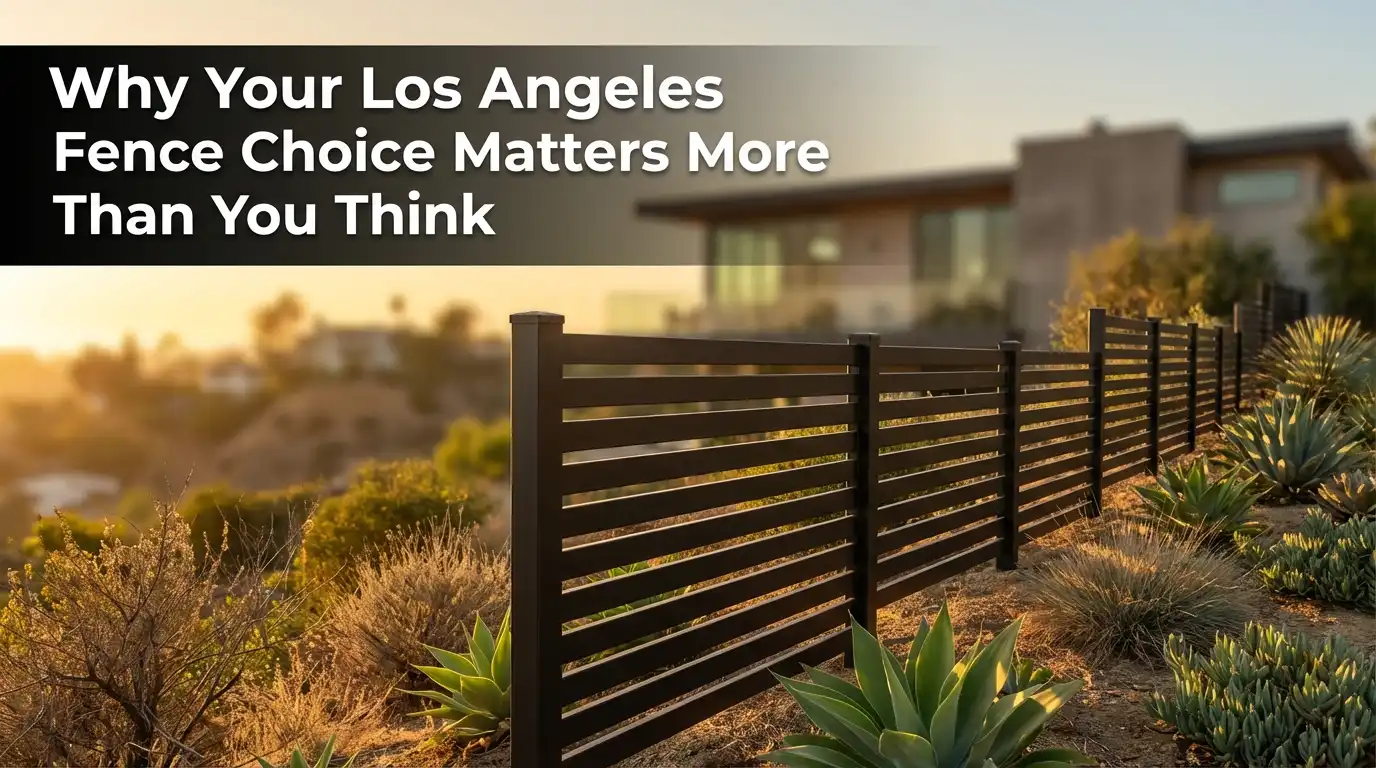
If you own a home in Los Angeles, you’ve probably thought about your fence for privacy, or maybe to keep the neighbor’s dog out. But lately, there’s another thing you have to think about: fire. It’s not just for houses in the hills anymore. The wildfire risk here has gotten real, and the rules have changed because of it. New state and local codes mean your next fence isn’t just about looks—it’s about safety and following the law.
This guide will help you sort out what’s actually required, what makes sense for your home, and which materials hold up in a place that can go from dry Santa Ana winds to damp ocean air overnight. We’ll go over the specific rules for your area, compare the good and bad of different fire-resistant materials, and tell you what to ask a local installer. You’ll end up with a clear idea of what to do next.
The new rules for fences in Los Angeles
Let’s start with the law, since that’s why many people are reviewing their fences right now. California’s AB 3074 introduced Zone 0 defensible-space planning for the area within five feet of a structure. In higher-risk locations, combustible materials in this area may require closer review, relocation, or replacement depending on parcel conditions and local AHJ guidance.
Need a non-combustible fence that still looks residential?
See aluminum fence systems built for coastal durability, clean lines, and fire-aware near-structure transitions.
Explore Aluminum FencingIf your fence is attached to your house or within five feet of it, the material has to be non-combustible or ignition-resistant. This isn’t just a tip from your insurance company. It’s a building code rule for new work and big renovations in places under the Los Angeles City Fire Department and across much of LA County.
Figuring out where these rules apply is tricky. It’s based on the state’s Fire Hazard Severity Zones. If you’re in a Very High Fire Hazard Severity Zone (VHFHSZ)—which covers big parts of the Santa Monica Mountains, the Hollywood Hills, areas near Griffith Park, and places like Sherman Oaks, Pacific Palisades, and Topanga—you almost definitely have to follow these rules. But it’s more complicated. The city’s brush clearance rules and the LA County Fire Code add more layers. The short version? If you’re replacing a fence, especially one close to your house, you should probably assume you need a fire-resistant option.
Why LA homeowners are switching to metal and composite
Wood used to be the standard. It was affordable, looked okay, and everyone used it. But in LA now, putting in a wood fence for a critical section is a bit like choosing a thatched roof. The problem isn’t just a big flame hitting it. It’s the embers. During a wildfire, millions of tiny, super-hot embers can travel for miles ahead of the main fire. They land in gutters, on decks, and against wooden fence panels. A wood fence within five feet of your siding isn’t just extra fuel; it’s a direct path for fire to reach your house.
That’s where aluminum, steel, and modern composites come in. Their main job is not to promise immunity in a major fire - no material can do that - but to support fire-aware perimeter planning with documented materials and lower-fuel transitions. Aluminum and steel options can reduce combustible exposure compared with wood, while composite suitability depends on product documentation, assembly details, and local AHJ review.
Besides safety, there are practical LA reasons for the switch. Durability in the sun is a big one. A powder-coated aluminum fence won’t warp, crack, or fade like wood after years of strong sun. In places near the coast like Marina del Rey or Playa Vista, fighting rust is key. Marine-grade aluminum alloys or properly galvanized steel handle salt air better than most wood. For a lot of people, it comes down to this: pay more upfront for a material that lasts decades with almost no upkeep, or pay less for wood and deal with staining, repairs, and replacing it much sooner.
What to look for in a fire-resistant fence installer in LA
Not every fence company will bring up fire codes. If you call for a quote and the talk doesn’t quickly get to AB 3074, Zone 0, and your property’s specific Fire Hazard Severity Zone, you’re likely talking to the wrong crew. You need a contractor who gets that this isn’t just any fence; it’s a regulated part of your home tied to its safety rating and maybe your insurance.
First, they should ask for your address. A solid installer will check the city or county maps to confirm your zone before they even recommend a material. They should be able to explain, in simple terms, what the code requires for your exact setup. Is it only the part within five feet of the house? The whole fence line? Does the gate have different rules?
Second, listen for specifics on materials. “Metal fencing” is too broad. Ask: Is it aluminum? What series (like 6061-T6, which is a structural grade)? How thick is the powder coat finish? Is the steel hot-dip galvanized? For composites, which brand (like Trex, TimberTech, or Fiberon) and which specific product line? Some composite lines have fire-resistant ratings, others don’t. The installer should know this and have the paperwork, like a product sheet showing an ignition-resistant classification (like Class A or B per ASTM E84).
Third, see if they know about local permits. In Los Angeles, replacing a fence often needs a permit, especially if you’re changing the material or height. In VHFHSZ areas, the permit process will involve proving you’re using fire-resistant materials. A good installer will handle this for you, not leave you to figure out the Department of Building and Safety (LADBS) on your own. They should be able to show you permits they’ve gotten for similar jobs in neighborhoods like Studio City or Brentwood.
Finally, check out their past work. Any good company will have photos. Don’t just look at the pictures; ask for approximate addresses (cross streets are fine) so you can drive by and see how the fence looks after a year or two. Look at how the fence connects to the house, the gate hardware, and the finish details.
Neighborhood-by-neighborhood considerations in LA
LA has different climates. Your best material might change based on exactly where you are.
In the canyons and hillside spots like Benedict Canyon or Mount Washington, the main worries are wildfire embers and often steep, tricky land. Here, the material’s strength and inability to burn are most important. A steel fence with posts set deep in concrete might be the strongest choice for a slope while meeting the safety rules. Getting trucks and equipment up there can be a real problem, so the installer’s plan for that matters a lot.
In the flat parts of the San Fernando Valley, like Northridge or Reseda, you might have different soil—denser, more clay-based dirt that affects how you set posts. The sun is also brutal. In these areas, how well the powder coat on aluminum resists UV rays or how well a composite keeps its color becomes a big deal for how it looks years later. The fire risk might feel different than in the hills, but if you’re in a VHFHSZ, the same strict codes apply.
For Westside neighborhoods close to the ocean, like Santa Monica or Venice, the salty, damp air is the biggest issue. Aluminum naturally forms a protective layer, but you need a high-quality, marine-grade powder coating to stop pitting and rust over time. Steel must be hot-dip galvanized, not just painted. While the immediate wildfire risk might seem lower, coastal areas can still get Santa Ana winds that spike the fire danger, and the codes don’t care about your zip code.
Getting a fire-resistant fence in Los Angeles: first steps
Start with information. Don’t call anyone yet.
- Find your zone. Go to the California Department of Forestry and Fire Protection (CAL FIRE) website and use their Fire Hazard Severity Zone viewer. Type in your address. This tells you your state zone. Then, check the Los Angeles City or LA County fire department websites (whichever is in charge) for any local maps or rules that might be even stricter.
- Call your insurance agent. Ask them straight up: “If I swap my wood fence for a non-combustible material, will it change my premium or my coverage?” Try to get their requirements in writing. Sometimes insurance companies have their own rules that go beyond the building code.
- Sketch your property. Draw a simple map of your house and where the current fence is. Mark the parts that are within five feet of any outside wall, including attached garages. This is your probable Zone 0 area. This sketch will help any installer give you a better initial quote.
- Gather your questions. Write down the material questions from earlier. Ask about warranties—not just on the materials, but on the installation work. A 25-year warranty on the aluminum is great, but if the installer only guarantees their work for one year, that’s a warning sign.
Then, and only then, start calling local installers. Be direct: “I’m in a VHFHSZ in Los Angeles and need a fence that meets AB 3074 for Zone 0. Can you handle that?” Their answer will quickly tell you who knows their stuff and who doesn’t.
Wrapping up
Picking a fence in Los Angeles has always been about balancing looks, privacy, and price. Now, for a huge number of homeowners, there’s a non-negotiable fourth thing: fire safety required by law. Ignoring it can mean failing a permit inspection, voiding your insurance, or worse, putting your home at more risk.
The move to aluminum, steel, and better composites isn’t just a trend; it’s a direct response to how things are now in Southern California. It’s putting money into a structure that won’t need replacing in a few years and one that actually helps defend your home. Start with the maps and the codes, get your questions ready, and find a contractor who understands both building and the rules. Your fence is your home’s first line of defense; it’s worth doing right.
FAQ: Fire-Resistant Fencing in Los Angeles
I live in a flat part of the Valley. Do these rules really apply to me? Yes, if your property is officially in a Very High Fire Hazard Severity Zone. The label isn’t just for hills; it looks at plants, weather, and past fires. Use the CAL FIRE map to check.
Is vinyl fencing a good fire-resistant option? Usually, no. Most vinyl (PVC) fencing can burn and melt, and it gives off toxic smoke. It doesn’t meet the requirements for non-combustible or ignition-resistant materials in Zone 0.
How much more does an aluminum fence cost than a wood fence? As a rough guess, expect to pay 2 to 3 times the installed cost of a basic pressure-treated pine fence. The exact difference depends on the style, height, and your land. Over the long term, when you consider almost no maintenance and a lifespan of decades, it often ends up being the more economical choice.
Can I just replace the section of my wood fence that’s within five feet of the house? This is a common and often legal approach. It’s called a “hybrid” or “split-material” fence. The critical Zone 0 part uses non-combustible material (like metal), while the rest of the fence beyond five feet can stay wood (though using fire-resistant materials everywhere is always safer). Your installer and the building inspector will need to okay the spot where the two materials join.
Who pulls the permit, me or the contractor? A good, licensed contractor will always pull the permit themselves. They are the “license holder” for the job. If a company asks you to pull the homeowner permit to “save money,” that’s a big red flag. It usually means they aren’t properly licensed or insured to work in Los Angeles.
Verification note (updated March 26, 2026): Regulatory requirements can vary by parcel, jurisdiction, and inspection cycle. Confirm current requirements with your AHJ and official California sources before final design or contract decisions: PRC 4291, Board of Forestry Zone 0 updates, and OSFM FHSZ maps.