Fire-wise fences in San Diego: aluminum, steel, and composite choices that actually make sense
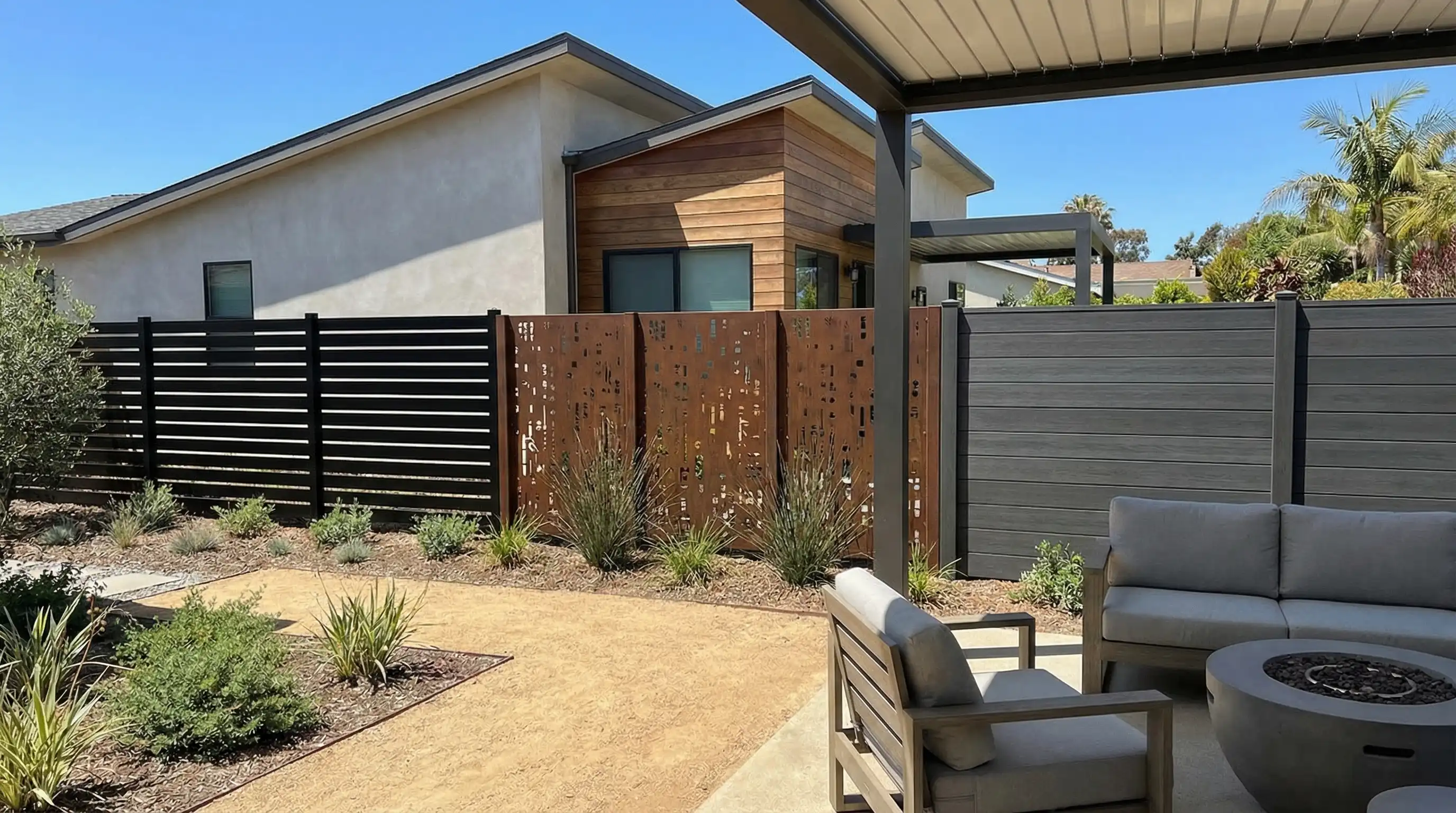
San Diego has a way of making fences earn their keep. They’re privacy screens for a small yard in North Park, wind breaks in Point Loma, and sometimes the first thing embers land on when a Santa Ana wind event blows through.
If you’re searching for Fire wise aluminum, steel and composite fencing. in San Diego (or you’re still trying to decode what “Zone 0” is), you’re in the right place. This guide breaks down what’s pushing fire resistant fencing choices here, which materials tend to hold up, how California’s defensible space rules can shape fence design, and what to ask a contractor before you sign anything.
And you’ll get some San Diego-specific context—because the right fence near Balboa Park isn’t always the right fence on the edge of a canyon.
Need a non-combustible fence that still looks residential?
See aluminum fence systems built for coastal durability, clean lines, and fire-aware near-structure transitions.
Explore Aluminum Fencing1) The local fire-wise fencing situation in San Diego
San Diego County has lived through enough wildfire to take it personally. The 2003 Cedar Fire burned over 273,000 acres and destroyed thousands of structures, and the 2007 Witch Fire drove evacuation zones deep into neighborhoods. That history is a big reason more homeowners now ask about non-combustible fencing and defensible space fencing instead of defaulting to wood.
The geography doesn’t make it easier. Canyon networks, chaparral, and open-space edges run right up against residential streets. If you live near a canyon edge in places like Clairemont or along parts of Point Loma, wind-driven embers tend to end up in the same trouble spots—corners, gate returns, fence-to-house connections, and anywhere leaves collect.
Then there’s the weather pattern. Wet winters can grow brush fast, and the dry season turns it into fuel. Santa Ana conditions (hot, dry, gusty) are the stress test. That’s when small design calls—like whether the first five feet of fence near your home can burn—stop feeling theoretical.
Homeowners who used to search “metal fencing” are now getting more specific: fire safe fencing, wildfire compliant fence, Zone 0 fencing California, and even AB 3074 fencing requirements. Insurance pressure is part of this too. California’s FAIR Plan policy count has climbed in recent years as private insurers pulled back in higher-risk areas, and that shift has made mitigation projects feel less like “nice to have.”
On the ground, most “fire-wise fence” conversations in San Diego end up in three material buckets:
Aluminum fencing
Aluminum is non-combustible, it handles coastal conditions better than many steels, and it fits modern fence design when you want clean lines without something that looks heavy.
Steel fencing
Steel is non-combustible and can take a beating, but the details matter—especially near the coast. In San Diego, a steel fence is only as good as its coating system, fabrication, and hardware.
Composite fencing (and composite decking near fences)
Composite products are all over the map. Many are harder to ignite than wood, but they are not automatically non-combustible, and they can still be the wrong call right next to the house if you are trying to follow stricter interpretations of Zone 0.
If your goal is simple—cut ignition risk at the perimeter and end up with a fence that still looks good years from now—San Diego is a decent place to do it. Metal and modern materials are already common here, and many HOAs are used to seeing them.
2) Why San Diego residents are choosing aluminum, steel, and selective composite
A lot of people start because their old wood fence is done. Termites. Dry rot. Warped pickets. Nails backing out. But in San Diego, once you start reading about wildfire behavior, fire risk becomes the main reason.
The ember problem (and why fences are part of it)
In major wildfires, homes often ignite from embers, not a direct wall of flame. A fence can turn into a fuse if it’s combustible and tied into the house. A wood fence that connects to a wood gate, that connects to a wood fascia detail, gives embers a path.
That’s why contractors and inspectors keep coming back to metal fencing and other non-combustible fencing materials near structures—especially at fence-to-wall connections and anywhere posts sit close to eaves.
Zone 0 logic in plain English
California has been leaning harder into the “immediate zone” idea: keep the first few feet around the structure as resistant to ignition as you reasonably can. You’ll hear “Zone 0” talked about even when a specific address isn’t under a new requirement yet. People are planning ahead.
For fences, that usually means treating the section closest to the house as its own design problem. A lot of San Diego homeowners use a steel fencing California style approach (or aluminum) for the first run, then transition to something else farther out if they want more warmth or more privacy.
Coastal corrosion and why aluminum keeps winning west of the 5
If you’re closer to Ocean Beach, Point Loma, or anywhere you can taste the salt in the air, corrosion isn’t a “maybe.” Aluminum has a real edge because it doesn’t rust the way steel does. Steel can still be a solid choice, but only if it’s protected correctly (proper galvanizing plus a quality powder coat). Skip that, and you’ll be dealing with repainting earlier than you expected.
“Modern fence design” that doesn’t scream “industrial”
A common worry is that metal fencing will make the house feel like a commercial lot. In real life, modern aluminum and steel designs can look surprisingly residential. Horizontal slats, slimmer pickets, hidden fasteners, and matte finishes (black, bronze, charcoal) are common around San Diego.
Composite: useful, but not a blank check
Composite can work when you want a consistent look, fewer splinters, and less upkeep than wood. But for fire planning, where it sits matters. Plenty of homeowners use composite fencing or composite decking in parts of the yard that aren’t in the immediate zone, while keeping the close-in sections non-combustible.
If you’re trying to hit a specific standard (or you suspect one is coming), don’t treat “composite” as shorthand for “fire resistant.” Ask for the exact product, the specs, and any relevant fire performance documentation.
3) What to look for in a San Diego fire-wise fencing provider
San Diego has plenty of fence installers. The real difference is whether the company can explain fire behavior, local conditions, and how the fence connects to the house.
Here’s what’s worth asking, without making it weird.
Ask how they handle fence-to-house connections
This is where problems usually start. A solid plan often includes a non-combustible “break” where the fence meets the house—maybe a short run of metal fencing, maybe a gate detail, maybe a different attachment method.
If a provider shrugs and says, “we attach it the normal way,” push a little. “Normal” in San Diego used to mean wood-to-wood all the way to the wall.
Confirm what “fire resistant fencing” means in their quote
You want details: aluminum vs steel gauge, post sizing, finish system, fasteners, and where (if anywhere) composite shows up. If they say “wildfire compliant fence,” ask what they mean by “compliant.” Some people mean general defensible space best practices. Others mean a stricter material approach around the immediate zone. Those are different promises.
Coastal neighborhoods: ask about coatings and hardware
If your project is anywhere near the coast—say you’re driving down Sunset Cliffs Boulevard thinking, “yeah, that’s salty air”—ask about corrosion-resistant hardware. Stainless fasteners and a real coating system cost more, but they help you avoid rust stains and hinges that seize up.
Gate function matters more than most people admit
San Diego yards use gates constantly—trash day, side-yard storage, dogs, kids’ bikes, surfboards. A fire-wise fence with a sagging gate is still a daily annoyance.
Ask what hinges and latches they’re using, whether posts are reinforced, and how they prevent sag over time. With metal gates, frame design and weld quality show up fast.
Know your HOA and permit realities
Some neighborhoods have strict HOA design rules, especially around front-yard visibility and height. A provider who works across San Diego will usually know the patterns—what tends to pass, what tends to get kicked back.
It’s also smart to ask about height limits, corner-lot sightline rules, and pool safety code requirements if the fence is part of a pool barrier plan.
Modern Fence & Deck builds fire wise aluminum, steel and composite fencing. San Diego CA homeowners use for privacy, boundary lines, and fire-aware upgrades. If you’re comparing bids, use the questions above to get real clarity. The best proposals read like a plan, not a fuzzy materials list.
4) San Diego-specific considerations people miss
San Diego isn’t one climate. Your fence plan should match your pocket of the county.
Canyon edges and wind corridors
If your lot backs up to open space or a canyon, plan around where debris piles up. Leaf litter and wind-blown mulch often collect at fence corners and behind planters. Even a non-combustible fence can turn into a problem if combustible debris is stacked against it right next to the house.
If you’re in a canyon-adjacent part of Clairemont or near the edge of Balboa Park-adjacent canyons, think about maintenance access too: enough clearance to pull debris and trim plants without crawling around the fence.
Coastal salt air vs inland heat
Coastal: put corrosion resistance first—hardware quality and finishes that can take UV plus salt exposure.
Inland: heat cycling can beat up cheaper composites and finishes. Ask how the material handles expansion/contraction, and whether the color you want is prone to chalking or fade.
Soil, slopes, and retaining quirks
A lot of San Diego properties have grade changes—sloped front yards, terraced back yards, side yards that drop off. This is where you find out who actually knows what they’re doing.
A provider should be able to explain whether they’ll rack panels, step panels, or custom-build sections to follow the grade. They should also talk about post depth and concrete footings in a way that matches your specific site.
AB 3074 and “Zone 0” chatter
Homeowners keep hearing about AB 3074 fencing requirements and Zone 0. The practical takeaway is simple: California is moving toward tougher ignition-resistant expectations near structures, especially in wildfire-prone areas. But the details vary by jurisdiction, property type, and timing.
So don’t treat a blog post (this one included) as a replacement for site-specific guidance. Use it as a filter: you want a fence plan that avoids the obvious weak spots—combustible fence sections touching the house, and designs that trap debris where embers can sit.
The “soft stuff” around the fence
A fire wise fence can be undone by what’s stored next to it. In San Diego, it’s common to see:
- mulch right up to the house
- wood patio furniture stored against a fence line
- dead palm fronds stacked by side gates
If you’re paying for fire safe fencing, spend 30 minutes looking at how your yard actually gets used—storage habits, landscaping, where leaves gather. That’s usually where the easy wins are.
5) Getting started with fire wise aluminum, steel and composite fencing in San Diego
Start with your map and your routine, not a Pinterest board.
Walk your property line and mark three zones: (1) fence sections that touch or sit very close to the home, (2) fence sections that run along vegetation or open space, and (3) fence sections that are mostly about privacy and looks.
Then schedule a site visit and get a bid that spells out materials by zone. A lot of San Diego homeowners end up with a hybrid approach: non-combustible fencing (aluminum or steel) near the structure and gate transitions, then a more privacy-forward design farther out if the risk profile allows.
If you’re near Balboa Park traffic corridors or you’re in a dense neighborhood like North Park, think about visibility and noise too. A modern slat design can give privacy without turning the front yard into a blank wall.
When you’re ready, Modern Fence & Deck can walk the site, talk through where metal makes the most sense, and price options that fit your layout—not just a generic “per-foot” number.
Conclusion: a fence that fits San Diego’s reality
A fire wise fence in San Diego isn’t about building a fortress. It’s about removing obvious ignition pathways, using non-combustible materials where they matter most, and picking finishes that can handle our sun, wind, and (in some neighborhoods) salt air.
If you want Fire wise aluminum, steel and composite fencing. in San Diego with a plan that accounts for your street, your slope, and how your gate gets used every day, reach out to Modern Fence & Deck for a site visit and a straightforward quote.
FAQ
Do I need Zone 0 fencing in California if I live in San Diego? It depends on where your property sits and which local rules apply. But even when it’s not strictly required, many homeowners follow Zone 0 principles near the house because fence-to-structure connections are a common weak spot.
Is aluminum fencing really fire resistant? Aluminum is non-combustible, so it won’t burn like wood. That’s why it’s often used for fire-aware upgrades near structures. Design still matters—especially how the fence meets the house and where debris collects.
Is steel fencing better than aluminum in San Diego? Not automatically. Steel is strong and non-combustible, but coastal corrosion can be an issue if coatings and hardware aren’t right. Aluminum often makes more sense near the coast; steel can work very well with proper galvanizing and powder coating.
Does composite fencing count as non-combustible fencing? Usually no. Composite products vary, and many aren’t truly non-combustible. Composite can still make sense in some yard zones, but ask for the exact product specs and place it deliberately.
What’s the most common mistake with fire safe fencing? A combustible fence attached directly to the house (or a design that traps leaf litter at the base) is a common issue. The fix is often a short non-combustible transition section and better debris clearance.
References
[1] CAL FIRE — Top 20 Largest California Wildfires (includes Cedar Fire data): https://www.fire.ca.gov/our-impact/statistics [2] California FAIR Plan — official site and reports: https://www.cfpnet.com/ [3] Ready for Wildfire (Cal OES/CAL FIRE) — Defensible space guidance: https://readyforwildfire.org/
Verification note (updated March 26, 2026): Regulatory requirements can vary by parcel, jurisdiction, and inspection cycle. Confirm current requirements with your AHJ and official California sources before final design or contract decisions: PRC 4291, Board of Forestry Zone 0 updates, and OSFM FHSZ maps.