Shared fence replacement made simple
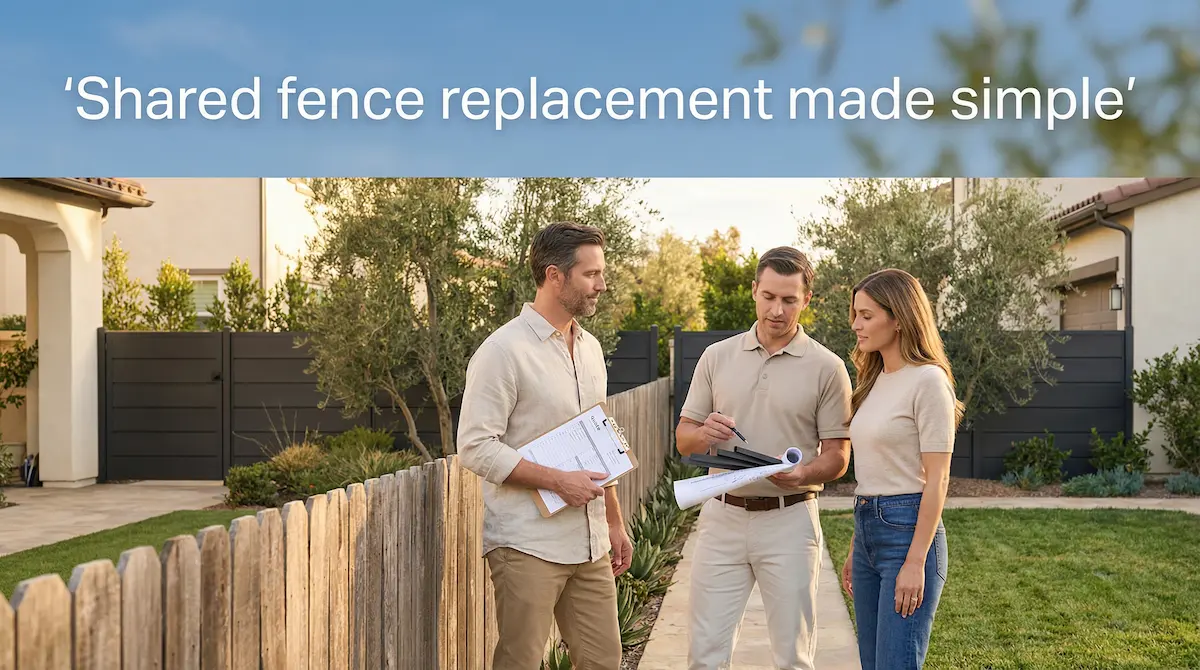
A fence gets complicated fast when two households are involved.
On paper, a shared fence replacement seems simple. The fence is old, leaning, missing boards, or just looks worn out. So you replace it. But in real life, one neighbor wants to do it now and the other wants to wait. One wants more privacy. The other is more focused on cost. One likes black steel. The other wants something lighter and more traditional.
That’s why shared fence projects drag on for months, or turn into little arguments that neither side was trying to have.
Need help coordinating a shared fence replacement?
We can help both households sort through scope, materials, pricing, and installation planning without turning the project into a bigger issue than it needs to be.
Schedule a Shared Fence ConsultationThis guide is meant to make the process feel a lot more manageable. If you’re dealing with a fence that sits on or near a property line, you’ll find a straightforward way to think through cost, style, timing, and communication without making it into a bigger issue than it needs to be.
The short version: shared fence replacement doesn’t have to turn into a dispute. With the right process, both neighbors can end up with a fence that works for them. And if you’d rather not coordinate every detail yourself, Modern Fence & Deck can help manage the project from planning through installation, pricing, and final installation logistics.
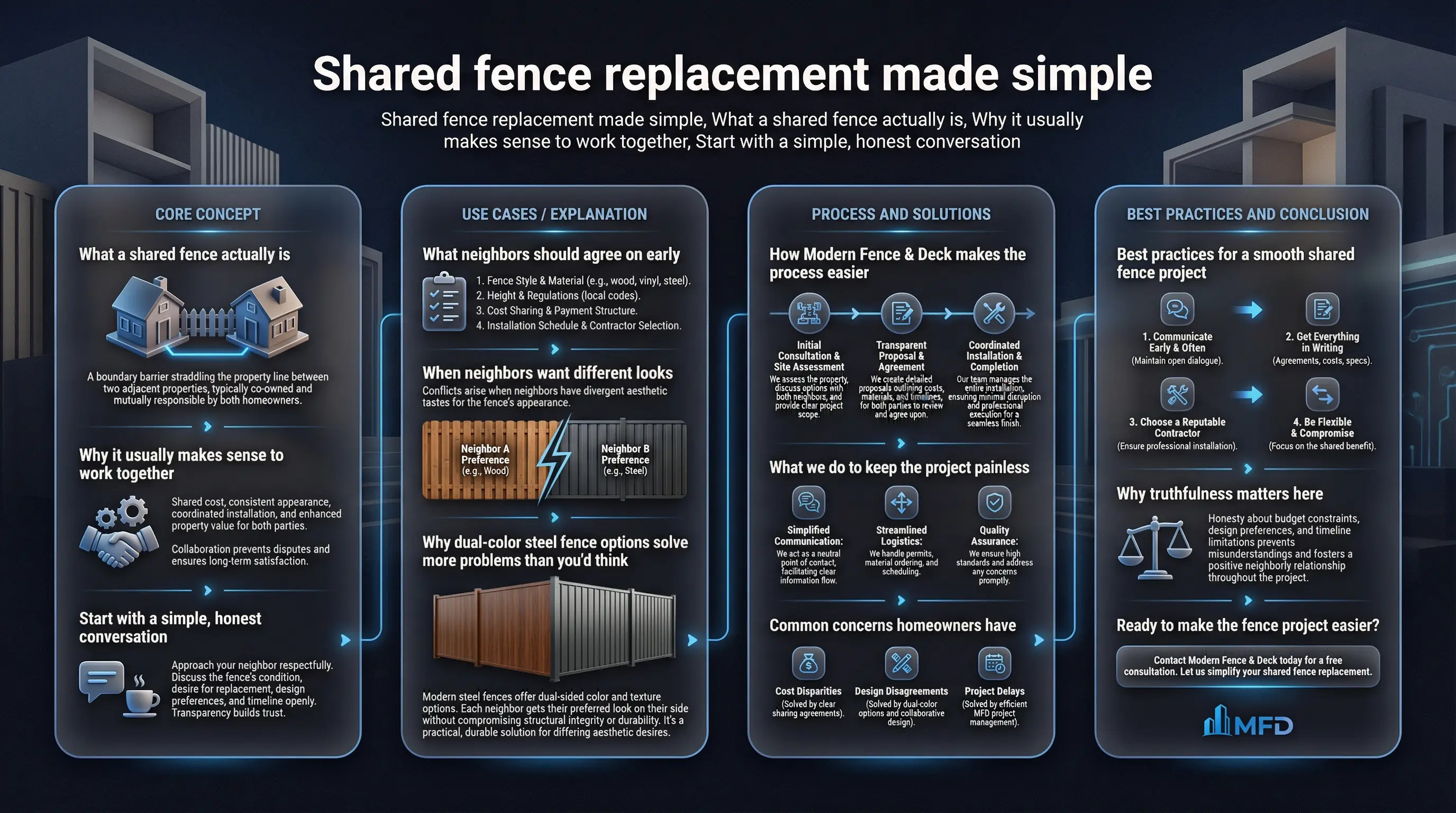
What a shared fence actually is
A shared fence is usually a fence on or near the property line that serves both homes. Both households see it. Both get some use from it. And both usually care about at least one of these things: privacy, security, appearance, pet containment, or marking the edge of the yard.
That shared benefit is also what makes the project tricky.
Sometimes the fence has clearly reached the end of its life for one side long before the other homeowner is ready to deal with it. Sometimes budgets don’t line up. Sometimes one person wants to keep things simple and functional, while the other wants a cleaner design that fits a remodel or new landscaping.
And sometimes the fence itself is the easy part. The hard part is getting two people to agree on what happens next.
Why it usually makes sense to work together
If both homeowners use the same fence, replacing it together is usually the cleanest way to handle it.
The first reason is cost. A shared fence replacement often costs less for each homeowner when the project is done as one job instead of split into separate patches, repairs, or overlapping work. You’re paying for one coordinated installation, one mobilization, one material plan, and one schedule. If the current fence is beyond repair, it also helps to account for old fence removal as part of the same scope instead of treating demo as a separate surprise line item.
The second reason is the finished result. A coordinated project usually looks better than a fence that has been repaired in sections over several years. You avoid mismatched panels, odd height changes, and patchwork fixes that make the property line look like two unrelated projects ran into each other.
Then there’s the part people don’t always think about at the beginning: avoiding future tension. When neighbors talk through budget, design, and expectations early, there’s less room for resentment later. Nobody wants to feel like they paid for someone else’s upgrade. Nobody wants to look at a fence color they never agreed to. A little clarity at the start saves a lot of second-guessing later.
Start with a simple, honest conversation
Most shared fence projects go better when the first conversation is calm and direct.
You don’t need a pitch. You don’t need to walk over with printed estimates on day one. And you definitely don’t want to make it sound like a demand. The best opening is usually something simple and factual.
You might say the fence is leaning, boards are loosening, posts are aging, or privacy has gotten worse over time. Then ask if they’ve noticed the same thing and whether they’d be open to talking about replacement options.
That works because it keeps the focus on the fence, not on blame.
A few talking points help if you want to keep the conversation moving:
The fence may have stability issues. It may not be giving much privacy anymore. It may be dragging down the appearance of both yards. And if the two of you plan the work together, there’s a chance to split costs and avoid a messier project later.
Tone matters more than people expect. If the conversation feels cooperative, most homeowners stay open. If it feels like pressure, they start getting defensive before you’ve even really talked about the fence.
What neighbors should agree on early
You don’t need a formal contract between neighbors on day one, but you do need clarity. A shared fence replacement gets easier when a few things are settled early instead of argued about halfway through.
Start with the scope of work. Are you replacing the full run of fence or only one damaged section? Are you keeping the same height, or changing it? Will the project include gates, post caps, trim pieces, or a different finish than what exists now?
Then talk about budget. Some neighbors split the cost evenly. Some don’t, and that’s fine. If one homeowner wants a material upgrade, extra height, or a premium finish, they may choose to cover that added cost. The fair answer depends on the job, not on some rigid formula.
Style is the next big one. This is where projects often slow down. One homeowner may want a modern steel fence with clean lines. The other may prefer something softer or more conventional. Privacy matters here too. Full privacy, semi-privacy, horizontal slats, decorative top sections, framed panels. Those choices affect both appearance and price.
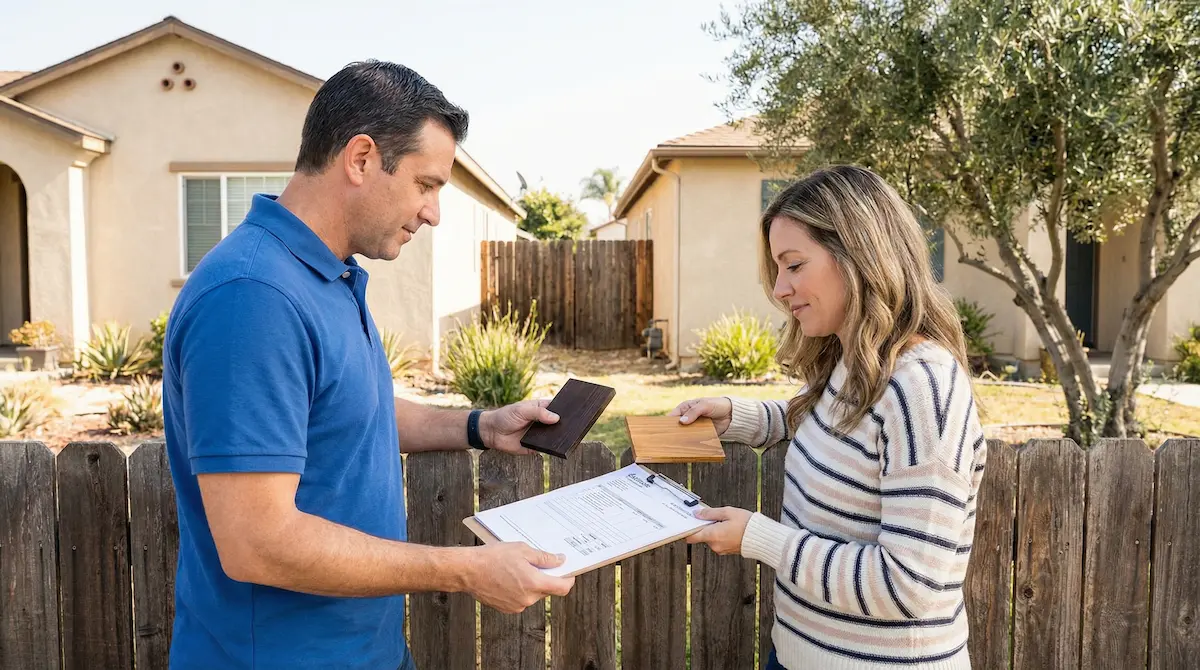
And don’t skip the timeline. Figure out when both households are comfortable starting, what access is needed during construction, and whether there are pets, kids, or specific scheduling constraints to plan around.
If those four things get discussed early, the rest usually moves a lot faster.
When neighbors want different looks
This is common. More common than most people expect.
One homeowner has a dark exterior and wants black or charcoal fencing. The other has a lighter home and wants bronze, beige, or white. One wants a sharper modern look. The other wants something that blends into a more traditional yard.
That doesn’t automatically end the project.
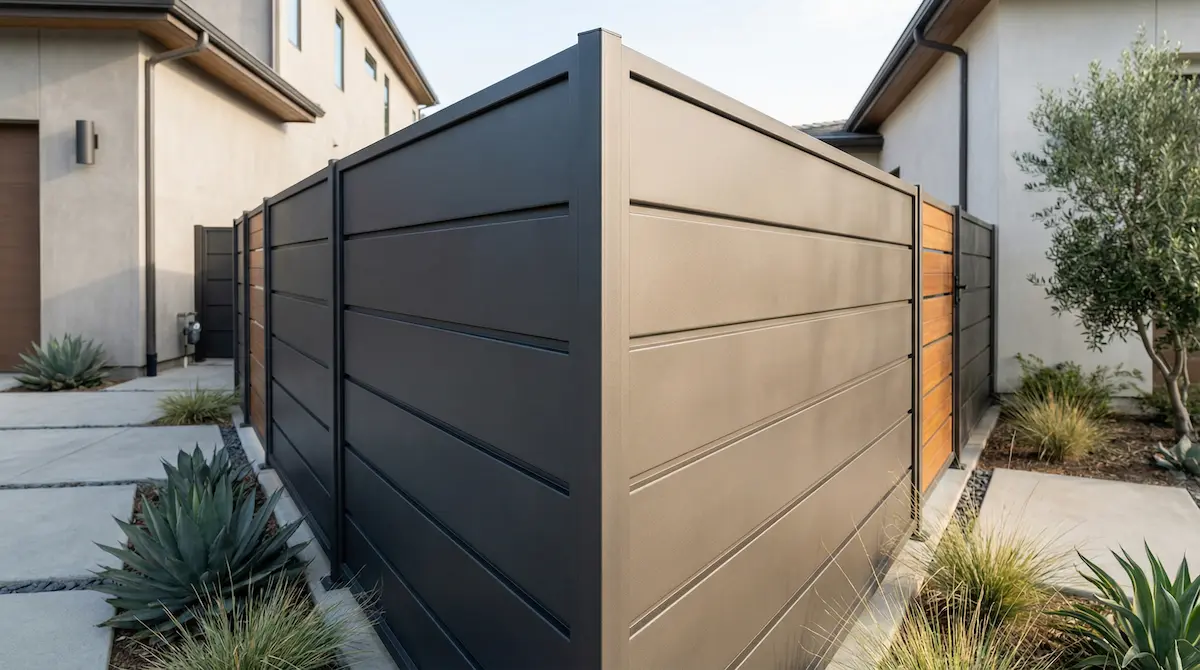
Steel fencing can be a practical answer here because it gives you strength, clean lines, and long service life, while still allowing finish flexibility. In some cases, one side of the fence can be finished in one color and the other side in another, depending on the fence design and fabrication approach. If you’re still comparing aesthetics, our modern fence design guide is a useful reference point before you lock in a finish.
So Homeowner A might face a black or charcoal finish that works with a modern exterior. Homeowner B might face bronze or another color that fits their house better. Both homeowners get a fence that looks considered from their side of the property.
That’s the part many people miss. Shared fence replacement does not always mean both sides have to want the same look.
At Modern Fence & Deck, we help homeowners look at steel fence options that can work for both sides where the design allows. That creates more room for agreement, especially when color is the sticking point.
Why dual-color steel fence options solve more problems than you’d think
A dual-color steel fence isn’t just a design move. It can remove one of the most common reasons neighbors get stuck.
The practical benefit is obvious. Each homeowner gets a fence color that works with their own house, hardscape, and planting. That means one person doesn’t feel pushed into the other person’s design choice.
But the visual side matters too. A well-planned steel fence with coordinated finishes looks far better than a fence line made up of patched sections, replacement panels that almost match, or a compromise color neither homeowner actually likes.
Then there’s the long-term part. Steel is durable and stable when fabricated and finished correctly. And if the appearance plan is settled at the start, you’re less likely to end up arguing later about repainting, refinishing, or trying to “fix” the look after installation.
Not every shared fence needs this solution. But when color is the obstacle, it can be the thing that gets the project moving again.
How Modern Fence & Deck makes the process easier
A lot of homeowners don’t mind paying for a new fence. What they really want to avoid is the coordination headache.
That’s where a contractor who understands shared fence replacement can help.
Modern Fence & Deck can meet with one or both neighbors to review the condition of the current fence, hear concerns from both sides, and talk through realistic options. The point isn’t to force a one-size-fits-all answer. The point is to narrow the project down to something that works for both households. That might mean a straightforward replacement, a more refined steel fencing layout, or a broader services conversation if gates or site conditions are part of the scope.
We help with design choices too. That includes material selection, height, privacy level, layout, and color options. If there are competing priorities, we can usually sort out which details actually matter and which ones are easier to resolve than they first seem.
Clear quoting matters just as much as design. A shared project gets messy fast when pricing is vague. We provide a clear scope of work so both homeowners know what is included. If one party wants an upgrade, the added cost should be easy to identify instead of buried in the estimate.
Then there’s project coordination. We handle measurements, planning, scheduling, and installation logistics. That keeps the process organized and cuts down on the endless back-and-forth homeowners usually dread.
One contractor. One process. Fewer chances for confusion.
What we do to keep the project painless
The best shared fence projects aren’t the ones where neighbors agree on every detail right away. They’re the ones where the process stays clear and calm even when opinions differ.
We keep communication simple. We make straightforward recommendations based on the site, the material, and what each homeowner is trying to accomplish. If something isn’t realistic, we say so. If there are multiple workable options, we explain the trade-offs.
We also stay flexible. Different budgets are real. Different design preferences are real. Sometimes the best answer is a straightforward replacement. Sometimes it’s a steel fence with a custom finish plan. Sometimes it’s a phased approach because both homeowners aren’t ready for the same scope yet.
We respect both properties during installation. That means clean jobsite practices, efficient scheduling, and keeping disruption as low as possible. A shared fence project already asks a lot from homeowners. The construction process shouldn’t add chaos on top of that.
And we’re careful not to overpromise. No vague assurances. No pressure tactics. Just a realistic path forward.
Common concerns homeowners have
One of the first questions is usually, “What if my neighbor doesn’t want to split the cost?”
That happens. In some cases, one homeowner pays more because they want upgrades. In other cases, the project may need to be phased or adjusted to fit what both sides can reasonably do. The first useful step is getting actual pricing and seeing what options exist before assuming the conversation will go badly.
Another common question is, “What if we want different colors?”
That’s exactly where dual-color steel fence finishing can help, where appropriate. It won’t work for every fence style, but it can solve a very specific problem that comes up all the time.
Then there’s privacy. One neighbor may want a taller or more enclosed feel, while the other prefers something more open. Depending on layout, local rules, and material choice, there may be design options that balance those goals without making the fence look confused.
And a lot of people simply ask, “Can this be low hassle?”
Yes, but usually only if someone is actually managing the details. Shared fence replacement tends to get stressful when nobody owns the process.
Best practices for a smooth shared fence project
If you want this to go well, start earlier than you think you need to. Once a fence is falling apart, every delay feels more irritating.
Be honest about budget from the start. It saves time. Stay practical about design. Write down agreements once you reach them, even if it’s just a simple shared summary of scope, cost split, and timeline. Choose materials that make sense for both homes over the long term, not just for the next six months.
And work with a contractor who can explain things clearly to both parties. That’s a bigger deal than it sounds. Shared fence projects don’t need fancy language. They need clarity.
Why truthfulness matters here
Not every neighbor situation is easy.
Not every project lands on a perfect 50/50 split. Not every homeowner wants the same material. And not every fence type makes sense for every property, budget, or layout.
That’s worth saying plainly because too many contractors act like every project has a simple answer if you just “move forward today.” That isn’t how shared fence replacement works.
The goal should be to find a workable solution that lowers stress and gives both sides a better result. Sometimes that’s a full replacement with shared costs. Sometimes it’s a premium material with one homeowner paying the difference. Sometimes it’s a design adjustment that gets two different people comfortable enough to finally say yes.
Modern Fence & Deck focuses on practical recommendations, clear communication, and durable workmanship. That’s what makes these projects easier to manage.
Ready to make the fence project easier?
If you and your neighbor are talking about a shared fence replacement, we can help you sort through the next steps without turning it into a bigger project than it needs to be.
Modern Fence & Deck can help with design ideas, material options, clear pricing, and planning that works for both households. If dual-color steel fencing makes sense for your property, we can walk you through that too. If you’re still deciding between material directions, it also helps to review our best fence material guide and our maintenance-by-material guide before the final quote conversation.
Where to go next
If this guide helped you frame the project, these pages are the most useful next clicks:
- Steel Fencing for cleaner dual-finish and privacy-forward design directions
- Fence Removal if the existing run is clearly at end of life
- Best Fence Material Guide if material selection is the main sticking point
- Fence Maintenance Guide if one neighbor is leaning toward repair while the other is pushing for replacement
- Get a Quote if both households are ready to compare real scope and pricing
Schedule a shared fence consultation, get a clear quote for your shared fence project, and let us help you and your neighbor find a fence solution that works for both homes.
FAQ
Can a shared fence have different colors on each side?
Yes, in some cases. A steel fence may be fabricated and finished so each side has a different color, depending on the design and project details. That’s one way to handle different style preferences without forcing one homeowner to accept a finish they don’t want.
Do both neighbors need to agree before replacing the fence?
That depends on where the fence sits, who owns it, and local rules. If the fence is shared or located on the property line, agreement usually makes the project much smoother. It’s smart to confirm property line details and check local requirements before work starts.
Can one neighbor upgrade the material and pay the difference?
Yes. That’s a common solution. If one homeowner wants a premium material, upgraded finish, or additional design detail, the project can often be priced so the extra cost is clearly assigned to that choice.
How long does installation usually take?
It depends on fence length, material, site conditions, and whether removal of the old fence is included. Many residential fence installations take a few days once work begins, but planning, approvals, material lead times, and scheduling can add time before installation starts.