Encinitas homeowners: what “fire-wise” fencing really means (and what to build within 5 feet)
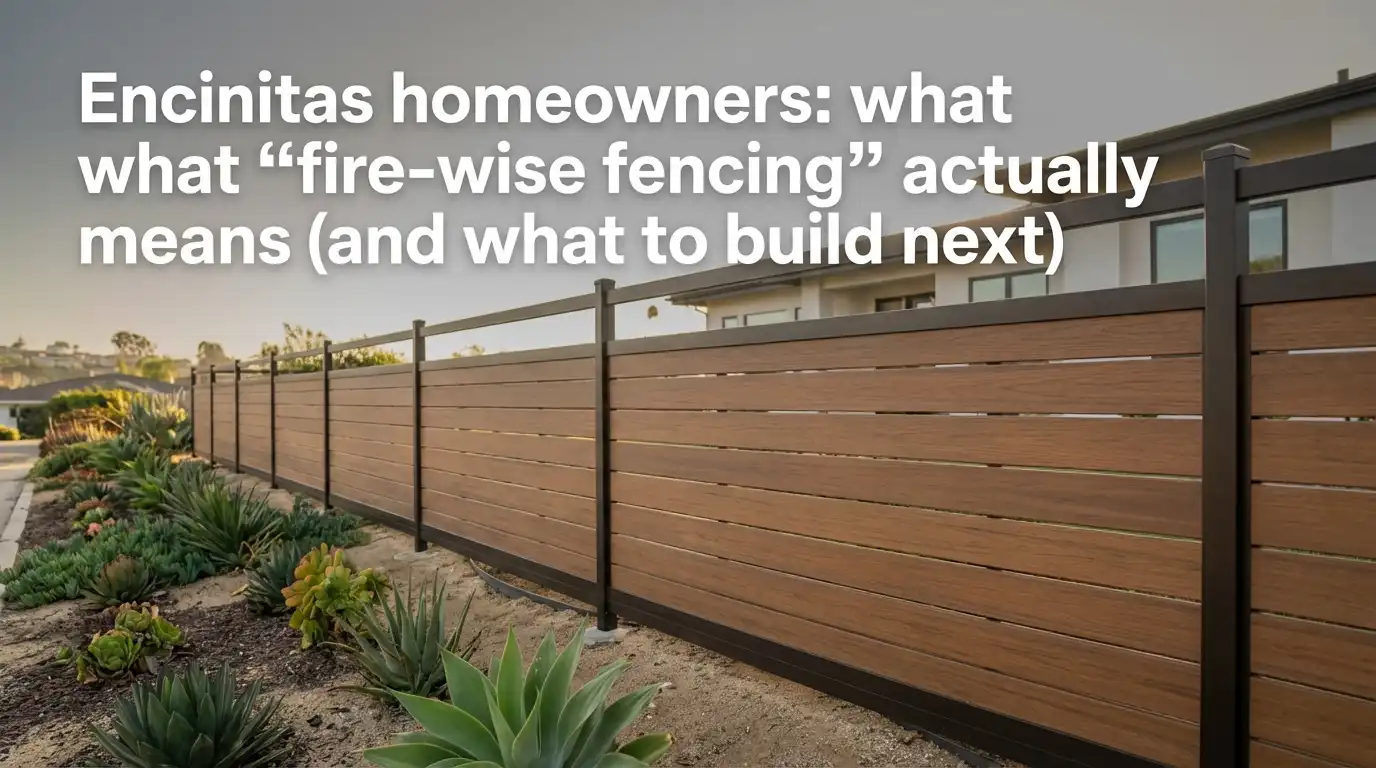
In Encinitas, a fence usually isn’t just a boundary—it’s often the first exterior thing that starts to rust, warp, fade, or turn into weekend maintenance. And if you’re in (or near) a wildfire hazard area, the fence can also change how your home’s immediate perimeter deals with embers.
This guide is for Encinitas homeowners searching Fire wise aluminum, steel and composite fencing. in Encinitas because you want something modern, long-lasting, and aligned with defensible space—without having to decode building-speak. We’ll break down what “fire-wise” looks like on a real property, where Zone 0 fits in, why aluminum/steel fall into the non-combustible category, and when composite is a smart call (and when it isn’t). We’ll also get into Encinitas realities like salt air, canyon winds, and HOA design rules.
1) The local fencing situation in Encinitas (it’s not one-size-fits-all)
Encinitas is a strange place to pick fencing because conditions change fast. Along the coast—think Leucadia west of the 5—salt air and marine moisture can wreck finishes and cheaper hardware sooner than most people expect. Head inland toward Olivenhain or up against open space and you’re dealing with dry wind days, brush exposure, and ember risk. Same city, totally different pressures.
Working on a project in Encinitas?
See local service options, material guidance, and nearby project coverage for Encinitas.
Explore EncinitasThat’s why “wildfire compliant fence” searches have climbed around San Diego County over the last few years. Most people aren’t trying to fortify their house. They’re trying to stop replacing wood panels every 8–12 years and make better choices near the structure.
A quick refresher on the language you’ll hear:
Defensible space is the managed area around a structure meant to reduce fire intensity and cut down ember ignition opportunities. California guidance breaks the area around your home into zones, and the closest zone gets the most scrutiny.
Zone 0 is a common way people refer to the 0–5 foot area around buildings where the goal is to reduce ember ignitions right next to the structure. The specifics can shift by jurisdiction and by what’s actually been adopted where you live, so you’ll hear references to state guidance, local amendments, and active bills.
Your AHJ (Authority Having Jurisdiction) is the agency that enforces local rules—usually your local building department or fire authority. Translation: what your neighbor “had to do” isn’t always what your property has to do.
For fencing, most Encinitas homeowners end up in one of these real situations:
You’ve got an older wood fence with posts that are soft at grade, leaning, or always needing paint.
You share a fence line with a neighbor and want to replace your side without kicking off a conflict.
You want a modern design that will pass HOA review (usually height, picket spacing, and color limits).
You’re trying to make the first 5 feet next to the house more defensible, which often means rethinking any wood fence that ties directly into the structure.
Bottom line: Encinitas is a city where aluminum fencing, steel fencing, and some composite systems make sense—not because it’s trendy, but because the climate and risk profile punish bargain materials.
2) Why Encinitas residents pick aluminum, steel, and composite for fire-wise builds
If you’re trying to match the intent of Zone 0, material choice is your first big decision. But it’s not the only one. How the fence attaches, how gates are built, and what happens in the “last five feet” near the house matter just as much.
Aluminum fencing (non-combustible, coastal-friendly when done right)
Aluminum is generally considered non-combustible. That’s why it comes up so often in Zone 0 fencing California conversations. It also doesn’t rot, doesn’t attract termites, and doesn’t demand repainting the way wood does.
Where people get burned is assuming “aluminum is aluminum.” In real life, performance usually comes down to:
Finish quality (a good powder coat keeps color longer in sun and salt air)
Hardware (hinges, latches, and fasteners should resist corrosion—cheap zinc hardware can get ugly fast near the coast)
Design intent (privacy screens vs. pickets change wind load and how debris collects)
For coastal Encinitas—near Highway 101 or west of Vulcan Avenue—aluminum often ends up as the low-hassle option, as long as the install is clean and the hardware isn’t an afterthought.
Steel fencing (strong, clean lines, but details matter near salt air)
Steel is also non-combustible. It’s a good fit when you want slimmer profiles, sturdier gates, or a specific modern look. In Encinitas, steel can hold up well, but it’s less forgiving when the finish system is cheap or cut edges aren’t treated properly.
If you’re looking at steel fencing California homeowners usually ask the same things:
Is it galvanized?
Is it powder-coated over a corrosion-resistant base?
What’s the plan for weld points and cut ends?
Near the coast, those aren’t “bonus features.” They’re the difference between steel that stays clean-looking for years and steel that starts rusting at joints and edges.
Composite (useful in the right place, but not the same as metal for Zone 0)
Composite is a broad category. Some composite fence boards are basically decking boards repurposed; some are made specifically as fence infill. Composite doesn’t rot or get termites, and it’s popular when you want something warmer than metal.
But if your goal is non-combustible fencing near the structure, composite isn’t in the same category as aluminum or steel. Many composite products are not non-combustible. Some may have tested flame-spread numbers (more on that below), but they can still be combustible.
Where composite tends to work well for a lot of Encinitas properties:
Privacy runs where the fence isn’t right up against the structure
Backyard sound buffering along busier streets
Design-driven yards where you want clean horizontal lines without constant staining
And yes, composite fencing choices often connect to Composite Decking decisions. If you’re rebuilding a yard, coordinating colors and rails can keep everything from looking like three unrelated projects.
What “fire-resistant” means in plain language
People say “fire-resistant” when they really mean “won’t burn.” That’s not the same thing.
Aluminum and steel are non-combustible—they won’t ignite the way wood will. But intense heat can still deform metal, and fire can still move through or around a fence.
Composite and wood are generally combustible materials, even when treated. They might resist ignition longer than dry redwood, but they can still burn.
So the fire-wise approach usually isn’t “pick one magic material.” It’s “reduce ignition opportunities near the home and don’t create a fuse that carries fire to the structure.” A fence that attaches directly to the house is a classic example.
3) What to look for in an Encinitas fire-wise fencing contractor (beyond the brochure stuff)
The quickest way to overspend on a fence is to choose materials first and sort out the details later. In Encinitas, a solid provider talks layout, attachment points, and site conditions before talking style.
They ask where the fence starts and ends relative to your house
If a wood (or composite) fence ties straight into the house, it can act as a path for flame or heat to reach the structure. A common fire-wise approach is to swap the section closest to the home for metal fencing or change the connection detail. This comes up a lot in side yards where fences often run right into the eave line.
A contractor should be comfortable discussing how to:
Transition materials near the structure
Change posts and rails near the “last five feet”
Handle gates near doors, gas meters, and side-yard access
They can talk about Zone 0 without pretending there’s one rule everywhere
Zone 0 requirements and enforcement depend on what’s been adopted and how your local AHJ applies it. Your installer shouldn’t promise “guaranteed compliance.” They should tell you what they’re building to align with, and when it makes sense to confirm specifics with your AHJ (Authority Having Jurisdiction).
If someone is tossing out “AB 3074 fencing requirements” like it’s a simple checklist, ask follow-up questions. AB 3074 is often discussed in the context of wildfire resilience standards near the home, but what you must do right now depends on adopted codes and local enforcement. Ask what they’re building to satisfy (state guidance vs. local code vs. project-specific inspection notes).
They can explain fire testing terms without hiding behind them
You may hear ASTM E84. That’s a test for surface burning characteristics (flame spread and smoke developed).
Here’s the homeowner version: E84 helps compare how materials behave in a controlled flame test. It doesn’t automatically mean a fence is “safe” in a wildfire. Ember exposure, radiant heat, wind, and debris are a different problem than an indoor tunnel test.
Some products are marketed as “Class A” based on testing. If you’re considering composite components, ask what exactly is rated (board only vs. full assembly) and under what conditions.
They have a real plan for corrosion in coastal Encinitas
In Leucadia and coastal Encinitas, corrosion usually shows up first in the small parts:
Gate latches and springs
Screws/fasteners
Post base plates (if surface-mounted)
If a provider can’t tell you what hardware they spec and why, take that seriously. A good-looking fence that fails at the gate is one of the most common “we should’ve spent a little more” outcomes.
They build for wind, not just for photos
Encinitas gets strong gusts—especially in exposed areas and during seasonal wind events. A privacy fence acts like a sail. That affects:
Post sizing and embedment depth
Footing diameter
Whether full privacy makes sense, or if partial privacy / airflow is the smarter move
This isn’t theoretical. It decides whether your fence is still straight after the first winter.
Modern Fence & Deck builds fire-wise Aluminum Fencing, steel fencing, and composite options across San Diego County, and in Encinitas it usually comes down to balancing the look you want with coastal durability and defensible space choices. If you want an estimate based on how your property actually sits, call (619) 975-1883.
4) Encinitas-specific considerations that change the “right” fence choice
This is where local details take over. The fence that works near Moonlight Beach can be the wrong pick in Olivenhain.
Coastal salt + sun = finish and hardware decisions
Encinitas sun will fade cheap coatings. Salt air will pit lower-grade metals and eat hardware. If you’re near the coast, think about:
Powder-coated aluminum from a reputable finish process
Stainless or otherwise corrosion-resistant fasteners where appropriate
Avoiding mixed metals that can speed up corrosion when paired poorly
And if irrigation overspray hits posts every day, mention it. Constant moisture at grade shortens the life of almost anything.
Canyons, open space, and ember pathways
In more exposed areas—common as you get closer to the edges of developed neighborhoods—wind can push embers sideways and carry heat. Fire-wise fencing choices here usually focus on the stretch closest to structures: non-combustible sections, cleaner transitions, and fewer debris traps.
A fence with a lot of horizontal ledges can collect leaves and mulch. That’s not a reason to avoid horizontal designs. It just means you want a design you can actually keep clear.
Neighborhood character and HOA review
Encinitas has pockets with strong architectural identity. On older coastal streets you’ll see beach cottages and modern rebuilds right next to each other. In planned communities, HOAs may limit:
Fence height (often 6’ max for side/back, lower in front)
Colors (black, bronze, or specific neutrals)
Front-yard openness (picket spacing or view-preserving designs)
If you’re near places like Encinitas Community Park or commuting corridors like El Camino Real, noise and visibility can matter as much as privacy.
A note on California rules and what you should verify
California defensible space guidance and evolving standards (including Zone 0 conversations and bills such as AB 3074) shape how homeowners think about the first 0–5 feet around structures.
But enforcement is local. Confirm what applies to your address with your AHJ (Authority Having Jurisdiction).
Also: insurance results depend on your carrier and policy. A “fire safe fencing” project can help your mitigation story, but nobody should promise it will change your premium or eligibility.
5) Getting started with fire-wise aluminum, steel, and composite fencing in Encinitas
If you want a plan that doesn’t turn into a month of back-and-forth, start with a quick, site-based checklist.
First, walk the perimeter and note where fencing is within 5 feet of the house, garage, or ADU. That’s where non-combustible options like aluminum fencing or steel fencing often make the most sense.
Next, decide what each run needs to do. Side yard security? Backyard privacy? Pool code compliance? View preservation? The “best” material changes depending on the job.
Then, take photos of:
Where the fence connects to the house
Any grade changes (slopes, retaining walls)
Gate locations (especially driveways)
Any corrosion you’ve already seen on existing hardware
From there, a consult should result in a design that spells out materials, post/footing approach, and a clean transition plan. If you’re mixing materials—say, a non-combustible section near the structure and composite privacy further out—your contractor should show exactly where that change happens and what it’ll look like from both sides.
If you’re ready to talk through options for Fire wise aluminum, steel and composite fencing. Encinitas CA, Modern Fence & Deck can walk the site, work within HOA constraints when needed, and propose a design that matches the look you want and the realities of coastal San Diego.
Conclusion: a fire-wise fence plan that fits Encinitas (and your actual property)
Most Encinitas fencing projects start with one annoyance: the old fence is failing, you’re tired of repainting wood, or you’re trying to make smarter choices right next to the house. Fire-wise planning doesn’t need to be dramatic. It’s usually a few clear decisions—especially within the 0–5 foot zone—and choosing materials that don’t fall apart in coastal conditions.
If you want help thinking through aluminum vs. steel vs. composite for your layout in Leucadia, coastal Encinitas, or Olivenhain, call Modern Fence & Deck at (619) 975-1883. We’ll give you straight answers, a plan you can actually build from, and options that take Encinitas weather and local rules seriously.
FAQ
Do aluminum and steel fences count as non-combustible for Zone 0 in California?
Aluminum and steel are generally considered non-combustible materials. Whether a specific fence design supports Zone 0 goals depends on your AHJ (Authority Having Jurisdiction) and how the fence is installed—especially where it ties into the structure.
Can I use composite fencing if I’m trying to be fire-wise?
Sometimes. Composite can be a solid choice for privacy runs away from the structure. For the first 5 feet next to a building, many homeowners switch to non-combustible materials like aluminum or steel. Ask your installer how they’d handle the transition near the house.
What’s the biggest mistake you see with fire safe fencing in Encinitas?
One common mistake is leaving a wood fence attached directly to the house, then upgrading everything else. The connection point at the structure is often where fire-wise decisions start.
Is steel fencing a bad idea near the coast?
Not automatically. Steel can do well in coastal Encinitas if it’s properly protected (finish system, galvanizing where appropriate) and built with corrosion-resistant hardware. The details decide how it holds up.
Do I need a permit to replace a fence in Encinitas?
It depends on height, location, and any special conditions (corner lots, retaining walls, pool barriers, HOA rules). Check with the City of Encinitas and your HOA, and confirm requirements with your AHJ.
Verification note (updated March 26, 2026): Regulatory requirements can vary by parcel, jurisdiction, and inspection cycle. Confirm current requirements with your AHJ and official California sources before final design or contract decisions: PRC 4291, Board of Forestry Zone 0 updates, and OSFM FHSZ maps.