Beverly Hills fire-conscious fencing: what actually works in Zone 0 (and what doesn’t)
Introduction
If you live in Beverly Hills, you’ve probably had the same thought during a Santa Ana wind event: “If an ember lands right here, what happens?” A lot of homeowners focus on roofs and landscaping, but fences can be the overlooked fuse—especially side-yard runs that connect to wood gates, decks, or mulch beds.
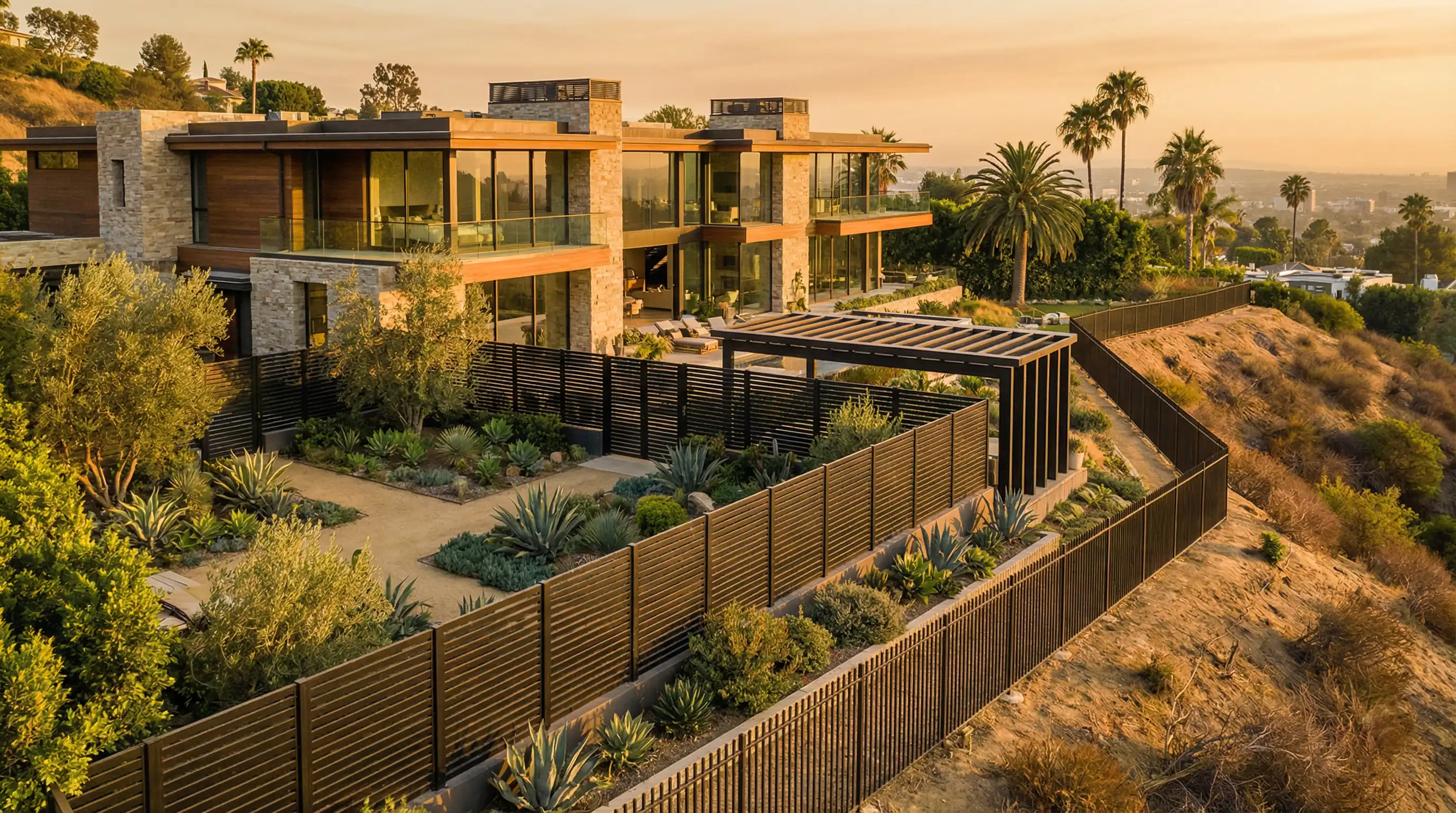
This guide covers Fire wise aluminum, steel and composite fencing. in Beverly Hills—which materials tend to make sense, where they usually fail, and how to lay out a fence line so it doesn’t become a path to the house. We’ll walk through Zone 0 fencing California expectations, how defensible space ideas translate to tighter Beverly Hills lots, and why “fire-resistant” claims can fall apart if the fence meets the wrong ground cover.
You’ll also get a practical starting plan: what to measure, what photos to take, what to ask a contractor, and how to avoid paying for the same work twice.
Working on a project in Beverly Hills?
See local service options, material guidance, and nearby project coverage for Beverly Hills.
Explore Beverly HillsThe local fencing landscape in Beverly Hills (and why it’s changing)
Beverly Hills fencing has always been a mix of privacy, curb appeal, and security. Lately, “looks good” has been sharing space with “how does it behave in a fire?” Not because Beverly Hills is a rural foothill town—because embers don’t care about city limits. Wind-driven ember showers can travel miles ahead of a fire front. When the wind is up and humidity is low, small ignition points (leaf litter, bark mulch, a wood fence corner) are enough to start trouble.
A few local patterns shape what people end up installing:
Tight side yards and long fence runs
In neighborhoods like Trousdale Estates and Beverly Hills Flats, many properties have long side-yard boundaries. That’s a lot of linear footage, often close to eaves, windows, and outdoor HVAC equipment. If a fence ignites, it doesn’t just burn itself—it can push heat toward the structure and crack windows.
More “modern” designs, fewer pickets
A lot of Beverly Hills owners want clean lines: horizontal slats, flush gates, thin sightlines, and integrated lighting. That’s pushed demand toward metal fencing (aluminum and steel) and newer composite systems that can mimic wood without lighting as easily.
Insurance pressure and practical retrofit thinking
Even when local code doesn’t force a specific fence material, homeowners are leaning toward wildfire compliant fence choices because they’re thinking about risk—and, honestly, what an inspector, buyer, or insurer might question later. That’s led to more requests for non-combustible fencing in the first 5 feet near the house, plus better detailing where fences meet gates and decks.
Where people install and why
In Beverly Hills, fencing decisions often come from very specific site triggers:
- A side-yard fence that meets a wood gate next to the garage.
- A fence line that runs close to a back patio and outdoor kitchen.
- A boundary near a slope (even a modest one) where heat can preheat materials faster.
- A neighbor’s mature landscaping that drops leaf litter along your fence line.
If your fence touches or sits close to attached structures—like a deck, stairs, or a pergola—material choice matters more than it does in the average “replace my fence” job.
Why Beverly Hills residents choose aluminum, steel, and composite for fire-wise fencing
People don’t choose aluminum and steel because they want their yard to feel industrial. They choose it because it solves a set of very Beverly Hills problems: tight spacing, design expectations, and fewer ignition points close to the house.
Aluminum fencing: clean, corrosion-resistant, and predictable
Aluminum is common for modern perimeter fencing because it’s light, straight, and holds a powder-coated finish well. For fire-wise planning, aluminum has a clear advantage: it’s non-combustible. It won’t become fuel the way wood does.
But “non-combustible” doesn’t mean “no heat issues.” In radiant heat, metal still gets hot. The better way to think about aluminum is as one part of a system:
- Keep the base area clear of leaf litter.
- Don’t plant resinous shrubs right against the fence.
- Treat the first 5 feet near the structure as its own zone.
In Beverly Hills Flats, where side setbacks can be tight, aluminum also helps because slat systems can give privacy without a thick fence profile that eats up usable space.
Steel fencing: stronger for security, better for tall gates
Steel is often the choice when homeowners want a heavier, more rigid feel—especially for tall pedestrian gates or driveway gates. It’s also non-combustible fencing, which helps when you’re trying to reduce ignition potential near the house.
Steel needs real corrosion protection. Beverly Hills isn’t coastal like Santa Monica, but marine layer and irrigation overspray still catch up with poorly finished steel over time. Look for:
- Hot-dip galvanizing or a proven anti-corrosion system
- A quality powder coat
- Hardware that won’t rust and streak
Composite fencing and decking: where it fits (and where it doesn’t)
Composite products vary a lot. Some are made for lower maintenance and consistent color; some aim to look more like wood. When people ask for composite in a fire-wise context, they’re often trying to avoid the repainting and warping that comes with wood.
Here’s the simple version: composite isn’t the same as non-combustible. Many composites are still combustible to some degree. That doesn’t automatically rule them out, but it changes how you detail the job. In Beverly Hills, the most common fit looks like this:
- Composite fencing away from the structure, paired with a non-combustible transition zone near the home (often metal).
- Composite decking when it can be detailed correctly and kept clean around the perimeter—especially where the deck meets walls, stairs, and under-deck storage.
If your goal is strict fire safe fencing close to the house, aluminum or steel usually makes the decision easier.
The Zone 0 reality check
You’ll hear “Zone 0” a lot in California wildfire conversations. Homeowners sometimes take it to mean “nothing can be near the house.” In practice, the most useful way to think about it is: the first few feet next to the structure should have the least ignitable materials possible.
That’s why many Beverly Hills homeowners run a metal fence section near the house, then transition to other materials farther out if they want a warmer look.
What to look for in a Beverly Hills fencing provider (so the job doesn’t get weird halfway through)
A good fence looks simple when it’s done. The hard part is the planning and the details you won’t notice until something goes wrong.
They ask about the first 5 feet near the house
If you’re talking about defensible space fencing and the contractor never asks what’s happening near the structure—mulch, planters, vents, windows, eave lines—that’s a red flag. The most common failure point is a fence corner sitting in bark mulch or leaf litter right beside a wall.
You want someone who walks through:
- What the fence is closest to (windows, vents, siding)
- Whether the fence touches a gate, deck, or stair
- How you’ll keep the base area clean and low-fuel
They know the material is only half the story
In Beverly Hills, the “fire-wise” part often comes down to transitions:
- Metal fence to wood gate (or vice versa)
- Fence to deck fascia
- Fence to privacy screen
Ask how they’ll handle the connection. For example, if you’re doing a metal fence run but keeping a wood gate, you still have a combustible piece right where people tend to park planters or store recycling bins.
They can explain AB 3074 fencing requirements without guessing
Homeowners in Los Angeles County hear “AB 3074” in wildfire conversations and want to know what it means for fences. A contractor shouldn’t wing it here. You want someone who can explain what applies to your project, what doesn’t, and how they’ll approach wildfire compliant fence design in a way that matches local expectations.
If a provider makes blanket promises like “this meets every requirement everywhere,” that’s usually sales talk. A real pro will stick to what they can control: material selection, detailing, clearances, and how the fence interacts with the structure.
They’re comfortable with Beverly Hills permitting and constraints
Beverly Hills projects can involve:
- Height rules and visibility concerns near driveways
- Neighbor-sensitive property lines
- Existing masonry walls or older footings
- Design review expectations, depending on scope
A contractor should be able to look at your site and explain how they’ll handle:
- Post placement without cracking existing concrete
- Slope changes without awkward gaps
- Gate alignment (especially if the driveway has a crown)
They show you finish options that hold up
A modern fence can look perfect on day one and worn out by year three if the finish system isn’t right. Ask what powder coat line they use, what hardware they spec, and what warranty (if any) is actually in writing.
If you’re near Rodeo Drive areas with higher visibility and you care about the fence looking crisp, don’t treat finish like a detail. Finish is most of what you see.
Beverly Hills area-specific considerations (the stuff that changes the plan)
Beverly Hills has micro-conditions that affect fire-wise fencing choices.
Santa Ana winds and ember exposure
When Santa Ana winds hit, the issue isn’t just flame contact. It’s embers lodging in corners and seams, then small fuels catching first. Fence lines collect debris—especially at the base where sprinklers don’t rinse it away.
If you want fire resistant fencing behavior in real conditions, plan for upkeep:
- A clear strip at the base (no bark mulch piled against it)
- Easy-to-blow-out corners and gate pockets
- No storage against the fence (cardboard, patio cushions, bins)
Hillside vs flats: different heat and access problems
In Benedict Canyon-adjacent areas and other hillside edges, slopes can preheat materials faster and make access harder for regular maintenance. In the flats, the bigger issue is long, continuous fence runs that connect multiple structures and yards.
Either way, breaking up combustible continuity helps. A short non-combustible section near the house can keep a fence fire from handing off to the structure.
Irrigation overspray and finish durability
A lot of Beverly Hills landscaping is heavily irrigated. Overspray hits fence panels and posts. Over time that can:
- Stain finishes
- Accelerate corrosion on cheap hardware
- Grow mildew in shaded sections
It’s one reason aluminum stays popular: it holds up better around irrigation than poorly protected steel.
The data point homeowners miss: wind is a fire multiplier
Los Angeles County tracks weather and fire conditions, and anyone who’s lived through wind advisories knows how fast things can flip. You don’t need a perfect number to act on the basic reality: wind turns small ignitions into fast-moving problems. In a place like Beverly Hills, where lots are tight, the gap between “small” and “expensive” can be a few feet.
Streets and access
If your property is near Sunset Boulevard or Wilshire Boulevard, staging and access can shape how the job runs—where materials get dropped, what hours are realistic, and whether a large gate install needs traffic planning. A provider who’s worked Beverly Hills jobs will bring this up early.
Getting started with fire-wise aluminum, steel and composite fencing in Beverly Hills
If you’re ready to move from “research mode” to an actual plan, do these three things before you call for bids.
First, walk your fence line and mark the sections within about 5 feet of the house. Those are your “lowest ignition tolerance” zones. Take photos of every corner and every connection point: fence-to-gate, fence-to-deck, fence-to-wall.
Second, decide what you need the fence to do: privacy, security, pool safety, or just a clean boundary. That will tell you whether aluminum, steel, or a hybrid approach fits.
Third, ask for a site visit and a written scope that spells out materials and transitions. For Fire wise aluminum, steel and composite fencing. Beverly Hills CA, Modern Fence & Deck typically starts with a layout conversation: where the non-combustible sections should go, what finish fits the house, and what you’ll do at the base so debris doesn’t build up.
The goal isn’t to overbuild. It’s to avoid the common trap: a great-looking fence that creates a new ignition path right next to the structure.
Conclusion
Beverly Hills fencing projects are rarely “just a fence.” They’re usually tied to privacy, property lines, and outdoor living—plus the real question of how your exterior behaves on a hot, windy day.
If you’re weighing aluminum vs steel, or trying to figure out where composite fits without creating a weak spot near the house, start with a site-specific plan. Modern Fence & Deck can walk the property, point out the risky connection points, and quote a fire-wise design that matches how Beverly Hills homes are typically laid out.
Verification note (updated March 26, 2026): Regulatory requirements can vary by parcel, jurisdiction, and inspection cycle. Confirm current requirements with your AHJ and official California sources before final design or contract decisions: PRC 4291, Board of Forestry Zone 0 updates, and OSFM FHSZ maps.