Zone zero aluminum fence for San Diego: a practical guide for fire-focused homes
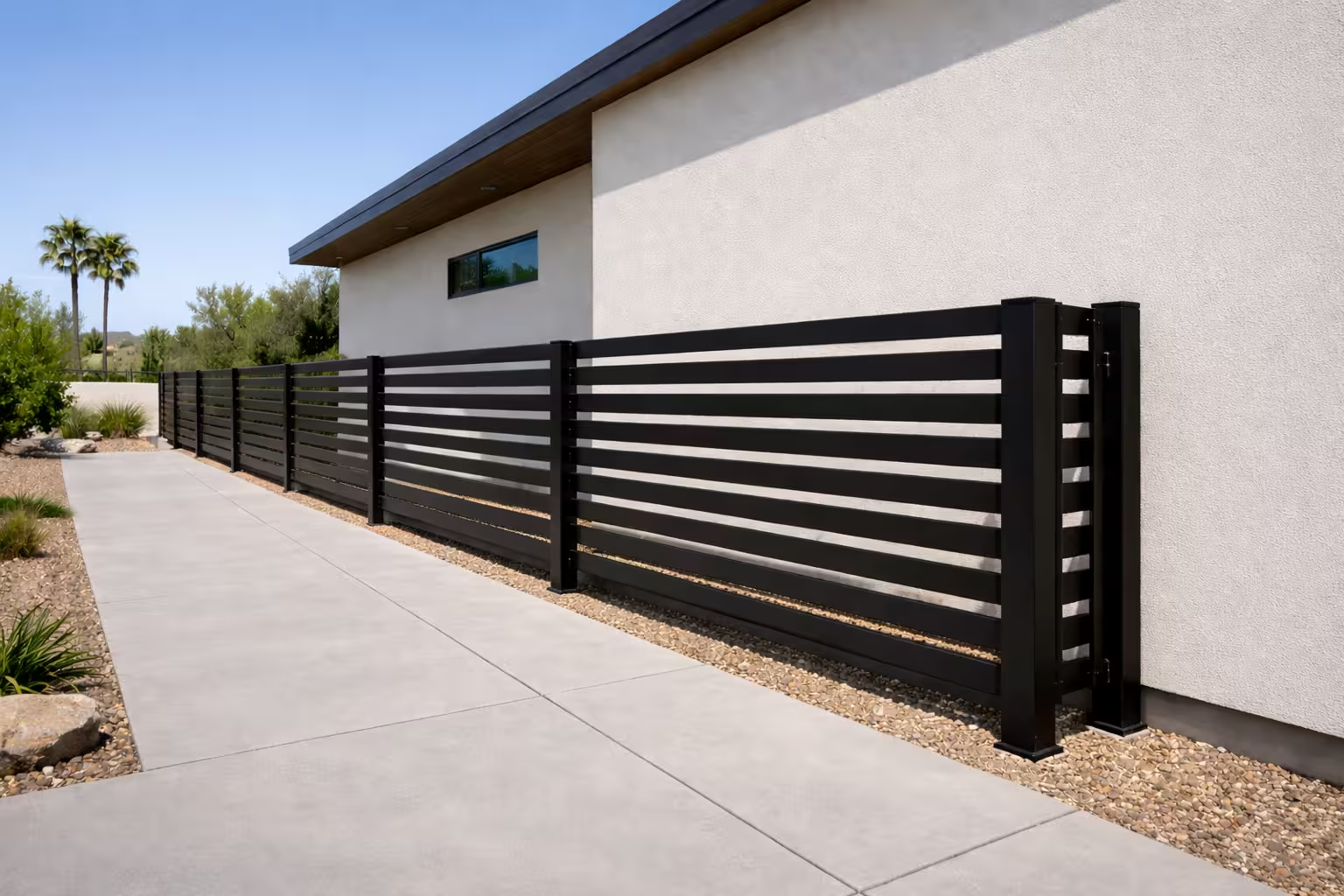
If you live in San Diego County long enough, you start paying attention to the first five feet around your house. It’s the same strip where gates swing, trash cans sit, and side yards quietly turn into storage. It’s also the area California defensible space guidance keeps calling out more clearly: “Zone 0,” the band right up against the structure.
Most homeowners find us after the same annoying loop. The wood fence is getting tired, an insurer starts asking for details, or a neighbor brings up “Zone 0.” Now you’re trying to figure out whether a fence can touch the house, what “non-combustible” really means, and what your local inspector will actually care about.
This guide explains what a Zone zero aluminum fence for San Diego usually looks like on real jobs: how Zone 0 is defined, where aluminum helps (and where it doesn’t), how to handle fence-to-house connections, and how to keep a modern look without signing up for constant maintenance. We’ll also point out what can vary by AHJ (Authority Having Jurisdiction) so you’re not designing to rules that don’t apply to your address.
Need a non-combustible fence that still looks residential?
See aluminum fence systems built for coastal durability, clean lines, and fire-aware near-structure transitions.
Explore Aluminum FencingZone 0 in California: what it really changes about fences
Zone 0 is the “first five feet” problem
Zone 0 generally means the first 0–5 feet from the exterior walls of your home (and sometimes attached structures). The idea is straightforward: lower the chance of ignition right where embers and radiant heat can cause problems. Fencing gets pulled into this because fences often tie straight into the house in side yards, courtyards, and at property-line returns.
In the real world, Zone 0 makes you answer one question: If embers are landing nearby, what in this five-foot band can ignite and carry fire to the house? Wood fences are the obvious worry because they burn, and they can act like a fuse leading to the structure. Even with a well-built home, a fence burning against siding or under eaves is a bad situation.
AB 3074 and what homeowners should know
California has been tightening guidance around the immediate area next to structures, including through legislation such as AB 3074 (focused on ember-resistant construction and defensible space concepts). What applies to you depends on the property type, where you are, and how your local jurisdiction enforces it. For a plain-language walkthrough of the law itself, see our AB 3074 compliance guide for homeowners.
For fencing, the practical takeaway is that more jurisdictions and inspectors are paying close attention to materials and details within 5 feet of the structure, especially in or near Very High Fire Hazard Severity Zones. Our Zone 0 fencing service page covers how we approach those near-structure details.
San Diego has already adopted Zone 0
Here is the part worth pinning down before you plan a job: San Diego and the state are at different stages.
Yes — the City of San Diego has already adopted Zone 0, ahead of the state. The city’s requirement lives in San Diego Municipal Code (SDMC) §512.0604, the San Diego Wildland Urban Interface (SDWUI) Code. It applies to structures in a Very High Fire Hazard Severity Zone within the City of San Diego and took effect for new structures on February 28, 2026, and applies to existing structures beginning February 28, 2027 (subject to change at the discretion of the Fire Code Official).
The statewide Board of Forestry Zone 0 rule is separate and is not yet final. The Board released an updated draft on April 17, 2026 (workshop April 23, 2026), and it remains a draft — the original December 31, 2025 deadline passed without adoption. The draft traces to AB 3074 and PRC 4291, and its fence and gate language is draft §1298.04(b)(8)–(9).
San Diego’s adopted rule includes specific exceptions. Existing vinyl fencing may be allowed within 5 feet if it runs parallel to the wall, sits no less than 4 feet from the structure, is kept clear of debris, and has no vegetation between the fence and the structure. New parallel wood fencing is permitted only if it is Fire Retardant Treated Wood (FRTW), meets the vinyl conditions, and is on the California OSFM Wildland Urban Interface (WUI) Products Handbook and approved for exterior use. Your insurer or the IBHS may not allow vinyl or FRTW within 5 feet even where code does.
| Rule | Status | Key dates |
|---|---|---|
| City of San Diego — SDMC §512.0604 (SDWUI Code) | Adopted | New: Feb 28, 2026 · Existing: Feb 28, 2027 |
| Statewide — Board of Forestry (PRC 4291 / AB 3074) | Draft (April 2026) | Not yet final; comment period open |
Confirm current status with your AHJ before final design decisions.
Your AHJ makes the final call
“Code” isn’t one person’s opinion, and it isn’t always consistent across the county. Your AHJ (Authority Having Jurisdiction) might be the City of San Diego, the County of San Diego, or a local fire authority tied to your area (for example, around Poway, Rancho Santa Fe, or parts of North County).
Before you lock in a design, confirm three things:
- Whether your property sits in a mapped hazard area that triggers stricter interpretation
- What the AHJ expects where a fence meets the structure (attachment details, gaps, or non-combustible returns)
- Whether gates, posts, or decorative pieces introduce combustible components
If you’re thinking “so it depends,” you’re right. That’s why the starting point is your specific address, not a generic checklist.
Why aluminum is a strong fit for Zone 0 near San Diego homes
Non-combustible material where it counts
Aluminum fencing is generally treated as non-combustible in the way homeowners mean it for Zone 0: it won’t ignite from embers the way wood does. That’s the main reason people ask for a Zone zero aluminum fence for San Diego instead of rebuilding another stained cedar fence. If you want the material details, our aluminum fencing page covers finishes, hardware, and coastal considerations.
Aluminum is also common in modern residential work because it holds up outside, doesn’t rot, and doesn’t attract termites (always a thing in Southern California). In coastal areas like La Jolla, Del Mar, Encinitas, and Coronado, the upkeep difference between wood and a powder-coated metal fence shows up fast. Salt air is hard on finishes and fasteners, and wood can start looking worn earlier than most homeowners expect.
Powder coating, fading, and coastal reality
Most good aluminum fences use a factory-applied powder coat. The quality of that finish matters a lot, especially near the ocean. A better powder coat holds off chalking and fading longer, and it’s usually easier to rinse clean.
What to ask your installer or manufacturer:
- Where the aluminum is fabricated and coated (and whether it’s one consistent system)
- Whether fasteners are corrosion-resistant (stainless or properly coated hardware)
- What the warranty really covers (finish vs. structural)
One common San Diego request is matte black. It looks sharp, but it also shows salt residue and dust sooner than lighter colors. That doesn’t mean you shouldn’t do it. Just plan on rinsing now and then, especially on coastal bluff properties.
Aluminum vs steel in Zone 0 applications
Steel is also non-combustible, but the trade-offs are different: it’s heavier, it can rust if the coating gets damaged, and it can cost more to fabricate and install depending on the design. Aluminum usually makes more sense when you want a modern look without taking on extra long-term maintenance.
Steel can be a better fit in high-abuse areas (commercial frontage, frequent impact risk) or when you want very thin profiles with a particular architectural feel. But for most residential side yards in San Diego, aluminum lands where most homeowners want it.
The details that make or break a Zone 0 fence design
The “fence-to-house connection” is the detail inspectors notice
Most Zone 0 fence issues aren’t in the middle of the run. They’re at the last few feet where the fence meets the structure.
If you’ve got a traditional wood return tied into the house, you’ve basically connected a combustible element straight to the structure. Switching to aluminum removes that part of the problem, but the connection detail still needs a plan.
Common approaches we see on San Diego projects:
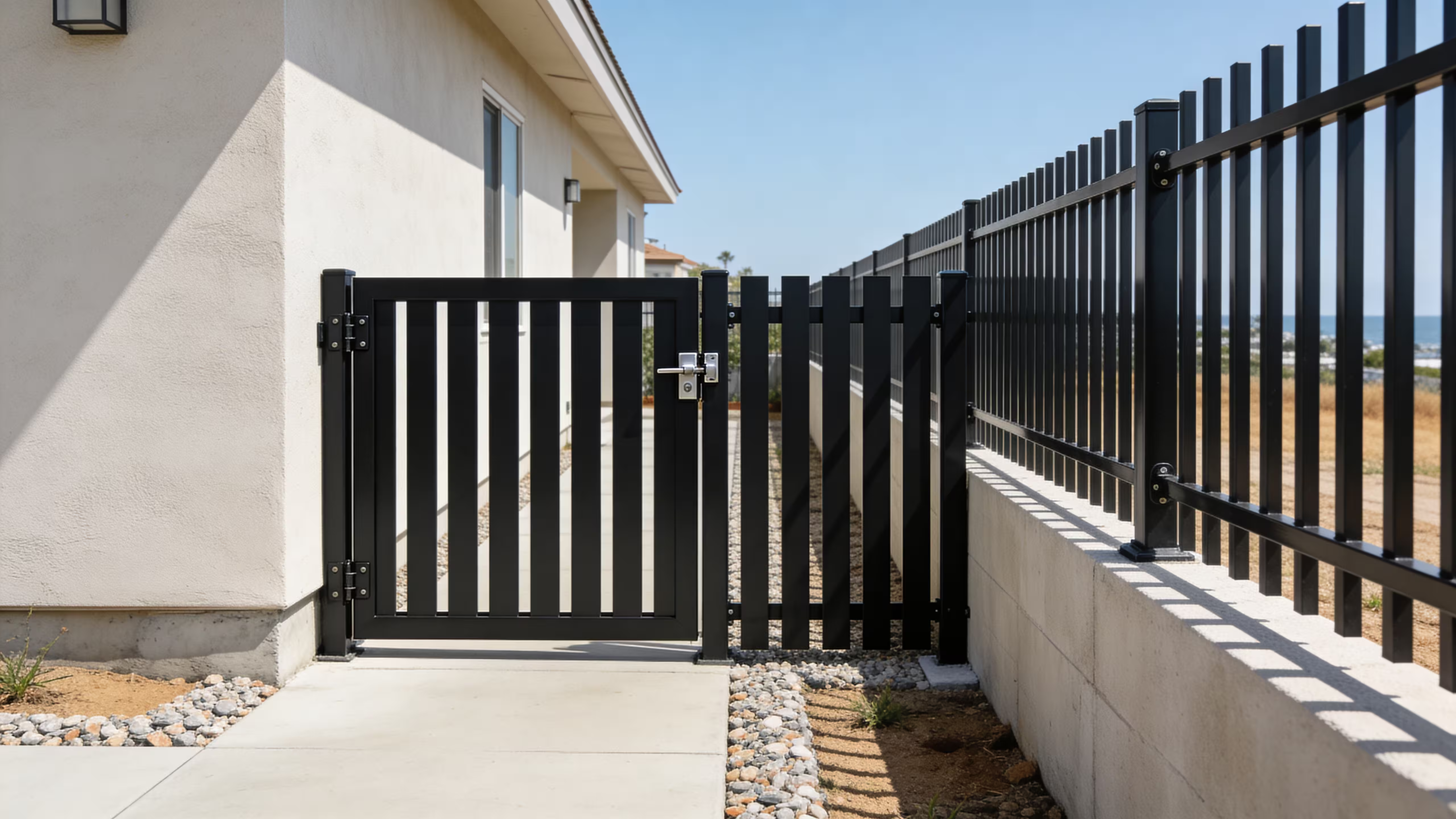
- Ending the fence run short of the wall and using a non-combustible gate frame that doesn’t rely on wood blocking
- Using stand-off brackets or details that don’t trap debris against the wall
- Designing a short non-combustible “return” section near the house even if the rest of the perimeter fence is a different material
Your AHJ may have preferences here. Even when they don’t, this is where workmanship shows up.
Ground clearance and debris: the unglamorous part
Zone 0 isn’t only about the fence material. It’s also about what can pile up and catch.
A fence with a tight bottom gap can trap leaf litter. A fence set right at grade can get buried after a few seasons of mulch, runoff, and routine yard work. And on San Diego properties with decomposed granite, slope planting, or irrigated planters, soil moves more than people expect.
Good design usually includes:
- Sensible bottom clearance (enough to avoid constant scraping and debris dams)
- Post placement that doesn’t create pockets where leaves stack up
- A plan for what sits under the fence line: hardscape, gravel, or well-maintained soil
If you want the fence to stay clean and “architectural,” you have to design for how yards actually behave.
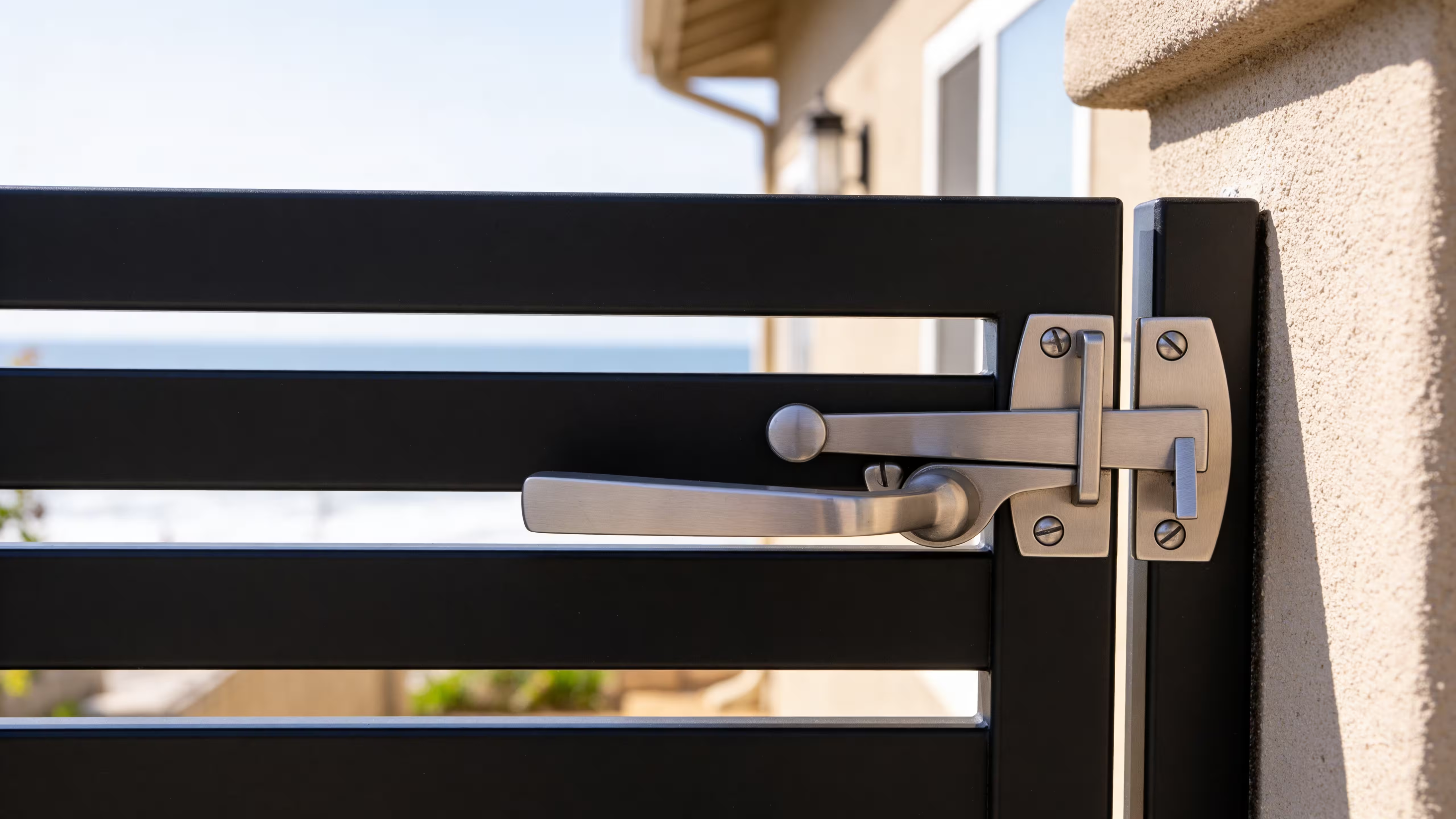
Gates, latches, and access: don’t let hardware be the weak link
A Zone zero aluminum fence for San Diego is often tied to a bigger access issue: side-yard gates that sag, latches that fail, or narrow passages that don’t work when you’re hauling bins.
We like to design side gates around real use:
- Can you roll trash and recycling bins through without banging pickets?
- Can the gate swing fully without clipping planters or a hose bib?
- Are hinges and latches actually rated for exterior use near the coast?
Hardware matters more than most homeowners expect. If you’re upgrading for safety and durability, a cheap latch that rusts out in two years misses the whole point.
San Diego neighborhoods: what changes from Poway to Point Loma
Wildland-adjacent areas have different conversations
In places like Poway, Rancho Santa Fe, parts of Escondido, or neighborhoods near open space, the defensible space conversation is usually more direct. People are used to brush management requirements and fire authority guidance.
In those areas, a non-combustible fence near the structure is often an easier “yes” than trying to justify a wood return or a decorative wood gate right next to the house.
But don’t count on an inspector to spell out every detail upfront. Homeowners tend to get better results when they show up with a clear plan: fence material, connection detail, and a simple drawing that marks the 0–5 foot band. If you want to know what a San Diego inspector actually looks at, our guide on San Diego fire inspections and Zone 0 breaks it down.
Coastal corrosion and finish selection
In Point Loma, Ocean Beach, Pacific Beach, and parts of Carlsbad and Encinitas, corrosion resistance becomes a bigger part of the brief. Aluminum holds up well, but fasteners and gate hardware still have to match the environment.
A practical approach is to treat coastal projects like marine-adjacent installs:
- Choose corrosion-resistant hardware
- Avoid mixing metals that can speed up galvanic corrosion
- Plan for rinse-down maintenance during salty months
If you’ve ever seen a good-looking fence ruined by rusty streaks from hardware, you already know how this happens.
HOAs and “modern” design constraints
In planned communities across San Diego County, the HOA may care more about picket spacing, height, and color than fire resistance. Zone 0 doesn’t disappear. You just end up working inside two sets of constraints.
We often see HOA-friendly aluminum designs do well because they can keep traditional proportions while staying non-combustible near the home. The move is to confirm the HOA’s approved palette and style rules early—before you get attached to a design they won’t sign off on.
Planning, permits, and what to ask before you build
Permits and property lines: where projects get delayed
Fences feel simple until they aren’t. In San Diego, delays usually come from three things:
- Property line uncertainty (common on older lots)
- Height rules (front yard vs side yard vs rear yard)
- Slope and retaining conditions that turn a “fence” into an engineered boundary condition
If there’s any doubt about the property line, paying for a survey can be cheaper than sorting out a dispute later. That’s not alarmist. It’s just what happens when a fence ends up six inches on the wrong side.
Documentation that helps with inspectors and insurers
We won’t promise a fence changes your insurance outcome—your carrier and policy decide that. But homeowners tend to get further when they can show exactly what was installed.
Helpful documentation can include:
- Product cut sheets that list materials and finishes
- Notes on non-combustible components near the structure
- Photos of the fence-to-house detail before and after
When you’re talking defensible space with an inspector or an insurance rep, specifics beat vague descriptions every time.
Fire ratings: know what they mean (and what they don’t)
You’ll sometimes hear about ASTM E84 and Class A ratings. ASTM E84 is a test method for surface burning characteristics (flame spread and smoke development) for certain materials.
For homeowners, the usable takeaway is this: ratings apply to specific tested materials and assemblies, and they don’t rescue a bad detail. A non-combustible aluminum fence near the house is a solid Zone 0 choice, but you still have to manage debris, attachment details, and nearby combustible items.
Fire performance and compliance can vary by jurisdiction, and your AHJ has the final say on what meets local requirements.
Choosing the right aluminum fence style for Zone 0 (without making it look industrial)
Picket spacing, privacy, and ember considerations
A lot of people assume “fire-conscious” means solid privacy panels. In practice, a more open style can reduce debris traps and still look like it belongs on a residential property.
For side yards, we often see homeowners choose:
- Vertical picket styles with moderate spacing
- Horizontal aluminum slats when HOA rules allow (and when you want more screening)
- Taller side-yard gates for security with a clean sightline
The right choice depends on how you use the space. If it’s just a utility corridor, durability and access usually win. If it frames a courtyard, sightlines and design start to matter more.
Color and texture: matte black isn’t the only answer
San Diego homes run from Spanish revival to ultra-modern new builds. Aluminum can work with all of it, but the finish choice does a lot of the heavy lifting.
- Matte black works with modern architecture and plenty of stucco palettes.
- Dark bronze often sits better with warmer stone and more traditional exteriors.
- Lighter finishes hide dust and salt spotting better near the coast.
Try to see physical samples outdoors in daylight. The same color can look totally different against your stucco and landscaping.
Mixing materials safely (and cleanly)
Sometimes the best plan is mixed: aluminum in the 0–5 foot Zone 0 band near the structure, and another material farther out where the rules are looser.
This is where you need some discipline. The transition should look intentional. And it can’t create a new weak point—like fastening wood straight into the house because “it’s only a small section.” If you’re mixing materials, plan transitions at posts, pilasters, or a change in elevation where it reads cleanly.
Modern Fence & Deck often designs these transitions so the job feels like one system, not a patch. And yes, it’s normal to tweak the design once you see it on your actual site.
FAQs San Diego homeowners ask about Zone 0 aluminum fencing
Does Zone 0 mean I can’t have any wood fence on my property? No. Zone 0 guidance focuses on the first 0–5 feet next to the structure. Many properties use non-combustible materials near the house and other materials farther away. Your AHJ sets local expectations.
Will an aluminum fence “pass inspection” automatically? No one can promise that. Aluminum is non-combustible, which helps in Zone 0, but inspectors may still care about attachment details, clearances, gates, and what’s stored near the fence.
Is aluminum fencing OK near the ocean in San Diego? Usually, yes—especially with a quality powder coat and corrosion-resistant hardware. Coastal conditions make hardware choices and maintenance (simple rinsing) more relevant.
Do I need a permit for an aluminum fence in San Diego County? It depends on location, height, and conditions (like retaining walls). Check with your city/county permitting office and your HOA if applicable.
Can a Zone zero aluminum fence for San Diego still look modern? Yes. Aluminum works well with modern lines, clean pickets, and simple gates. The best results come from matching picket spacing, post size, and finish to your home’s architecture.
Conclusion: plan for Zone 0 like it’s part of your home, not a separate project
Zone 0 can feel abstract until you walk the side yard with a tape measure. Then it clicks: the first five feet is where your yard actually connects to your house—through fences, gates, stored stuff, and the little corners where leaves collect.
A Zone zero aluminum fence for San Diego is a practical way to remove one common ignition path near the structure while also improving durability and cutting down on upkeep. Aluminum won’t solve every fire-related concern, and it’s not a magic shield. But as a non-combustible material, it fits the zone that demands the most from your details.
If you’re planning a fence project in San Diego—whether you’re in a coastal neighborhood like Del Mar, a canyon-adjacent community near Poway, or a hillside property in North County—start with the connection points: fence-to-house, gate hardware, and ground conditions. Get clear on what your AHJ expects, then design the fence as part of the site instead of an add-on.
If you want Modern Fence & Deck to sanity-check a layout or talk through Zone 0 details for your property, call (619) 975-1883. We’ll start with the boring questions. That’s usually where the smooth projects come from.
Planning an aluminum fence for the first five feet around your home? Review Zone 0 material options and gate details, then confirm the near-structure requirements with your local jurisdiction (AHJ).
Verification note (updated March 26, 2026): Regulatory requirements can vary by parcel, jurisdiction, and inspection cycle. Confirm current requirements with your AHJ and official California sources before final design or contract decisions: PRC 4291, Board of Forestry Zone 0 updates, and OSFM FHSZ maps.