What is composite wood? A practical guide for decks, fences, and exterior projects
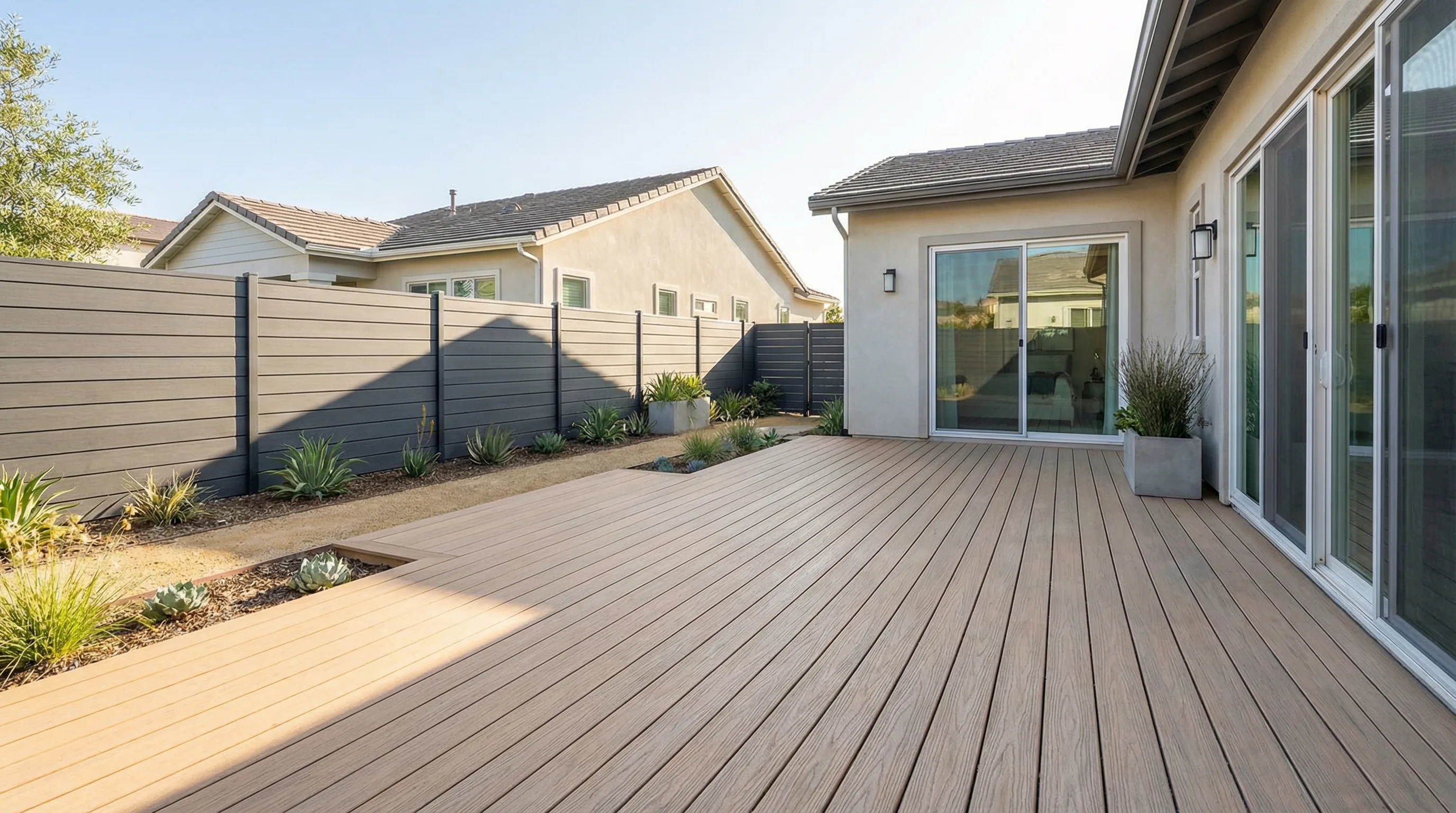
When homeowners ask what composite wood is, they are usually not asking about MDF or furniture panels. They are asking about the boards used on composite decks and composite fences: the material that promises a wood look with less upkeep.
That is the version this guide is built around. We will define composite wood in the deck-and-fence sense first, then break down what it means for board construction, maintenance, heat, movement, fire context, and how it compares with real wood, PVC, aluminum, and steel.
What homeowners usually mean
For decks and fences, composite wood usually means a wood-plastic composite board made for outdoor use.
What it is made of
Most products combine wood flour or fiber with plastic polymers, pigments, and additives. Better products add a protective cap.
Best-fit use cases
Composite is usually strongest on low-maintenance decks and privacy fences where homeowners want a wood look without full wood upkeep.
Biggest watch-outs
Composite can get hot in direct sun, moves with temperature changes, and is not the same thing as a non-combustible material.
Where composite wood fits best
Decking
Composite is popular for deck boards because it reduces refinishing work, resists splinters, and offers a more uniform finish than many wood systems.
Privacy fencing
Composite works best where the goal is a warmer privacy look with less upkeep than standard wood fencing.
Near-house or wildfire-prone runs
Composite needs a more careful review here because product-specific fire data and local requirements matter.
If you want the next comparison
PVC, aluminum, steel, and hardwood are usually the right alternatives to compare once you know your style and maintenance priorities.
Composite wood, decoded
What composite wood usually means for decks and fences
For deck and fence projects, composite wood usually means an outdoor board made from wood fiber and plastic. You will also hear this called wood-plastic composite, composite lumber, capped composite, or simply composite decking or composite fencing.
Need help deciding if composite fits your deck or fence project?
We can help you compare composite against aluminum, hardwood, steel, and PVC based on appearance, maintenance, heat, and fire context.
Get a Material RecommendationThe point of the material is simple: keep some of the appearance of wood while reducing the refinishing, splintering, and moisture problems that come with standard lumber.
On most homeowner projects, composite wood shows up in two places:
- deck boards and stair treads
- privacy fence boards and screen panels
If that is what you are shopping for, this is the right definition to use.
What composite wood is made of
Most outdoor composite boards use a blend of:
- wood flour or wood fiber
- plastic polymer, usually polyethylene or polypropylene
- pigments and stabilizers
- additives that help with UV, stain, and moisture performance
That blend gets extruded into a finished board profile. The exact formula varies by manufacturer, which is why two composite products can look similar in a showroom but perform differently outside.
Uncapped composite
Uncapped composite uses the same material all the way through the board. It is usually the lower-cost version, but it is also the version more likely to show its age faster through staining, fading, or surface wear.
If someone tells you composite has a bad reputation, there is a decent chance they are talking about older or uncapped products.
Capped composite
Capped composite adds a protective polymer shell around the core. For most deck and fence buyers, this is the more important distinction because the cap is what improves resistance to staining, fading, surface mold, and routine weather exposure.
For most modern fence and deck applications, capped composite is the baseline worth comparing. It is not perfect, but it is meaningfully better than older uncapped material.
PVC is nearby, but it is not composite wood
PVC boards often get lumped into the same conversation because they are sold in the same deck and fence shopping process. But PVC is a separate category. It contains no wood fiber.
That matters because PVC and composite do not behave identically under heat, moisture, scratch wear, or fire testing. If you are comparing quotes for a deck or a fence, make sure everyone is actually quoting the same material family.
How composite wood is used in decking
Composite decking is where most homeowners first encounter the material. The promise is attractive: a deck that keeps a wood-like look without yearly sanding and staining.
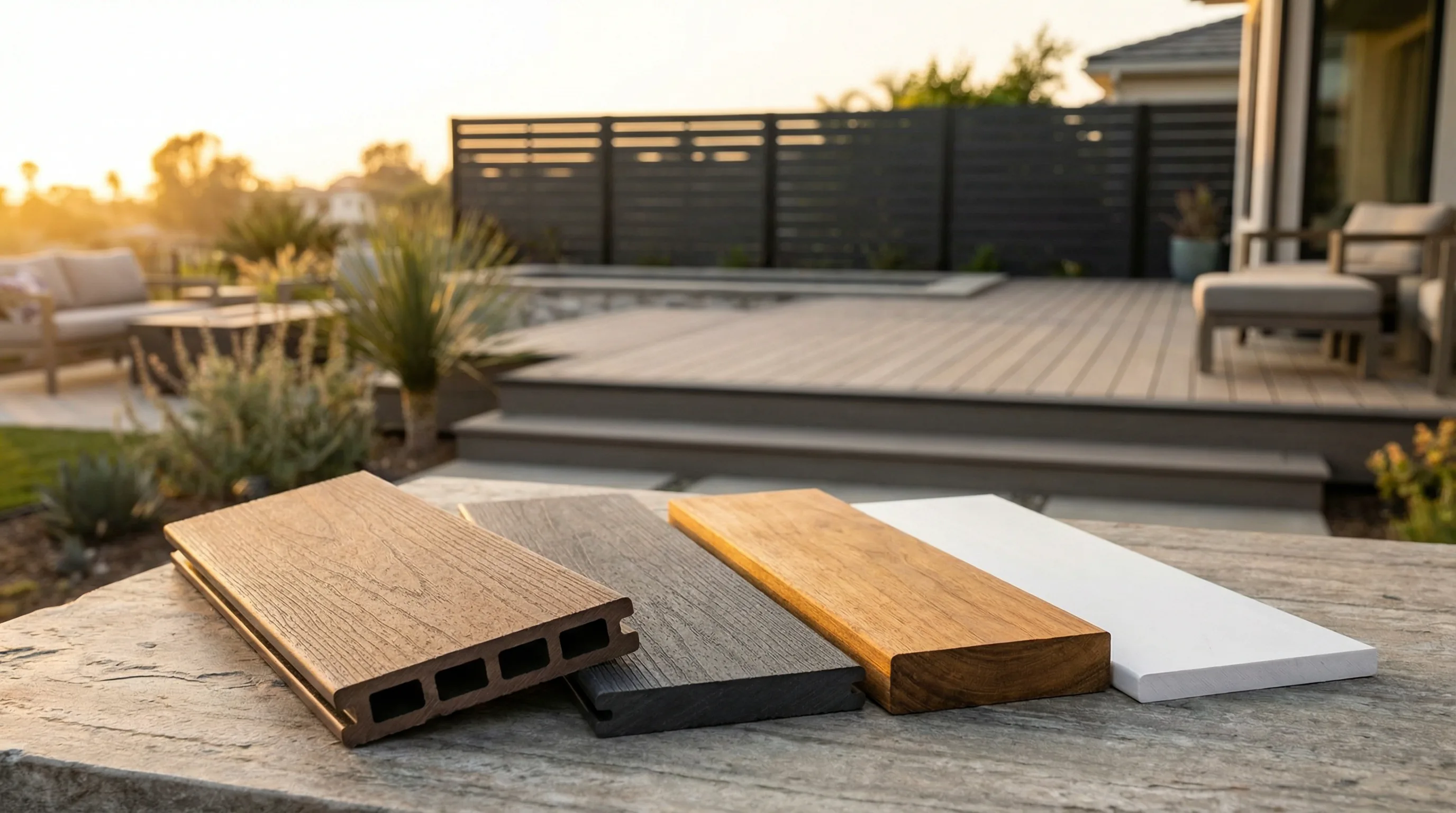
Why homeowners choose composite for decks
- less routine maintenance than standard wood decking
- fewer splinters for barefoot use
- more uniform board color and texture
- better moisture resistance than many wood decks
- long warranty periods on many premium capped lines
What catches deck buyers off guard
- dark colors can get hot in direct sun
- boards still expand and contract with temperature swings
- scratches and gouges are harder to disguise than on stainable wood
- substructure choices still matter as much as the surface boards
On a deck, composite is usually strongest when the homeowner values low maintenance and consistent appearance more than true natural grain or refinishing flexibility.
How composite wood is used in fencing
Composite fencing is a slightly different conversation. Nobody is walking on the boards, so barefoot comfort matters less. Privacy, appearance, movement, and system design matter more.
Why homeowners choose composite for fences
- warmer look than metal-only privacy fencing
- less upkeep than standard wood privacy fences
- more uniform finish across long runs
- good fit for modern horizontal or clean slat-style privacy systems
What catches fence buyers off guard
- fence boards still move with temperature changes
- the post and frame system matter as much as the infill boards
- damaged boards are harder to refinish or disguise than wood
- composite is not automatically the best answer near the house in fire-prone settings
For fencing, composite is usually strongest when the goal is a privacy-first, low-upkeep, wood-look system.
Is composite wood real wood?
Partly, yes. But it is not solid lumber.
Outdoor composite boards usually contain real wood flour or fiber blended with plastic. That means composite wood can carry some of the appearance and texture cues people like about wood without behaving exactly like natural boards.
The simple distinction is this:
- solid wood is milled from lumber
- composite wood is an engineered board made from wood material plus a binder
That engineered structure is why it behaves differently on decks and fences.
Composite wood vs real wood for decks and fences
| Material | Best at | Usually weaker at |
|---|---|---|
| Composite wood | Lower upkeep, uniform appearance, splinter resistance, moisture resistance | Heat in full sun, thermal movement, refinishing flexibility, fire context near structures |
| Real wood | Natural grain, repairability, refinishing flexibility, authentic wood feel | Ongoing maintenance, splinters, insect pressure, moisture-related aging |
If you love the look of wood but do not want to live inside a stain-and-seal cycle, composite becomes attractive fast. If you care most about authentic wood character or easy repairability, real wood still has advantages.
Composite wood vs PVC, aluminum, and steel
The right comparison depends on whether the project is a deck or a fence.
Composite vs PVC
PVC is the next closest comparison for decks and some fence systems. It usually wins on moisture resistance and can stay a little cooler in some product lines, but it is not composite wood and often has a different look and feel.
Composite vs aluminum or steel
For fencing, metal systems are often the clearer answer when low maintenance and fire-aware placement matter more than a wood look. Composite often wins on warmth and privacy feel. Metal often wins on near-house fire context and cleaner structural simplicity.
If your shortlist includes metal, use our best fence material guide to compare the trade-offs directly.
The main trade-offs deck and fence buyers should know
It still moves in heat
Outdoor composite expands and contracts more than many homeowners expect. This matters on decks and fences alike. If the system is not designed correctly, you can end up with seasonal gaps, panel movement, or a finish that looks less crisp than it did on install day.
It can get hot in direct sun
In Southern California, this is mostly a decking issue. Dark composite in full afternoon sun can become uncomfortable underfoot. Lighter colors and shade planning matter more than many buyers realize.
You cannot treat it like refinishable lumber
If you deeply scratch a composite board, you cannot just sand it back and re-stain it the way you can with real wood. On decks and fences, repair options are more limited and often mean board replacement.
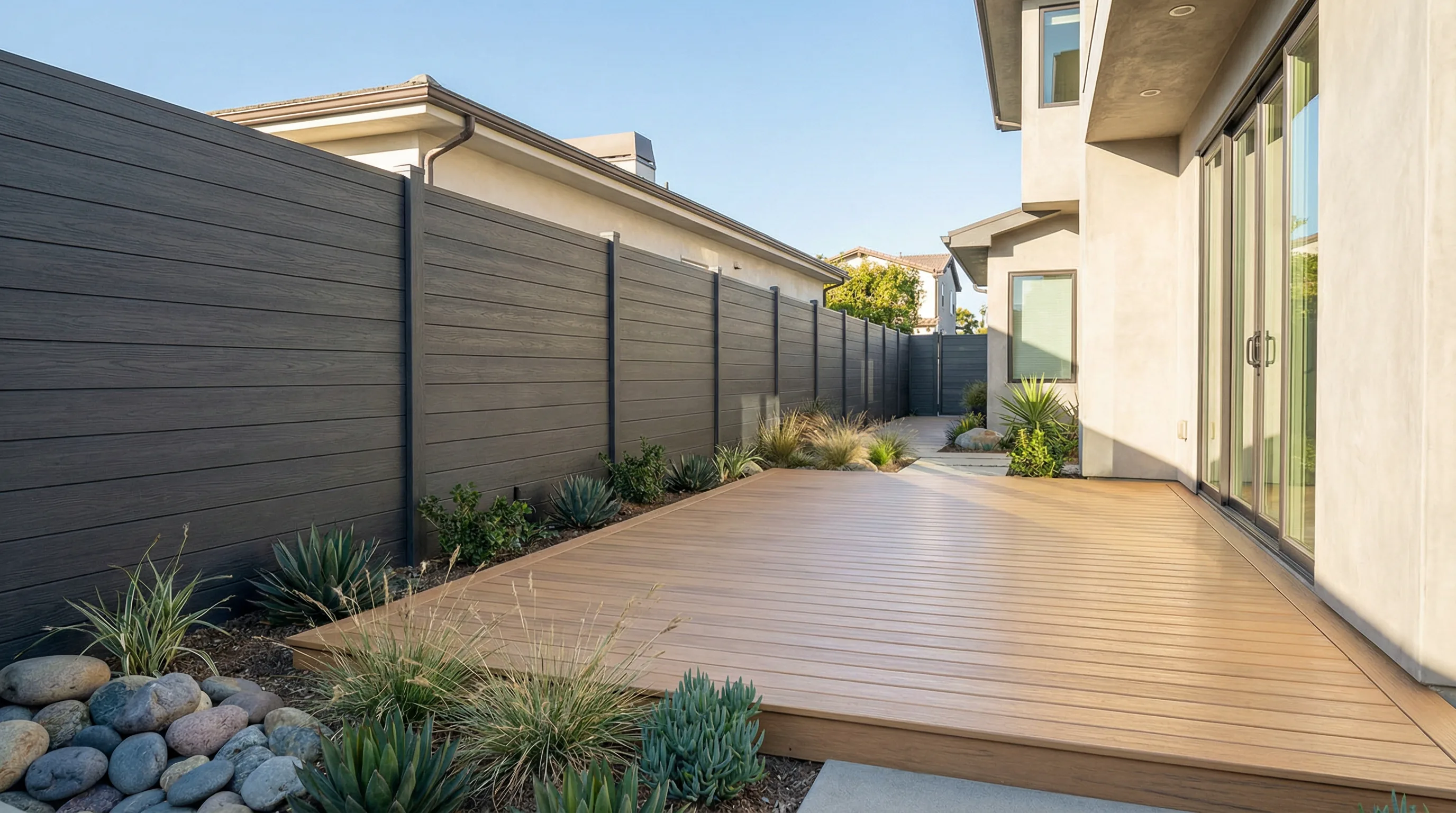
It is not the same as non-combustible material
This is especially important on California fence and deck projects. Composite wood is not the same thing as aluminum, steel, masonry, or another non-combustible system. If fire exposure matters, product-specific testing and local requirements matter more than a brochure sentence.
Composite wood in Southern California: the practical version
In San Diego and the rest of coastal and inland Southern California, three site conditions change the conversation quickly:
Sun and heat
UV and surface temperature matter here. Composite that feels fine in a milder climate can feel much harsher on a west-facing California deck.
Salt air and hardware
On coastal sites, the board is only part of the system. Posts, fasteners, clips, and frames matter too.
Wildfire context
If a fence or deck is close to the structure, fire behavior becomes more important than style preference alone. Composite may still fit some projects, but it needs a more careful review than non-combustible materials.
That is why we usually recommend composite when the homeowner wants the material benefits and the placement supports it, not as a one-size-fits-all answer.
Quick clarification: why some people mean MDF or particleboard
You will still see “composite wood” used more broadly for interior engineered wood products such as MDF, particleboard, and hardwood plywood. That use is not wrong. It is just not the version most homeowners mean when they are pricing a deck or privacy fence.
If your project is cabinetry or millwork, that indoor definition matters. If your project is a fence or deck, the outdoor wood-plastic definition is the one that will help you make better buying decisions.
When composite wood is usually a good fit
Composite is often a good fit when you want:
- a low-maintenance deck
- a wood-look privacy fence
- fewer splinters than wood
- a uniform, predictable finish
- less refinishing work over the life of the project
Composite is usually a weaker fit when you want:
- the coolest possible deck surface in full sun
- the refinishing flexibility of real wood
- a clearly non-combustible near-house fence path
- the cheapest upfront option
If your shortlist still includes composite after that filter, then the next step is comparing the actual deck or fence system details rather than debating the generic term.
How to choose composite for a deck or fence
Start with the application
Decide whether you are choosing deck boards or fence boards. The product details and trade-offs are not identical.
Pick the board family
Separate uncapped composite, capped composite, and PVC before you compare color, warranty, or price.
Check your site conditions
Sun exposure, barefoot traffic, salt air, privacy goals, and wildfire context will affect what works best.
Compare against the real alternatives
Composite only makes sense when it beats real wood, aluminum, steel, or PVC for your specific project goals.
Bottom line
For decks and fences, composite wood usually means an outdoor board made from wood fiber and plastic, often with a protective cap.
That is the definition most homeowners actually need. The more generic MDF-and-particleboard meaning exists, but it is secondary if you are comparing deck boards, privacy fences, and exterior material systems.
The practical questions are not “what does the term mean in every industry?” They are:
- is this composite, capped composite, or PVC?
- is it for a deck or a fence?
- how will it handle sun, movement, maintenance, and fire context on my site?
Once you answer those, composite wood becomes much easier to evaluate honestly.
Sources & What To Verify Before You Buy
For this guide, composite wood is mainly about deck boards and fence boards. The generic definition matters less than the actual outdoor system you are buying.
- Confirm whether the quoted product is uncapped composite, capped composite, or PVC before you compare warranty or maintenance claims.
- For decking, verify the manufacturer's installation, spacing, and care requirements so you are not surprised by heat or movement.
- For fencing, verify the full system, including posts, rails, hardware, and how the boards are supported.
- In wildfire-prone California locations, confirm local requirements with your AHJ before using composite near the structure.
Sources
- U.S. Environmental Protection Agency: Frequently Asked Questions for Consumers about the Formaldehyde Standards for Composite Wood Products Act
- TimberTech: What Is Composite Wood? Pros and Cons
- Trex: Eco-Friendly Composite Decking
- Trex ICC-ES ESR-3168 evaluation report
- Composite Panel Association
- Modern Fence & Deck: Composite fencing pros and cons for San Diego homes
- Modern Fence & Deck: Composite decking for San Diego homes