Fire-safe zone 0 xeroscaping with artificial foliage
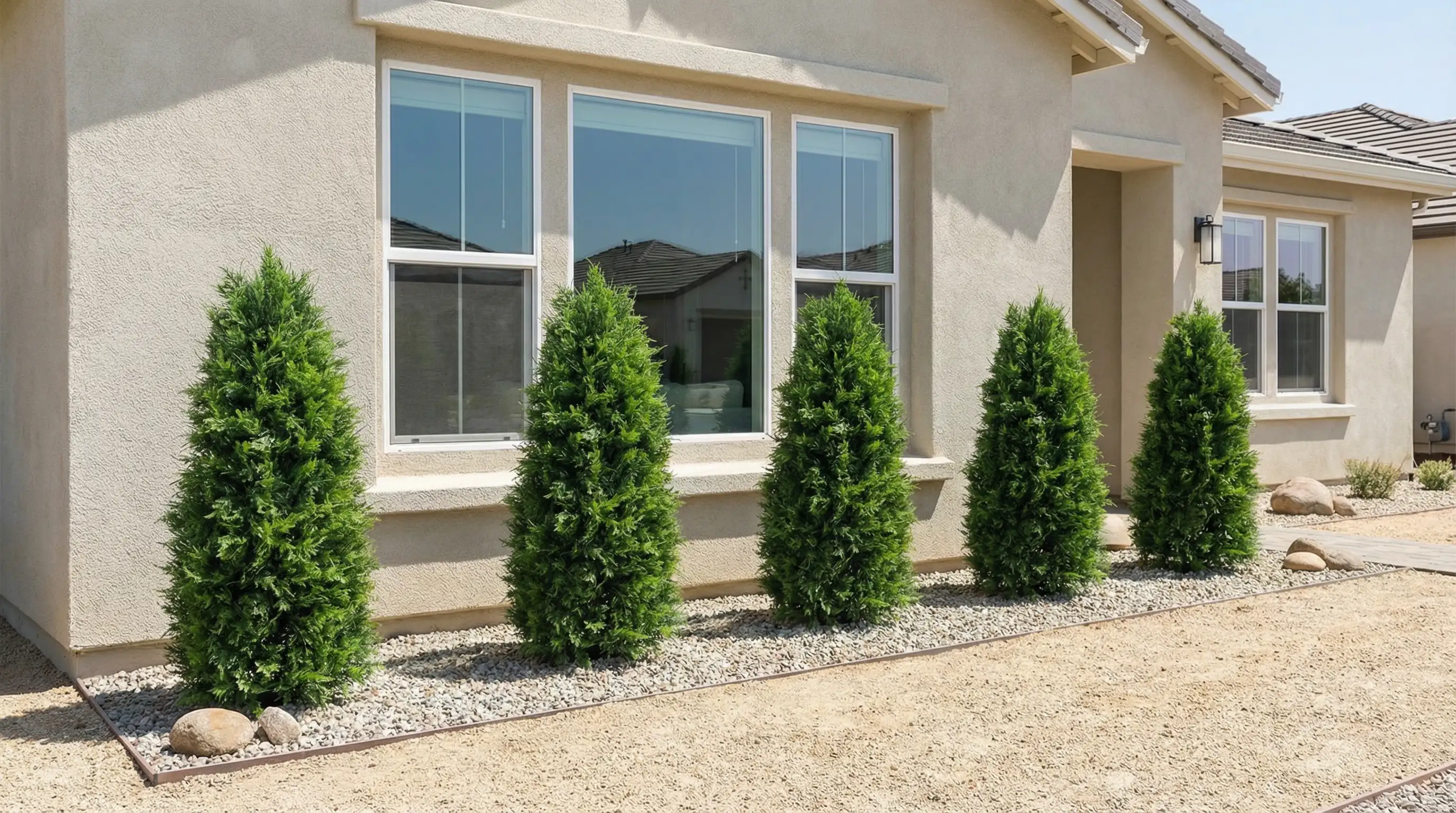
If you live in a wildfire-prone area, the first 5 feet around your house can’t be landscaped like the rest of the yard. That area, often called Zone 0, is where a lot of good intentions turn into bad fire risk. Bark mulch gets piled against siding. A neat row of shrubs sits under windows. Plastic privacy vines end up on a fence that touches the house. It may look tidy. It may also give embers exactly what they need.
That’s why more homeowners and HOAs are looking at zone 0 xeroscaping. The idea is pretty simple: use less water, keep plant fuel down near the structure, and make it harder for wind-blown embers to start a fire right next to the building. Artificial foliage comes up a lot because people want greenery without irrigation or constant upkeep. But this is the part where you need to be careful. In Zone 0, “low maintenance” and “fire safe” are not the same thing.
This guide explains where artificial foliage makes sense, where it doesn’t, and how to build a dry-climate landscape that lines up better with Zone 0 goals.
Need a Zone 0 planning review?
Review near-structure material options and get parcel-specific guidance before you finalize your layout.
See Zone 0 FencingWhat Zone 0 actually means
Zone 0 usually means the first 0 to 5 feet from the structure. The exact wording may change depending on your state, insurer, HOA rules, or local fire code. But the basic point is the same: this is the part of the property that is most vulnerable to ignition.
The reason is ember exposure. During a wildfire, homes often don’t catch because a wall of flames reaches them. They catch because embers land in spots that can easily ignite. A dry doormat. Leaves in a corner. Mulch against wood trim. A shrub under a window. Or a synthetic material that can melt, burn, and drip.
That changes how this area should be designed. Zone 0 is not the place for dense planting, stored combustibles, untreated wood mulch, or decorative items that catch easily. For HOAs, this matters because a lot of community standards still reward “soft” landscaping right up against buildings. In wildfire country, that approach is dated.
So yes, zone 0 xeroscaping is about water use. But it’s also about reducing ignition risk.
Why “xeriscape” and “fire safe” are not automatically the same thing
A lot of people assume xeriscaping is fire safe by default because it uses less water and often fewer plants. Sometimes that’s true. Sometimes it’s not.
A drought-tolerant yard can still be risky if it includes resinous shrubs, dry ornamental grasses, juniper near the foundation, bark mulch, or dead material that isn’t cleaned up. And a yard with artificial turf or synthetic ivy may use almost no water, but that doesn’t mean it belongs in Zone 0.
Fire-safe design has less to do with whether a plant is labeled drought tolerant and more to do with fuel arrangement, upkeep, and what sits right next to the house. A sparse mineral surface with a few well-spaced, irrigated plants beyond the immediate 5-foot area is very different from a packed “desert style” bed full of wood chips and synthetic accents.
That’s the first thing homeowners and HOAs need to get straight: don’t treat xeriscaping as a look. Treat it as a set of decisions about fuel, spacing, and maintenance.
The uncomfortable truth about artificial foliage near the house
Artificial foliage is appealing for obvious reasons. No irrigation. No pruning. No leaf drop. The same appearance year-round across a neighborhood. For HOA boards, that can sound ideal.
But in Zone 0, artificial foliage comes with a real trade-off. Most artificial plants, privacy screens, faux boxwood panels, and decorative vines are plastic. Common materials include polyethylene, polyester, and PVC. Some products are sold as fire retardant. That may help in some indoor commercial settings, but it does not make them noncombustible, and it does not mean they belong in an exterior area exposed to embers.
Outdoors, those materials also age. Sun, heat, dust, and time can change how they behave. And if they do ignite, some will melt and deform. That matters when they’re mounted on fences, walls, gates, balcony railings, or entry features attached to the building.
So here’s the practical answer: if you’re trying to meet Zone 0 expectations, don’t assume artificial foliage is acceptable in the first 5 feet from the house. In a lot of cases, it’s a poor choice. If a local code official, fire district, insurer, or HOA consultant has to judge whether it belongs there, plastic greenery is a tough sell.
For most homes, the safer position is this: keep artificial foliage out of Zone 0 unless you have written confirmation that the specific product and use condition are allowed. And even then, I’d be careful.
Where artificial foliage can work, if you still want it
That doesn’t mean artificial foliage has no place on the property. It means location matters.
Outside Zone 0, some homeowners use artificial hedging on detached structures, in interior courtyards with noncombustible surfaces, or as decorative screening well away from buildings and fences that connect back to buildings. HOAs sometimes use it in entry monuments or amenity areas where irrigation is hard to manage. But even there, you still have to think about heat, sun exposure, and cleaning. Dust and debris collect in artificial greenery. Dead leaves get stuck inside it. Spiders love it. And cheap panels often look worn after a couple of hot summers.
If you’re using artificial foliage anywhere on a wildfire-prone property, ask a few basic questions first:
What is it made of?
Is there a flame-spread rating from an actual test standard?
Is that rating for interior use, exterior use, or both?
Will it be attached to a combustible fence or wall?
Can leaves and debris collect in it or behind it?
Who is going to clean and inspect it?
That’s not alarmist. It’s just maintenance reality. A material that saves water but traps embers or adds plastic fuel next to structures is not doing you any favors.
What to put in Zone 0 instead
This is where a lot of designs actually get cleaner. Zone 0 does not need to be barren. But it does need to stay simple.
The best Zone 0 surfaces are usually noncombustible and easy to check at a glance. Think gravel, decomposed granite where it’s allowed and stable, pavers, concrete, stone, and well-detailed walkways. Use materials that don’t trap litter in corners. Keep edges neat. Avoid fussy little pockets where leaves and pine needles collect.
If you want some visual softness, use planters carefully and be honest about where they sit. A large ceramic or metal planter right at an entry may still be fine in some settings, but don’t turn the front step into a dense container garden. One restrained accent is different from six flammable pots under a wood awning.
For HOAs, this often means changing landscape standards. Replace “foundation shrubs required” with standards that allow hardscape, rock mulch, and low-profile noncombustible design within the first 5 feet. Otherwise residents get two conflicting messages: the fire agency says clear it out, and the HOA says add greenery.
The mulch issue people keep underestimating
Mulch causes more debate than it should, mostly because it’s so common. In Zone 0, organic mulches like shredded bark, gorilla hair, wood chips, and pine straw are poor choices. They can smolder or ignite from embers. That’s the exact problem you’re trying to avoid.
A lot of fire agencies prefer noncombustible materials close to the house, like gravel or rock. But not every rock mulch works equally well. Light river rock can move around. Large decorative stone can make cleanup awkward. Sharp crushed rock can be unpleasant near entries. Pick something stable and practical, not just something that fits a “dry climate” look.
And don’t ignore what lands on top of the mulch. Even noncombustible gravel becomes an issue if it’s covered in dry leaves. Maintenance is part of the material choice.
Planting just beyond Zone 0
Most homeowners still want a yard that feels alive. That’s fair. Usually the better move is to push planting outward rather than strip it out completely.
Beyond the first 5 feet, use lower-fuel plants with space between them, and avoid continuous masses that can carry fire. Keep plants away from windows, vents, and fences that lead back to the house. Skip species known for high resin or for building up dead material if they’re close to structures. The exact plant list will vary by region, but the principles stay the same.
In practice, a good zone 0 xeroscaping plan often looks like this: hardscape and mineral mulch in the first 5 feet, then a transition area with widely spaced low-growing plants, then more typical xeriscape farther out where spacing, irrigation, and maintenance can be handled more safely.
And it usually looks better than people expect. Cleaner lines. Less clutter. Less watering. Less trimming around the foundation. Less second-guessing about what belongs where.
What HOAs should put in their guidelines
Most HOA documents were not written with ember exposure in mind. They usually regulate appearance, not ignition risk. That can be fixed, but only if the rules are specific.
A useful HOA guideline should treat the first 5 feet around structures as a separate landscape zone. It should prohibit combustible mulch there. It should restrict or ban artificial foliage, artificial turf attached to structures, and decorative synthetic screening in that area. It should also allow residents to use gravel, stone, pavers, and similar noncombustible materials without getting cited for having “too little planting.”
And the review committee needs pictures. Not mood boards. Real examples of acceptable and unacceptable conditions. A photo of bark mulch against stucco with a wood fence tied in. A faux ivy panel attached to a gate next to the garage. A gravel strip with clean metal edging. People understand specifics faster than vague wording.
If the HOA wants consistency, publish a short approved materials list. For example: 3/8-inch crushed rock, concrete pavers, stone slabs, ceramic pots in limited numbers, and low-profile metal edging. Then list what is not allowed in Zone 0. That saves a lot of back-and-forth.
The three mistakes that keep showing up
The first mistake is treating all “green-looking” products as if they’re basically the same. A live succulent bed, a bark-mulched shrub border, and a synthetic hedge panel do not behave the same way in a fire.
The second is attaching combustible design elements to structures. Fences, gates, trellises, privacy screens, and wall décor all matter if they can carry flame or melt against the building.
The third is assuming maintenance can fix a bad material choice. Maintenance helps. But it does not turn plastic foliage into a noncombustible surface, and it does not make bark mulch a smart Zone 0 material.
That’s why the best Zone 0 designs are often a little plain on purpose. They leave fewer ways for things to go wrong.
A simple way to decide what belongs in the first 5 feet
If you’re standing near the house and trying to figure out whether something belongs in Zone 0, ask four questions.
Can it burn, melt, or smolder?
Can it trap leaves, needles, or embers?
Is it attached to the house or to something that touches the house?
Will it still look safe after two years of sun, dust, and delayed maintenance?
If the answer is yes to any of those, move it out of Zone 0 or pick something else.
That one test clears up most of the confusion around artificial foliage.
FAQ
Can I use artificial plants right next to my house if they’re labeled fire retardant?
I wouldn’t assume that label makes them acceptable for Zone 0. Fire-retardant treatment and noncombustible performance are not the same thing. And exterior wildfire exposure is not the same as an indoor decorative-use test. If you want to use a specific product near the house, get written approval from your local fire authority or building official first.
What’s the best ground cover for Zone 0?
In most cases, gravel, stone, pavers, or concrete are the safer choices near the structure. The right material depends on drainage, slope, and how the area is used. Organic mulch like bark or wood chips is usually a poor fit in the first 5 feet.
Does xeriscaping meet Zone 0 requirements by itself?
No. Xeriscaping reduces water use. Zone 0 is about ignition resistance near the home. A xeriscape can still miss Zone 0 goals if it includes combustible mulch, dense shrubs, ornamental grasses, or synthetic materials close to the house.
Can an HOA require plants near the foundation if the area is in a wildfire-prone zone?
An HOA can write that rule, but it may conflict with current fire-safety guidance. In wildfire-prone areas, HOAs should update their standards so residents can use noncombustible materials in the first 5 feet without being penalized for skipping foundation beds.
Verification note (updated March 26, 2026): Regulatory requirements can vary by parcel, jurisdiction, and inspection cycle. Confirm current requirements with your AHJ and official California sources before final design or contract decisions: PRC 4291, Board of Forestry Zone 0 updates, and OSFM FHSZ maps.