Zone 0 fencing cost in San Diego: what to budget for in 2026
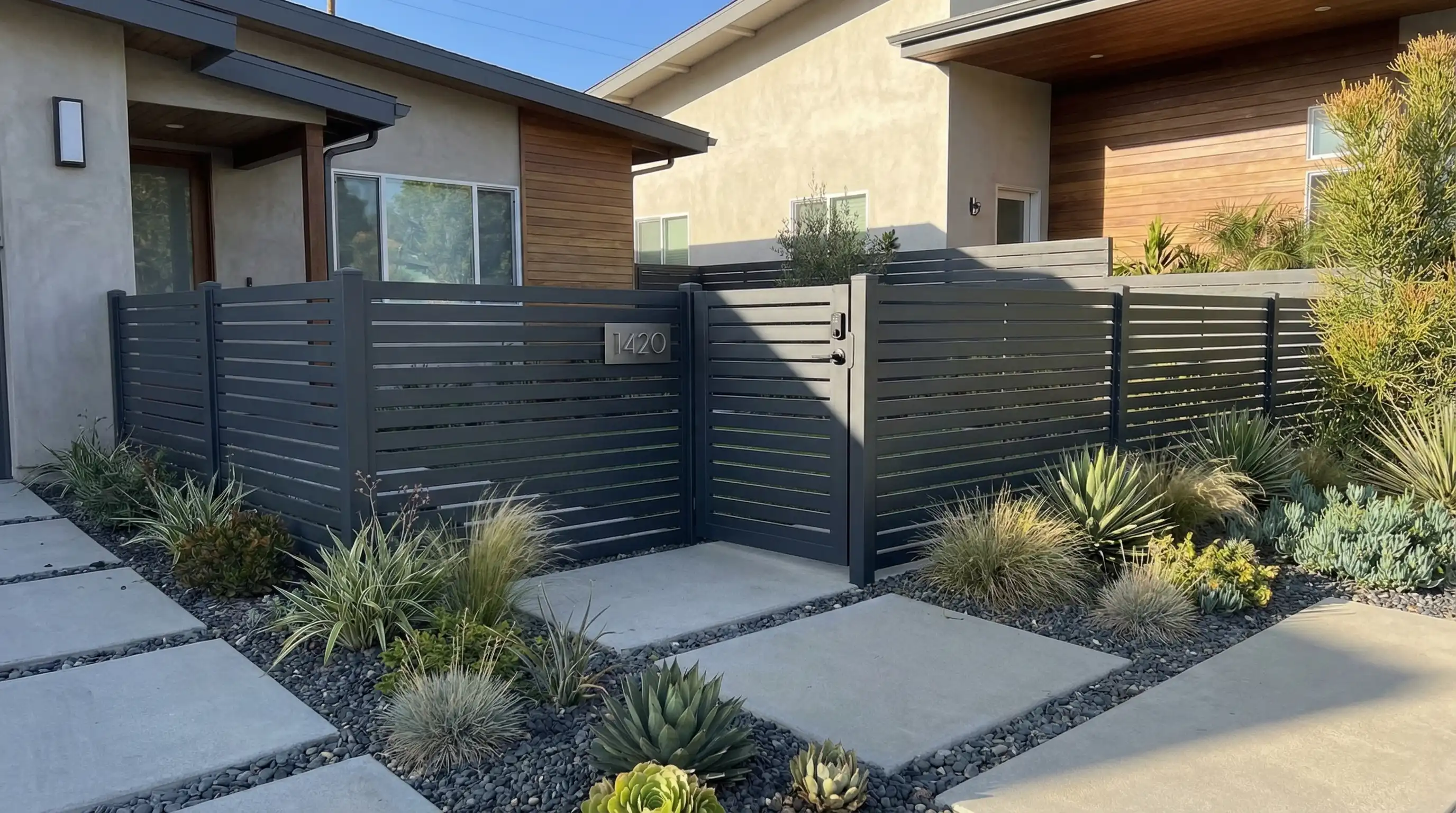
Most Zone 0 fence pricing questions start with, “What does it cost per foot?” That is understandable, but it is not enough to budget correctly for a real property.
This guide keeps pricing honest: no fake precision, no made-up statewide averages, and no single number that pretends every parcel looks the same. You will get practical tiers, the drivers that move cost fastest, and a clear way to scope estimates before you sign.
What changes price fastest
Material, linear footage, terrain, gates, and access are the biggest cost drivers.
What most generic price lists miss
Slope, rocky soil, retaining conditions, and electrical work can change the scope dramatically.
What drives the budget most?
Material choice
Aluminum is often the most practical residential entry point, while masonry and gabion sit in a heavier cost tier.
Site conditions
Slope, access, and soil conditions can add labor and structural requirements.
Gates and power
Operators, electrical work, and larger gate frames can shift the budget faster than people expect.
Removal and permits
Old fence demo, haul-off, and permit research are real line items, not noise.
Budget driver map
How to get an accurate estimate
Measure the runs
Separate the near-structure sections from the rest of the fence line.
Note the hard parts
Slope, access, retaining conditions, and gates need to be called out before pricing is useful.
Verify local scope
Confirm whether permit or electrical requirements add work for your address.
Cost tiers that are useful for planning
Use tiers as directional planning tools, not a final quote.
Need a real Zone 0 quote instead of a generic range?
We can scope the actual site conditions, fence runs, gates, and permit questions that move the number on your property.
Request a Zone 0 QuoteTier 1: straightforward near-house replacement
This is usually the lightest scope: shorter runs, reasonable access, limited slope, and fewer custom details. For many San Diego homes, aluminum is the most practical entry point in this tier because it is non-combustible, low maintenance, and typically simpler to install than heavier systems.
Tier 2: mixed conditions and added complexity
This tier often includes meaningful slope, tighter access, larger gates, more reinforcement, or partial retaining conditions. Material may still be aluminum or steel, but labor scope expands because layout, post work, and gate framing become less forgiving.
Tier 3: structural or specialty scope
This is where projects move into masonry, gabion, significant retaining conditions, major grade transitions, or powered gate systems with electrical coordination. These are not simple panel swaps. They are broader construction scopes, and budgets move accordingly.
Driver groups that move pricing fastest
1. Material and footage
Longer runs increase both labor and material. Material choice then sets your tier: aluminum is often the practical residential baseline, while steel, gabion, and masonry tend to push into heavier cost bands.
2. Terrain and access
San Diego topography matters. Steep side yards, canyon edges, rocky soil, and poor equipment access can add labor quickly. If crews cannot move materials efficiently or standard post installation fails, scope changes.
3. Gates, automation, and electrical
Gates are often the highest-cost component per linear foot. Add automation, trenching, or power coordination and the budget can shift more than most homeowners expect.
4. Demo, haul-off, and permit work
Removing an old fence, disposing of debris, and handling permit research are real line items. They should be explicit in writing, not hidden in vague “miscellaneous” charges.
What generic online price lists usually miss
Most public ranges ignore the exact conditions that decide real cost:
- Whether the run is truly within the first 5 feet of the structure.
- Whether retaining or grade correction is required before fence work.
- Whether rocky soil changes post and footing work.
- Whether the gate plan requires power and permit coordination.
That is why directional tiers are useful for planning, but contract decisions should be based on site-specific scope.
How to compare bids without getting misled
Ask each contractor to break out the same categories so comparisons are fair:
- Material system and finish assumptions
- Linear footage by run segment
- Gates and hardware scope
- Site constraints (slope, access, soil)
- Demo and disposal scope
- Permit and electrical assumptions
If one bid is far below the others, check what is omitted before assuming it is a better deal.
Source handling: what is fixed vs what is local
For Zone 0 budgeting, separate source types:
- Fixed baseline: California law and state guidance establish the broad framework.
- Local application: AHJ interpretation, local map adoption, and permit triggers decide real parcel scope.
- Project reality: Soil, access, gate design, and existing conditions decide labor and engineering burden.
This separation helps avoid a common mistake: treating a legal source as if it is a final parcel quote.
Sources & What To Verify Locally
State law and map guidance are real, but your local AHJ and parcel conditions decide final scope.
- Confirm local permit triggers, height limits, and inspection expectations for your address.
- Verify whether gate operators or new electrical runs change permit scope on your parcel.
Budget planning checklist before you request final pricing
- Measure each fence run and flag near-structure segments.
- Mark slope, access limits, and potential retaining sections.
- Identify gate count, size, and whether automation is planned.
- Confirm permit and electrical assumptions with the local AHJ.
- Request itemized estimates using the same scope categories.
Next step
If you want a working number for your property, the fastest path is a scoped site review with run measurements, gate details, and local permit assumptions documented in writing.
Request a quote and we will map the actual drivers on your parcel so you can budget from scope, not guesswork.
Sources
- California Public Resources Code Section 4291 (PRC 4291). Defensible space baseline: leginfo.legislature.ca.gov
- California Assembly Bill 3074 (AB 3074). Ember-resistant zone framework: leginfo.legislature.ca.gov
- OSFM Fire Hazard Severity Zones guidance and maps: osfm.fire.ca.gov
- City of San Diego Development Services permitting information: sandiego.gov
- County of San Diego permitting information: sandiegocounty.gov
Planning a Zone 0 fence project and mapping out scope? Review the near-structure material options and gate details, then confirm requirements with your local jurisdiction (AHJ).
Verification note (updated March 26, 2026): Regulatory requirements can vary by parcel, jurisdiction, and inspection cycle. Confirm current requirements with your AHJ and official California sources before final design or contract decisions: PRC 4291, Board of Forestry Zone 0 updates, and OSFM FHSZ maps.